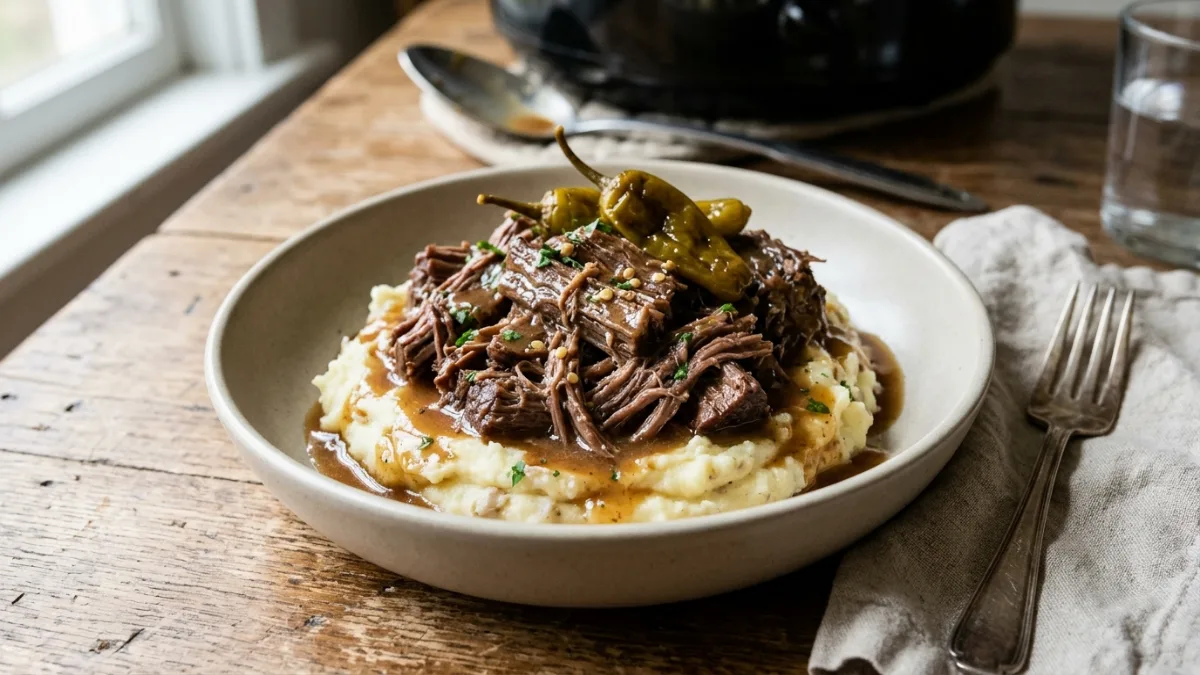
Mississippi pot roast transforms a modest boneless beef chuck roast into fork-tender, shreddable beef braised in an intensely savory, buttery, tangy gravy. Slow-cooked with dry ranch dressing mix, dry au jus mix, sliced pats of butter, and jarred pepperoncini peppers, this classic set-it-and-forget-it dinner delivers rich depth with minimal prep.
Recipe Testing & Status Note: This recipe reflects the established, source-backed standard formula originating from Robin Chapman’s classic preparation. Because this specific written draft was assembled based on culinary reference standards rather than evaluated in our own test kitchen, it is classified as a source-backed proposal.
Mississippi Pot Roast Recipe Card
- Yield: 6 to 8 servings
- Prep Time: 10 minutes
- Cook Time: 8 hours on LOW (or 4 to 5 hours on HIGH)
- Total Elapsed Time: 8 hours 10 minutes
- Essential Equipment: 6-quart slow cooker (oval recommended), large skillet (optional for browning), meat forks, chef’s knife, cutting board.
Ingredients
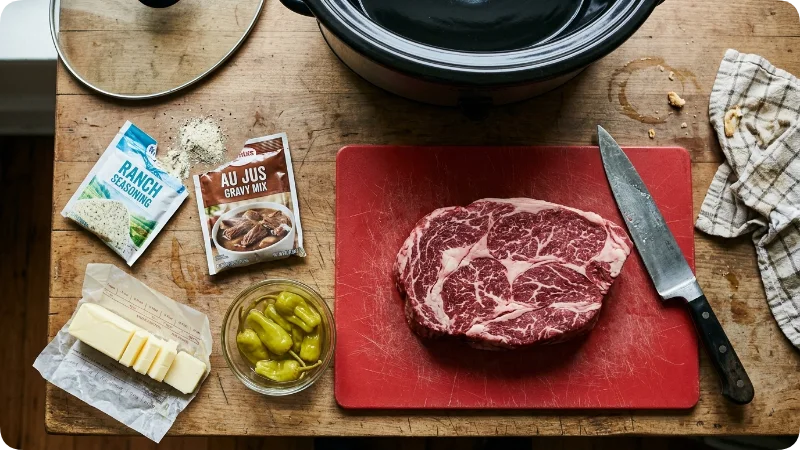
- 1 boneless beef chuck roast (3 to 4 pounds), trimmed of excess external fat cap thicker than 1/4 inch
- 1 packet (1 ounce / 28 g) dry ranch dressing mix
- 1 packet (1 ounce / 28 g) dry au jus gravy mix
- 1/2 cup (1 stick / 113 g) unsalted butter, sliced into 8 pats
- 6 to 8 whole jarred pepperoncini peppers
- 2 tablespoons jarred pepperoncini brine (optional, for added acidity)
- 1 tablespoon neutral high-heat oil (vegetable or canola oil; optional, only if searing first)
Instructions
- Prep the meat: Pat the trimmed beef chuck roast dry with paper towels. (Optional searing step: If browning, heat 1 tablespoon neutral oil in a heavy skillet over medium-high heat until shimmering. Sear the roast for 3 to 4 minutes per side until a deep brown crust develops, then transfer the meat to the slow cooker insert. If skipping the sear, place the raw roast directly into the bottom of the slow cooker.)
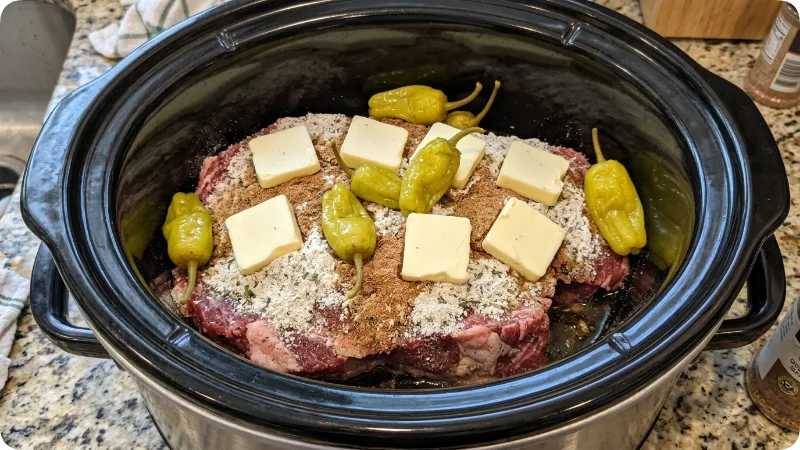
- Layer seasonings: Sprinkle the dry ranch dressing mix evenly over the top of the beef. Sprinkle the dry au jus mix directly over the ranch layer.
- Add butter and peppers: Distribute the 8 slices of unsalted butter across the top of the seasoned roast. Scatter the whole pepperoncinis around and on top of the beef. If desired, pour 2 tablespoons of pepperoncini brine around the base of the roast. Do not add water, stock, or other cooking liquids; the roast and butter will release ample liquid during braising.
- Cover and cook: Secure the slow cooker lid. Cook on LOW for 8 hours (or on HIGH for 4 to 5 hours). Check that the beef is tender: a fork inserted into the center should twist easily with zero resistance, and an internal meat thermometer must read at least 145°F (with optimal shredding tenderness occurring between 200°F and 205°F).
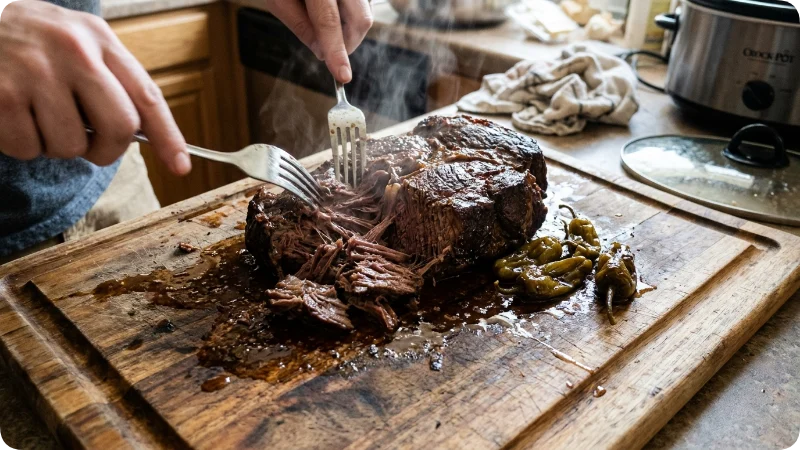
- Shred and rest: Transfer the roast to a clean rimmed cutting board. Use two forks to shred the beef into bite-sized chunks, discarding any remaining pockets of tough connective tissue or gristle.
- Defat and combine: Skim excess surface fat from the braising liquid remaining in the slow cooker with a wide spoon or ladle. Return the shredded beef to the warm juices, tossing gently to coat. Keep on the WARM setting until ready to serve.
Ingredient Notes and Substitutions
- Beef Chuck Roast: The high concentration of intramuscular collagen and marbling makes beef chuck ideal for low-and-slow braising. Leaner cuts such as round roast, rump roast, or sirloin tip will dry out, seize, and turn stringy rather than tender.
- Unsalted vs. Salted Butter: Always choose unsalted butter. Both the ranch seasoning packet and the au jus mix contain significant sodium. Using salted butter can easily push the finished gravy past the point of palatability.
- Au Jus Gravy Mix: A standard 1-ounce au jus envelope provides beef bouillon depth and light starch thickening. A dry brown gravy mix or onion soup mix can substitute in an equal 1-ounce quantity, though onion soup mix will yield a more onion-forward profile with a slightly thinner consistency.
- Pepperoncini Peppers: Jarred mild pepperoncini provide brightness, vinegary acidity, and gentle heat that cuts through the rich beef fat and butter. Banana peppers make an acceptable direct substitute if pepperoncini are unavailable.
Before You Begin
- Thaw the Meat Completely: Never cook a frozen beef roast in a slow cooker. The slow cooker heats gradually, allowing a frozen roast to remain in the bacterial danger zone (40°F to 140°F) for too long, violating basic food safety guidelines.
- Inspect the Surface Fat: While internal marbling keeps the meat juicy, a heavy outer layer of fat will melt into an overly greasy sauce. Trim hard exterior fat caps down to approximately 1/4 inch before seasoning.
- Check Crock Capacity: Use an appliance rated at 6 quarts or larger so the roast rests flat against the bottom. An overcrowded or undersized crock alters heat distribution and prolongs cook times.
How to Make It: Key Checkpoints and Principles
- The Searing Decision: Searing is not part of the original 1990s Mississippi recipe, but browning the beef for 3 to 4 minutes per side initiates the Maillard reaction, developing savory flavor compounds that enrich the pan drippings. If convenience is the priority, place the roast directly into the crock without browning; the braise remains deeply flavorful.
- No Added Water: Do not add broth or water. As the chuck roast heats, its muscle fibers contract and release natural moisture, combining with melting butter to produce a concentrated braising jus. Extra liquid dilutes the flavor and leaves the sauce thin.
- Slow-Braising Mechanics: Keeping the cooker on LOW produces the silkiest texture. Collagen breaks down into gelatin smoothly between 160°F and 180°F. Rapid heating on HIGH can cause the protein fibers to contract tightly before the collagen fully melts, resulting in a slightly firmer shred.
Tips and Troubleshooting
- Problem: The beef is tough, rubbery, and resists shredding.
- Cause: The meat is undercooked. Beef chuck requires extended heat to convert collagen into gelatin; simply reaching the USDA safety minimum (145°F) is not enough for fork tenderness.
- Fix: Cover the slow cooker and continue cooking on LOW for another 45 to 60 minutes. Check again with a fork.
- Problem: The finished gravy tastes overly salty.
- Cause: Using salted butter, an oversized seasoning packet, or an undersized roast (under 3 pounds).
- Fix: Stir in 1/2 cup of low-sodium beef broth or unsalted beef bone broth, or serve the shredded beef over unseasoned, plain mashed potatoes or unsalted egg noodles to balance the profile.
- Problem: The cooking juices look excessively oily or broken.
- Cause: The chuck roast rendered high amounts of intermuscular fat along with the melted butter stick.
- Fix: Remove the shredded beef, pour the remaining juices into a fat-separator cup, discard the separated clear yellow fat, and pour the concentrated pan juices back over the meat.
Variations and Alternative Methods
Instant Pot / Electric Pressure Cooker Method
- Adjustments: Requires 1/2 cup of low-sodium beef broth in the bottom of the inner pot to help the cooker reach pressure without scorching.
- Execution: Sear the roast on the SAUTÉ setting for 4 minutes per side in 1 tablespoon of oil. Turn off SAUTÉ. Remove the beef, pour in 1/2 cup beef broth, and scrape up browned bits from the bottom. Place the roast back in, top with ranch mix, au jus mix, sliced butter, and peppers.
- Timing: Lock the lid and cook on HIGH pressure for 60 minutes for a 3- to 4-pound roast. Allow a natural pressure release for 15 minutes before venting the remaining steam.
Dutch Oven / Oven Method
- Adjustments: Add 1/2 cup low-sodium beef broth to maintain moisture in a dry oven environment.
- Execution: Preheat oven to 300°F. Sear the roast in an enameled Dutch oven over medium-high heat. Add the broth, scatter seasonings, butter, and peppers over the roast.
- Timing: Cover tightly with a heavy lid and braise in the oven for 3.5 to 4 hours until the roast shreds easily with a fork.
Serving Suggestions
- Classic Mashed Potatoes: Spoon the shredded roast and pan gravy over garlic or buttermilk mashed potatoes so the potatoes absorb the buttery jus.
- Warm Hoagie Rolls: Pile the beef onto toasted hoagie or French rolls, top with a slice of provolone cheese, and broil for 1 to 2 minutes until melted.
- Buttered Egg Noodles or White Rice: Serve alongside wide egg noodles or steamed white rice to balance the bold seasonings.
Make-Ahead, Storage, and Reheating
- Refrigerator Storage: Allow leftovers to cool to room temperature within 2 hours of cooking. Store the beef submerged in its cooking juices in an airtight container for up to 4 days.
- Freezing: Transfer the cooled beef and juices into freezer-safe containers or heavy-duty freezer bags, pressing out excess air. Freeze for up to 3 months. Thaw overnight in the refrigerator before reheating.
- Reheating: Reheat gently on the stovetop in a saucepan over medium-low heat, stirring occasionally until the internal temperature reaches 165°F. Alternatively, reheat in a covered microwave-safe dish in 60-second intervals at 70% power to keep the meat juicy.
FAQs
Can I make Mississippi pot roast without butter?
Yes. While the butter creates the signature velvety mouthfeel, a well-marbled chuck roast produces plenty of rendered fat. Reducing the butter to 2 to 4 tablespoons, or omitting it entirely, creates a lighter sauce without sacrificing tenderness.
Is Mississippi pot roast spicy?
No. Pepperoncini peppers are mild, tangy, and slightly sweet. They lend an acidic brightness rather than sharp heat. For actual spice, add sliced pickled jalapeños or a pinch of crushed red pepper flakes.
Can I add vegetables like carrots and potatoes?
Yes. Add 1 pound of baby potatoes and 3 thick-cut whole carrots around the base and sides of the roast before cooking. Keep in mind that root vegetables will absorb salt from the seasoning packets and release water, which slightly dilutes the gravy.
Why shouldn’t I cook this on HIGH for the whole duration?
Cooking beef chuck on LOW allows connective tissue to dissolve smoothly without shocking the meat fibers into tough, tight strands. While cooking on HIGH for 4 to 5 hours works if you are short on time, the LOW setting produces the most tender, consistent result.
Summary
Mississippi pot roast is a flavorful, hands-off slow-cooker dish that turns boneless beef chuck roast into melt-in-your-mouth shredded beef using just five key ingredients: beef chuck, dry ranch dressing mix, dry au jus gravy mix, unsalted butter, and jarred pepperoncini peppers. The dish relies on the slow breakdown of collagen in the chuck roast over an eight-hour simmer on low heat.
Because the dry packets supply concentrated sodium and spices, using unsalted butter is critical to avoid an overly salty sauce. The dish produces its own cooking liquid as the meat cooks, meaning no extra broth or water is required in the slow cooker. Searing the beef beforehand is an optional step that adds color and savory depth, but the roast will still shred cleanly if placed directly into the cooker raw.

Leo Campbell is the founder, recipe developer, and culinary voice behind Recipe Morsil. With nearly a decade of hands-on home cooking and professional baking experience, Leo tests every recipe multiple times to ensure reliable, fail-proof results in real home kitchens. When he’s not fine-tuning spices or testing cook times, he’s helping home cooks build confidence one bite at a time.
Connect with Leo via [Instagram/Email] or explore his verified recipes below.