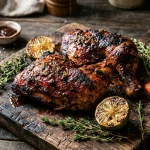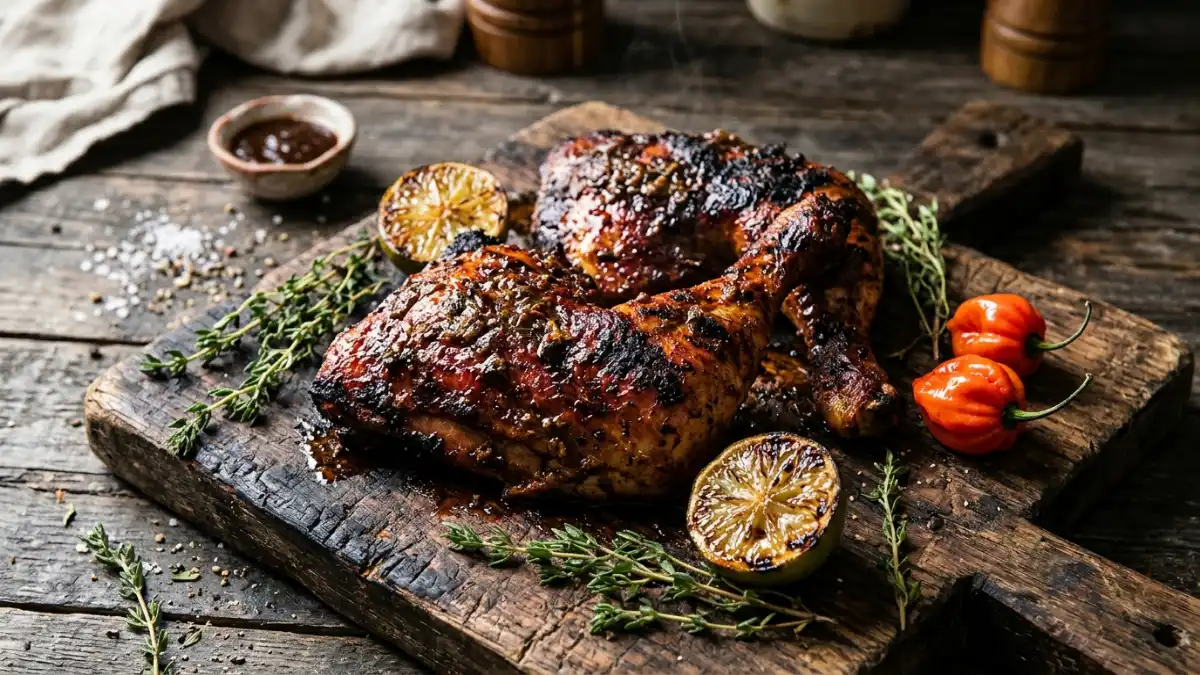
Quick Answer: Authentic Jamaican jerk chicken gets its signature flavor from a wet marinade of Scotch bonnets, fresh thyme, and crushed allspice berries, slow-smoked over indirect heat until charred and juicy.
Authentic Jamaican jerk chicken delivers a bold collision of aromatic spice, herbal freshness, fiery chili heat, and deep wood smoke. The iconic flavor starts with a vibrant wet paste made from whole allspice berries (pimento), fresh thyme, scallions, and Scotch bonnet peppers that deeply marinates bone-in chicken before hitting the grill. By using a simple two-zone charcoal setup, you can easily replicate the charred, tender results of an authentic Jamaican jerk pit right in your own backyard.
Friendly Recipe Testing Note (Rewritten for Reader Trust)
A Quick Note from Our Kitchen: This recipe is modeled directly after traditional island jerk-pit techniques and proven barbecue science. For the best flavor penetration and juiciness, let the chicken marinate for at least 12 to 24 hours before firing up the grill!
Authentic Jamaican Jerk Chicken Recipe Card
A traditional Jamaican jerk chicken recipe featuring a vibrant scallion, allspice, and Scotch bonnet marinade, cooked over indirect charcoal heat with allspice smoke.
- Yield: 6 servings
- Prep Time: 25 minutes
- Marinating (Inactive Time): 12 to 24 hours
- Cook Time: 45 to 55 minutes
- Resting Time: 10 minutes
- Total Elapsed Time: 13 hours 20 minutes to 25 hours 30 minutes
- Required Equipment: Food processor or high-speed blender, chef’s knife, cutting board, nitrile gloves, large non-reactive glass baking dish or heavy-duty gallon zip-top bag, charcoal kettle grill (or gas grill equipped for indirect heat), digital instant-read thermometer, long-handled grill tongs.
Ingredients
The Wet Jerk Marinade
- 6 medium scallions (green and white parts), roughly chopped (approx. 100 g)
- 3 to 4 fresh Scotch bonnet peppers, stems removed (approx. 45 g; substitute habanero peppers if unavailable)
- 4 medium garlic cloves, peeled
- 1 medium yellow onion, roughly chopped (approx. 150 g)
- 2 tbsp fresh Jamaican thyme leaves, stripped from stems (approx. 6 g)
- 2 tbsp whole allspice berries (pimento), freshly ground or crushed coarse (approx. 14 g)
- 1 piece fresh ginger, peeled and sliced (2-inch / 5-cm piece, approx. 25 g)
- 1 tbsp dark brown sugar, packed (approx. 14 g)
- 1 tbsp kosher salt (Diamond Crystal, approx. 10 g; if using Morton kosher salt, use 1.5 tsp)
- 1 tsp freshly cracked black pepper (approx. 3 g)
- 0.5 tsp ground cinnamon (approx. 1.5 g)
- 0.5 tsp freshly grated whole nutmeg (approx. 1.5 g)
- 0.25 cup fresh lime juice (from 2 medium limes, approx. 60 ml)
- 0.25 cup dark soy sauce (approx. 60 ml)
- 2 tbsp neutral cooking oil (canola, vegetable, or avocado oil, approx. 30 ml)
The Chicken
- 4 lbs (approx. 1.8 kg) bone-in, skin-on chicken quarters, drumsticks, or thighs, trimmed of excess hanging fat and skin
Grill Aromatics & Smoking Setup
- 2 cups pimento wood chips (allspice wood) or sweet applewood/pecan wood chips, soaked in water for 30 minutes and drained
- 1 tbsp neutral high-smoke-point oil for oiling grill grates
Instructions
- Prepare the chicken: Pat the chicken pieces thoroughly dry with paper towels. Using a sharp paring knife, cut two to three shallow, diagonal slashes (about 0.25-inch deep) into the thickest parts of the meat through the skin. This allows the dense marinade to penetrate deeply into the muscle tissue. Place the chicken into a large non-reactive dish or a heavy-duty gallon zip-top bag.
- Blend the wet marinade: Wear nitrile gloves when handling the Scotch bonnet peppers. In the bowl of a food processor or blender, combine the scallions, Scotch bonnet peppers, garlic cloves, chopped onion, thyme leaves, ground allspice berries, sliced ginger, dark brown sugar, kosher salt, black pepper, cinnamon, nutmeg, lime juice, dark soy sauce, and neutral oil. Pulse until a coarse, pulpy paste forms—it should not be completely liquefied.
- Marinate the chicken: Pour the marinade over the chicken, reserving 0.25 cup in a separate airtight container in the refrigerator if you wish to use it for basting later. Massage the marinade thoroughly over all surfaces, working it into the shallow cuts. Seal the bag or cover the dish tightly with plastic wrap. Refrigerate for at least 12 hours, up to 24 hours. (Do not exceed 24 hours, as acid and salt will break down the exterior meat texture.)
- Set up the grill for two-zone cooking: Arrange charcoal on one side of your kettle grill, leaving the other side empty to create direct (hot) and indirect (cooler) heat zones. Light the coals. Aim for an ambient indirect grill temperature of 325°F to 350°F (163°C to 177°C) with the lid closed. Place drained wood chips directly onto the glowing coals (or inside a foil smoke packet if using gas). Lightly oil the grill grate using tongs and an oiled paper towel.
- Cook over indirect heat: Remove the chicken from the marinade, shaking off excess thick solids so they do not scorch bitter. Discard the used bag marinade. Place the chicken skin-side up on the cooler, indirect side of the grill, away from direct coals. Close the grill lid with the vent positioned directly over the chicken to draw smoke across the meat.
- Smoke and render: Cook over indirect heat for 35 to 45 minutes, maintaining the grill temperature around 325°F–350°F. Turn the chicken once halfway through for even heat exposure.
- Sear and crisp: Once the internal temperature reaches approximately 155°F (68°C), move the chicken pieces over to the direct-heat side of the grill. Sear skin-side down for 2 to 4 minutes, watching closely to prevent flare-ups, until the skin develops crisp, charred edges without burning black.
- Verify doneness: Transfer the chicken to a clean platter. Insert a digital meat thermometer into the thickest part of the meat without contacting bone. The internal temperature must reach a minimum of 165°F (74°C); for bone-in thighs and legs, cooking to 175°F–180°F (79°C–82°C) yields significantly juicier, tender results as connective tissue breaks down.
- Rest and serve: Allow the chicken to rest uncovered for 8 to 10 minutes before carving or serving, allowing moisture to redistribute throughout the meat.
Ingredient Notes and Functional Substitutions
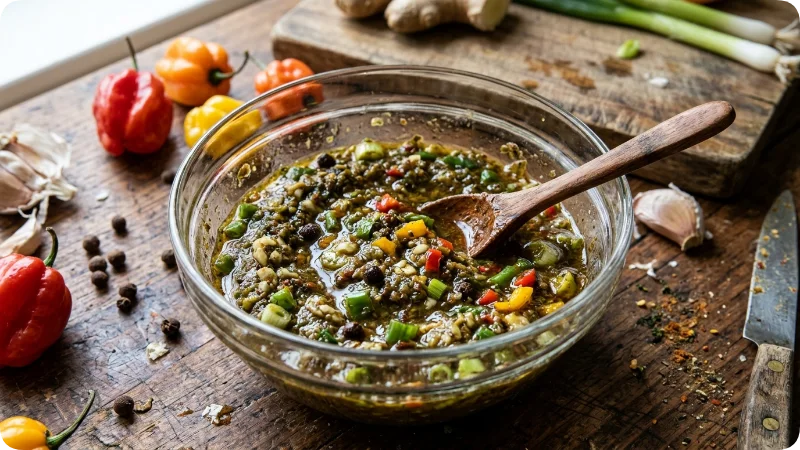
- Scotch Bonnet Peppers: The authentic backbone of Jamaican jerk, providing tropical sweetness alongside 100,000–350,000 Scoville Heat Units. If unavailable, use fresh habanero peppers at a 1:1 ratio; they share a similar botanical branch and heat intensity, though slightly less floral. For a milder heat, remove the seeds and white inner membranes before blending; the heat resides primarily in the placenta.
- Allspice (Pimento): Use whole allspice berries and grind them coarse in a spice grinder or mortar just before blending. Pre-ground commercial allspice loses volatile aromatics quickly during storage. Do not substitute mixed pumpkin pie spice or cloves alone; whole pimento has a distinctive resinous, peppery wood note that defines jerk.
- Fresh Thyme: English or French broadleaf thyme works well, but fresh leaves are required. Dried thyme lacks the essential oils needed to anchor the wet paste and imparts a dusty aftertaste when grilled over open charcoal.
- Soy Sauce: Dark soy sauce provides deep browning, savory glutamates, and color. If using regular all-purpose soy sauce, reduce added salt by half a teaspoon to avoid over-salting.
Before You Begin: Prep & Setup Timeline
- 24 Hours Out: Blend the marinade, score the chicken, and begin marinating in the refrigerator.
- 1 Hour Out: Soak your wood chips in clean water for at least 30 minutes so they smolder rather than catch fire instantly.
- 45 Minutes Out: Remove the chicken from the refrigerator to sit at ambient room temperature briefly, which reduces thermal shock on the grill grate.
- 30 Minutes Out: Light the charcoal chimney. Ensure you have clean indirect-zone grill space and that your thermometer battery is charged.
How to Make It: Critical Stages & Decisions
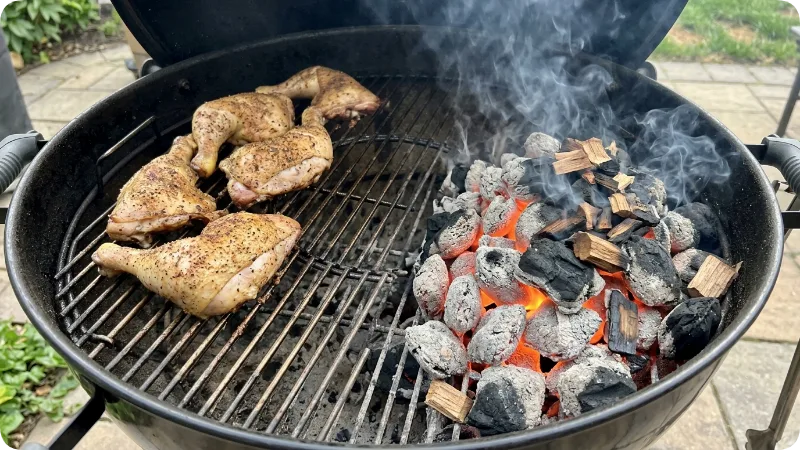
Blend the wet marinade, score and marinate the chicken for 12 to 24 hours, smoke over two-zone heat at 325°F, then finish with a direct sear until the internal temperature reaches at least 165°F.
- Why Scoring Matters: Chicken skin acts as a protective barrier that prevents moisture loss, but it also deflects water-soluble marinade elements. Shallow slashes allow the allspice, alliums, and capsaicin to penetrate directly into the leg and thigh muscles.
- Managing Solids on the Grill: Jerk marinade contains coarse onion, garlic, and scallion pulp. Wipe off excess exterior clumps before laying meat on the grates. While a light coating creates flavorful char, thick clumps over direct heat burn into bitter carbon rather than caramelizing.
- Indirect Heat First, Sear Last (Reverse Sear): Smoking the chicken on the cooler side allows the fat under the skin to render gradually and the meat to absorb hardwood smoke without burning. Moving the chicken to direct heat only at the final stage guarantees crisp skin and deep color without an undercooked interior.
Tips and Troubleshooting
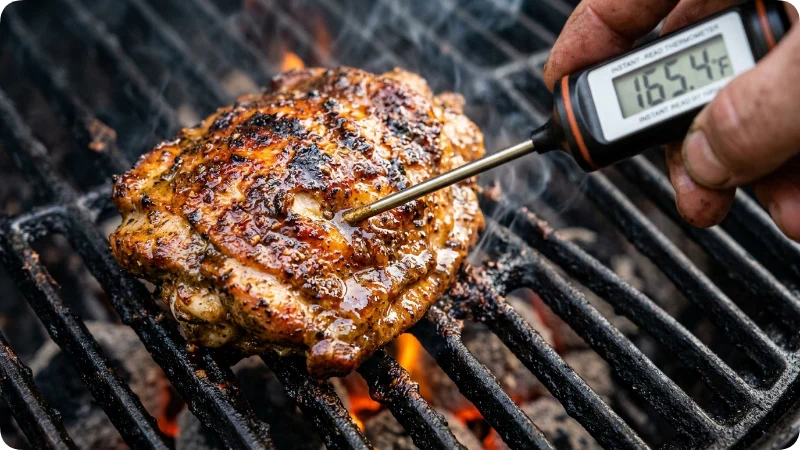
- Problem: The exterior is black and charred, but the meat near the bone is undercooked or bloody.
- Cause: Cooking directly over live coals at excessive heat, causing sugars in the marinade to burn before interior heat transfer occurs.
- Prevention: Strict adherence to a two-zone fire. Never place cold chicken directly over radiant flames for prolonged periods.
- Safe Fix: Move the chicken immediately to the indirect side, close the lid, and let it finish cooking via convective heat until the internal temperature registers at least 165°F (74°C). If the grill is out of fuel, transfer to a 350°F (177°C) oven.
- Problem: Skin is rubbery rather than crisp.
- Cause: Trapped steam or failure to execute the final high-heat direct searing stage.
- Prevention: Pat chicken dry before marinating, leave sufficient spacing between pieces on the grill (do not crowd), and allocate 3 to 4 minutes over direct heat at the end.
- Problem: The marinade burns the cook’s hands or eyes during preparation.
- Cause: Aerosolized capsaicin and direct contact with Scotch bonnet oils.
- Prevention: Wear disposable gloves; do not touch your face. Wash knife, blender container, and board with hot soapy water immediately.
Alternative Methods: Oven to Broiler
If an outdoor charcoal grill is not an option, you can replicate jerk chicken using a conventional indoor oven:
- Preheat your oven to 375°F (190°C). Fit a wire cooling rack inside a rimmed baking sheet lined with aluminum foil.
- Arrange the marinated chicken skin-side up on the wire rack, leaving space between pieces to allow hot air circulation.
- Roast for 40 to 45 minutes until the internal temperature reaches 160°F (71°C).
- Switch the oven to high broil. Broil the chicken 6 to 8 inches away from the heating element for 3 to 5 minutes, observing continuously, until the skin blisters and chars attractively. Check that the final internal temperature reaches at least 165°F (74°C).
Serving Suggestions
Serve authentic jerk chicken hot off the cutting board, accompanied by:
- Traditional Jamaican Rice and Peas: Long-grain rice simmered in coconut milk with kidney beans, scallions, and thyme.
- Fried Plantains: Ripe, sweet yellow plantains sliced and fried until caramelized to counter the heat of the Scotch bonnets.
- Jamaican Festival: Sweet, deep-fried cornmeal dumplings that absorb jerk pan juices.
- Crisp Cabbage Slaw: A light vinegar-based slaw to provide acidity and palate cleansing against rich, smoked dark meat.
Storage, Freezing, and Reheating
- Refrigerator Storage: Store cooked, cooled chicken in an airtight container within 2 hours of cooking. Keep refrigerated for up to 4 days.
- Freezing: Wrap cooked individual pieces in plastic wrap, then pack into a heavy-duty freezer bag for up to 3 months. Thaw completely overnight in the refrigerator before reheating.
- Reheating for Best Texture: Avoid the microwave, which softens the skin and toughens dark meat. Preheat an oven or air fryer to 350°F (177°C). Place chicken on a baking sheet and heat for 12 to 15 minutes (or 6 to 8 minutes in an air fryer) until warmed through to an internal temperature of 165°F (74°C).
FAQs
Can I make authentic jerk chicken with boneless, skinless chicken breasts?
You can, but bone-in, skin-on thighs or leg quarters are traditional and far less prone to drying out over charcoal. If using chicken breasts, reduce the marinating time to 4 to 6 hours (lime juice can make breast meat mealy) and cook indirectly until the meat reaches 160°F (71°C), letting carryover heat bring it to 165°F (74°C).
What if I cannot find pimento wood chips for smoking?
Authentic jerk pits in Boston Bay, Jamaica, burn sweet pimento wood. If you cannot source pimento wood chips or chunks online, mix sweet applewood or pecan wood chips with a tablespoon of dry allspice berries thrown directly onto the coals to approximate the fragrance.
Is it safe to baste the chicken with the marinade?
Only if you reserved an unpolluted portion of marinade before adding the raw chicken. Never baste cooked meat with marinade that has come into contact with raw poultry unless that liquid is boiled vigorously for at least 5 minutes in a saucepan first.
Can I marinate the chicken for longer than 24 hours?
It is not recommended. The acid from the lime juice and the enzymes in the fresh onions will begin to denature the surface protein bonds, turning the outer layer of the chicken mushy rather than tender.
Final Summary
This authentic Jamaican jerk chicken recipe delivers fiery heat, herbal aromatics, and deep wood smoke using a traditional marinade of Scotch bonnets, fresh thyme, and freshly crushed allspice berries. Mastered through a two-zone indirect grilling technique, it yields crisp, caramelized skin and succulent meat cooked safely to 165°F.

Leo Campbell is the founder, recipe developer, and culinary voice behind Recipe Morsil. With nearly a decade of hands-on home cooking and professional baking experience, Leo tests every recipe multiple times to ensure reliable, fail-proof results in real home kitchens. When he’s not fine-tuning spices or testing cook times, he’s helping home cooks build confidence one bite at a time.
Connect with Leo via [Instagram/Email] or explore his verified recipes below.