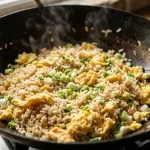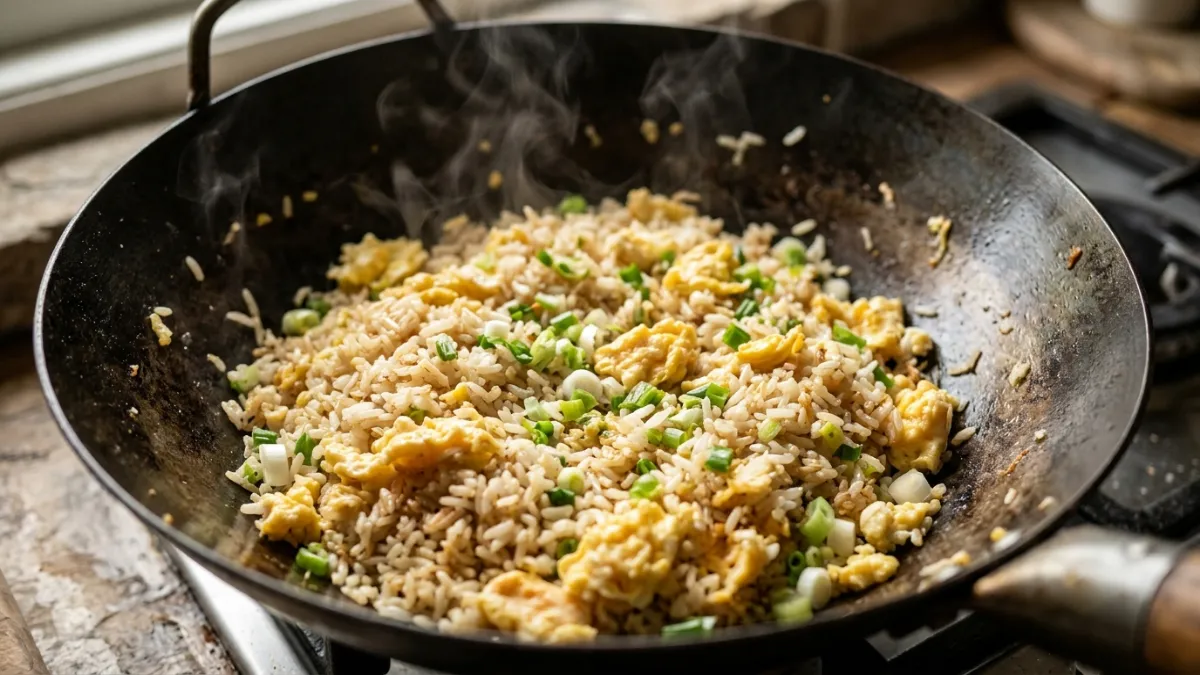
Quick Answer: The secret to the best fried rice is using a blazing-hot skillet and chilled day-old rice to achieve that authentic, restaurant-style flavor in just 15 minutes.
Making exceptional fried rice at home comes down to grain separation, heat control, and moisture management. This classic recipe uses chilled long-grain jasmine rice, beaten eggs, scallions, and a balanced savory sauce to deliver distinct, lightly charred grains without turning mushy or greasy. Using high residential heat and a properly preheated wok or heavy skillet, you can produce a restaurant-quality meal in under 15 minutes.
Recipe Testing Disclosure: This recipe reflects culinary synthesis based on traditional Cantonese wok principles and published stir-fry techniques. While built on established food-science benchmarks, this exact formulated configuration is an untested editorial proposal that has not undergone an in-house test kitchen trial.
Classic Savory Egg Fried Rice
A quick, high-heat stir-fry featuring separated grains, soft-curd eggs, toasted aromatics, and savory soy seasoning.
- Yield: Approximately 4 cups cooked fried rice
- Servings: 2 generous main servings or 4 side servings (approx. 1 to 2 cups per serving)
- Prep Time: 10 minutes
- Cook Time: 8 minutes
- Inactive Time (Chilling Rice): 12 hours (minimum 4 hours)
- Total Elapsed Time: 18 minutes (excluding advance rice chilling)
- Essential Equipment: 12-to-14-inch carbon steel wok or 12-inch heavy cast-iron skillet; sturdy metal or heat-safe wooden spatula
Ingredients
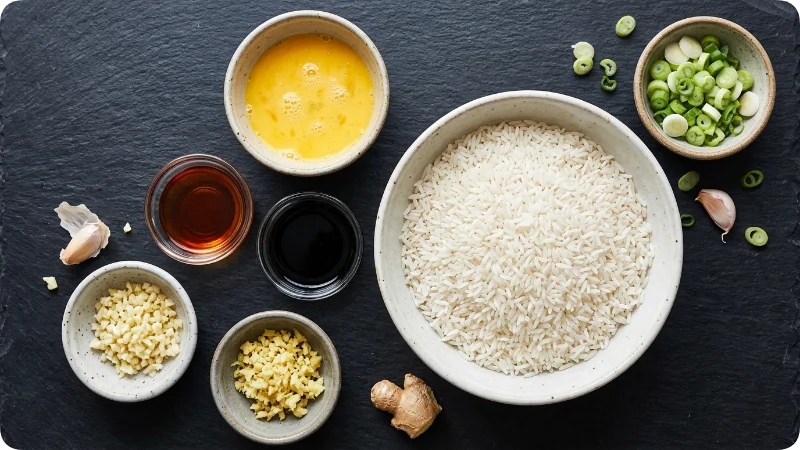
Sauce Mixture
- 1 tablespoon light (regular) soy sauce
- 1 teaspoon dark soy sauce (for rich color and caramel undertones)
- 1 teaspoon toasted sesame oil
- 1/4 teaspoon ground white pepper
- 1/4 teaspoon granulated sugar
- 1/4 teaspoon fine sea salt
Eggs
- 3 large whole eggs, beaten until uniform
- 1/2 teaspoon neutral high-smoke-point oil (avocado, peanut, or canola oil)
- 1 pinch fine sea salt
Stir-Fry Base
- 4 cups cooked jasmine rice, chilled overnight (approx. 500g / 17.5 oz cooked weight; gently broken up with clean hands to eliminate large clumps)
- 2 tablespoons neutral high-smoke-point oil, divided (1 tablespoon for rice, 1 tablespoon for aromatics)
- 2 cloves garlic, finely minced (approx. 1 tablespoon)
- 1 teaspoon fresh ginger, peeled and finely grated or minced
- 3 medium scallions (green onions), thinly sliced; white/light-green parts separated from dark-green tops
Instructions
Prep the Sauce and Eggs
- Whisk the sauce and eggs: In a small ramekin, stir together light soy sauce, dark soy sauce, toasted sesame oil, white pepper, sugar, and fine sea salt until the sugar dissolves. In a separate small bowl, whisk the eggs with 1/2 teaspoon neutral oil and a pinch of salt. Set both next to your stove.
- Scramble the eggs: Heat a 14-inch flat-bottom wok or heavy 12-inch cast-iron skillet over high heat until wisps of smoke appear. Drizzle 1/2 teaspoon neutral oil down the sides. Pour in the beaten eggs; they will puff immediately. Swirl quickly with your spatula for 20 to 30 seconds until soft curds form and the eggs are roughly 85% set (still slightly glossy). Slide the eggs out onto a clean plate and set aside.
Sear and Fry the Rice
- Sear the rice: Return the wok to high heat. Add 1 tablespoon neutral oil and swirl to coat the surface. Once the oil shimmers, add the chilled, separated rice. Spread the grains across the bottom and sloped sides of the pan in an even layer. Let the rice sear undisturbed for 45 to 60 seconds until you hear sharp crackling sounds, allowing moisture to evaporate and edges to turn lightly crisp.
- Toss and break: Stir-fry vigorously for 2 to 3 minutes, breaking apart any remaining clusters with the edge of your spatula. Toss the grains repeatedly so the residual oil coats each grain individually and the rice heats through thoroughly.
Season and Assemble
- Bloom the aromatics: Push the rice to the perimeter of the wok, clearing a bare space in the center. Add the remaining 1 tablespoon neutral oil to this cleared well. Drop in the minced garlic, minced ginger, and the white/light-green scallion slices. Stir the aromatics within the well for 15 to 20 seconds until fragrant, taking care not to burn the garlic, then toss the rice back into the center to incorporate them.
- Season the grains: Drizzle the sauce mixture around the hot perimeter of the wok rather than pouring it straight onto the rice. This flash-vaporizes excess liquid against the hot metal and caramelizes the sugars before the sauce coats the grains. Toss continuously for 1 to 2 minutes until every grain takes on an even, light-amber hue.
- Reincorporate eggs and finish: Return the cooked eggs to the wok, using the edge of the spatula to break them into bite-sized curds as you toss. Turn off the heat. Scatter the sliced dark-green scallion tops across the pan and fold together for 30 seconds until warmed through by residual heat. Transfer immediately to warm serving bowls and serve hot.
Ingredient Notes and Functional Substitutions
- Jasmine Rice: The optimal baseline for fried rice. Its medium-to-long grain structure contains balanced amylose levels, meaning it firms up when chilled and resists turning gummy during high-heat tossing. Substitution: Long-grain white rice or basmati can be substituted 1:1. Avoid short-grain glutinous or sushi rice for this specific recipe, as high surface starch causes excessive clumping and mushiness under high heat.
- Day-Old Chilled State: Refrigeration retrogrades the starch within the cooked grains, hardening the exterior and drying out surface moisture. If using fresh rice in an emergency, spread freshly cooked rice onto a wide, rimmed baking sheet and chill it uncovered in the freezer for 15 to 20 minutes to evaporate surface water quickly before frying.
- Neutral High-Smoke-Point Oil: Avocado oil, peanut oil, canola oil, or refined soybean oil withstand high searing temperatures (400°F–450°F / 204°C–232°C) without breaking down or burning. Do not substitute butter or unrefined olive oil for the main cooking fat; their low smoke points will scorch and impart acrid flavors.
- Soy Sauce Balance: Light soy sauce provides salinity and umami; dark soy sauce provides viscous body, rich color, and faint sweetness. If dark soy sauce is unavailable, replace it with an additional 1 teaspoon of light soy sauce plus 1/8 teaspoon molasses or dark brown sugar.
Before You Begin: The Moisture Rule
Moisture is the primary enemy of distinct fried rice grains. When excess water hits hot oil, it boils rather than fries, steaming the rice into a wet, sodden mass.
- De-clumping: Cold rice straight from the refrigerator often forms brick-like clumps. Spend two minutes gently breaking the grains apart between clean, dry fingers before the rice enters the hot pan.
- Prep Mise en Place: High-heat stir-frying moves rapidly; the entire cooking phase takes less than 8 minutes. Place your pre-mixed sauce, whisked eggs, minced aromatics, and partitioned scallions in small prep bowls within arm’s reach of your burner before lighting the flame.
How to Master Wok Technique at Home
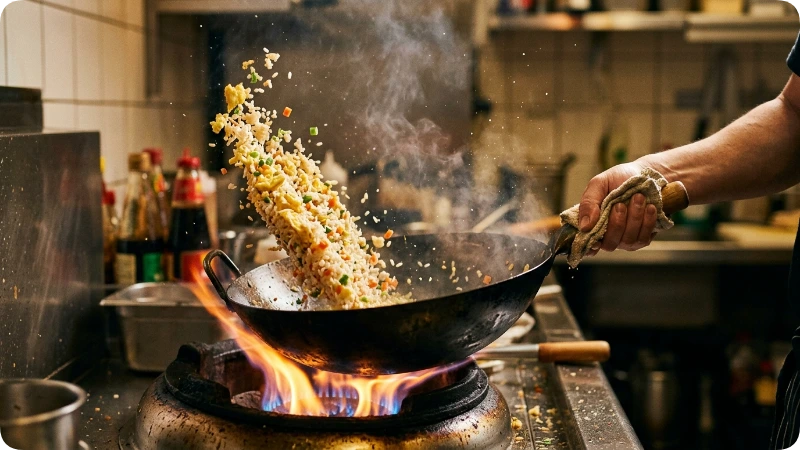
- Achieve Proper Pan Heat: A properly preheated pan is non-negotiable. Whether using carbon steel or cast iron, let the pan preheat over medium-high to high heat until a faint wisp of smoke rises from the metal before adding oil. This prevents the proteins in the egg and starches in the rice from adhering to the pan.
- Manage Pan Crowding: This recipe is scaled to 4 cups of cooked rice, which is the functional limit for standard residential burners and 12-to-14-inch home cookware. Overloading the pan drops the surface temperature precipitously, resulting in steamed, soggy rice. If cooking for a larger group, execute the recipe in two distinct batches rather than doubling the volume in a single pan.
- The Perimeter Sauce Drizzle: Never dump liquid seasoning directly onto a pile of rice. By drizzling the sauce down the sloping, hot steel sides of the wok, the soy sauce instantly reduces and caramelizes against the metal, infusing the dish with subtle charred depth without soaking the rice grains.
Troubleshooting Common Mistakes
- Problem: The rice turns mushy, clumpy, or wet.
- Cause: Fresh, warm rice was used, or the pan was overloaded, trapping steam.
- Prevention: Use thoroughly chilled, day-old rice and adhere strictly to the 4-cup batch limit for residential stovetops.
- Fix: Cannot be reversed in the pan. Immediately spread the rice onto a flat sheet pan and let steam escape; avoid further stirring in the wok, which mashes fragile starch granules.
- Problem: Grains stick aggressively to the bottom of the pan.
- Cause: The wok or skillet was not preheated adequately before adding oil, or cold oil was heated too slowly.
- Prevention: Follow the classic long yau technique: heat the dry wok until smoking, add room-temperature oil, swirl to coat, and begin cooking immediately.
- Fix: Allow the stuck layer to crisp without moving it; once browned and dry, it will release naturally from seasoned steel.
- Problem: Garlic tastes bitter or scorched.
- Cause: Garlic was added at the start of cooking or exposed to direct bare-metal heat for too long.
- Prevention: Add garlic and ginger to the center well only after the rice has been seared, blooming them for no more than 15 to 20 seconds before blending them into the grain mass.
- Fix: Discard burned garlic bits before tossing if caught early; severe scorching requires starting the aromatic step over.
Variations and Add-Ins
- Cooked Proteins (Chicken, Pork, or Shrimp): Add 1 cup (approx. 150g) of previously cooked, diced chicken breast, char siu pork, or seared shrimp. Fold the protein into the wok during Step 6 alongside the sauce to reheat it through without overcooking or adding water to the pan.
- Vegetable Additions (Peas and Carrots): If using frozen peas and finely diced carrots, measure 1/2 cup total. Thaw completely and pat thoroughly dry with paper towels to eliminate excess surface ice and moisture. Add them along with the aromatics in Step 5.
- Kimchi Fried Rice: Fold in 1/2 cup well-drained, finely chopped aged kimchi alongside 1 tablespoon gochujang during Step 5. Reduce the light soy sauce in the main sauce mix to 1/2 tablespoon to balance sodium levels.
Safe Storage, Cooling, and Reheating
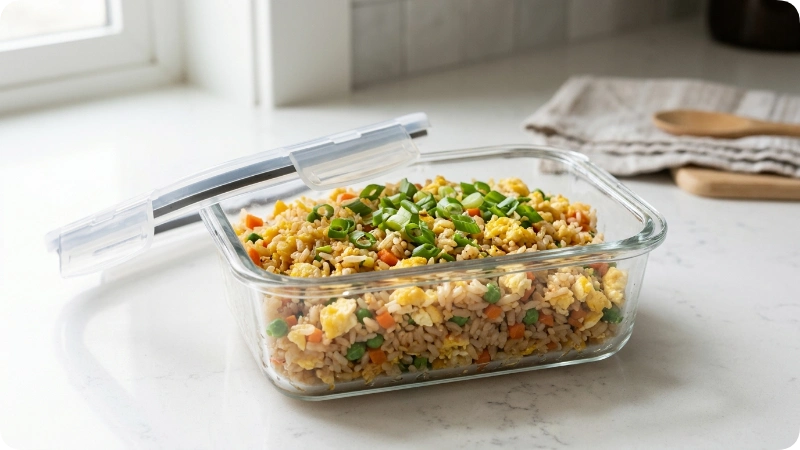
Cooked rice carries potential risks of Bacillus cereus, a bacterium capable of producing heat-stable toxins if left at ambient temperatures. Adhere to safe cooling and storage protocols:
- Cooling: Never leave cooked rice sitting at room temperature for more than 1 hour. Cool freshly cooked rice rapidly by spreading it thinly on clean baking trays before refrigerating.
- Refrigeration: Store leftover fried rice in an airtight, shallow container in the refrigerator (at or below 40°F / 4°C) for up to 3 to 4 days.
- Freezing: Fried rice freezes effectively for up to 2 months. Pack individual portions tightly into freezer-safe containers or freezer bags, pressing out excess air to limit freezer burn. Thaw overnight in the refrigerator before reheating.
- Reheating: Reheat rice thoroughly until steaming hot throughout, reaching an internal temperature of at least 165°F (74°C). Reheat on the stovetop over high heat in a lightly oiled skillet with 1 teaspoon of water to restore moisture, or microwave in a covered bowl for 1.5 to 2 minutes, stirring halfway through.
FAQs
Can I make this recipe with brown rice?
Yes. Use cooked, day-old long-grain brown rice. Brown rice contains more dietary fiber and a firmer bran layer, resulting in distinct grains with a nuttier profile. It requires an additional 30 to 45 seconds of stir-frying to heat thoroughly.
What if I don’t own a wok?
A 12-inch heavy cast-iron skillet or heavy-gauge stainless steel pan is a reliable alternative. A cast-iron pan holds exceptional heat, replicating the searing capability of carbon steel, though tossing requires a flat spatula rather than pan-flipping due to weight.
Why does my fried rice look pale compared to restaurant versions?
Restaurant fried rice relies on dark soy sauce, high-temperature caramelization, and seasoned wok seasoning to achieve an amber tone. Ensure you do not omit the dark soy sauce, which contributes deep color without excessive saltiness.
Can I make fried rice without day-old rice?
Yes. Cook fresh jasmine rice using slightly less water than usual (a 1:1.1 or 1:1.2 rice-to-water ratio by volume). Once cooked, immediately spread the hot grains thinly across a rimmed baking sheet and place it under a running kitchen fan or inside the refrigerator for 20 minutes to evaporate surface moisture.
Summary
This guide provides a classic Cantonese-style fried rice recipe focused on grain separation, moisture control, and home wok technique. Using cold day-old jasmine rice, aromatics, and a balanced soy seasoning, the article details proper preheating, pan-crowding prevention, food safety storage protocols for Bacillus cereus, and actionable troubleshooting for common stir-fry errors.

Leo Campbell is the founder, recipe developer, and culinary voice behind Recipe Morsil. With nearly a decade of hands-on home cooking and professional baking experience, Leo tests every recipe multiple times to ensure reliable, fail-proof results in real home kitchens. When he’s not fine-tuning spices or testing cook times, he’s helping home cooks build confidence one bite at a time.
Connect with Leo via [Instagram/Email] or explore his verified recipes below.