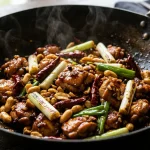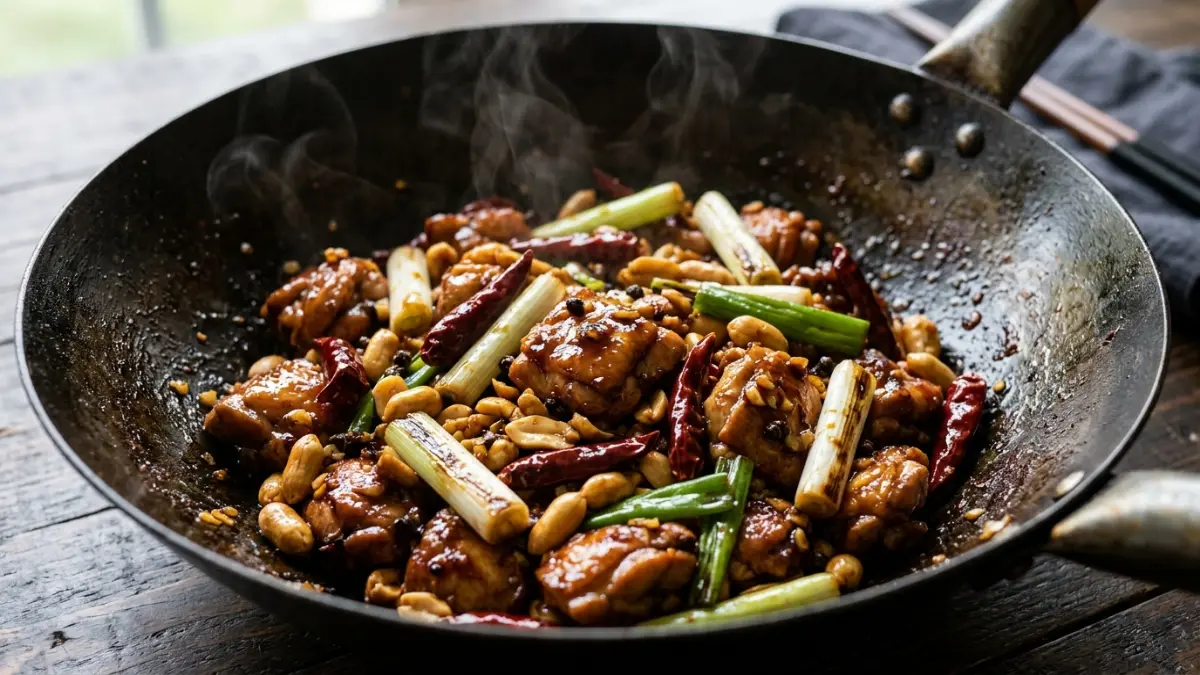
Quick Answer Authentic Sichuan Kung Pao Chicken relies on velveted chicken thighs, toasted dried chilis, floral peppercorns, and a fast high-heat wok toss with a balanced sweet, sour, and savory glaze.
Kung Pao Chicken (Gong Bao Ji Ding) balances tender seared chicken thighs, fragrant scorched chilis, floral Sichuan peppercorns, and crisp roasted peanuts in a complex sweet-sour-savory sauce. Known in Sichuan cuisine as a “lychee-flavored” dish, this stir-fry does not rely on heavy vegetable fillers or syrupy sauces; instead, it uses a quick marinade to lock in poultry juiciness and a rapid high-heat wok toss to produce a light, glossy glaze.
Recipe Testing Disclosure: This recipe is an untested editorial proposal derived from traditional Sichuan culinary ratios and published stir-fry science. While aligned with authoritative regional cooking standards, this exact synthesized configuration has not yet undergone formal multi-trial kitchen validation.
Classic Sichuan Kung Pao Chicken (Gong Bao Ji Ding)
Tender marinated chicken thigh cubes stir-fried with fragrant dried chilis, Sichuan peppercorns, scallions, and roasted peanuts in a rich Chinkiang vinegar sauce.
- Yield: Approximately 3 cups prepared stir-fry
- Servings: 3 to 4 servings (approx. 3/4 cup per serving, served with steamed rice)
- Prep Time: 15 minutes
- Cook Time: 8 minutes
- Inactive Time (Marinating): 20 minutes
- Total Elapsed Time: 43 minutes
- Essential Equipment: 14-inch carbon steel wok or heavy 12-inch skillet; wire whisk or fork; small prep bowls; chef’s knife; cutting board
Ingredients
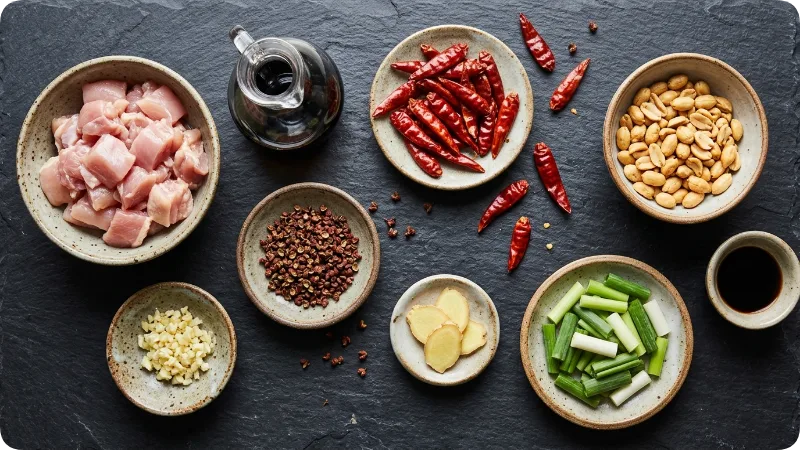
Chicken & Marinade
- 1 pound (454 g) boneless, skinless chicken thighs, trimmed of excess fat and cut into uniform 1/2-inch (1.3 cm) cubes
- 1 tablespoon Shaoxing wine (Chinese rice cooking wine)
- 1 tablespoon light (regular) soy sauce
- 1 1/2 teaspoons cornstarch
- 1/2 teaspoon fine sea salt
- 1 tablespoon cold water
Stir-Fry Sauce
- 1 1/2 tablespoons Chinkiang black vinegar
- 1 tablespoon light (regular) soy sauce
- 1 teaspoon dark soy sauce (for rich color)
- 1 tablespoon granulated sugar
- 1 teaspoon toasted sesame oil
- 1 teaspoon cornstarch
- 2 tablespoons unsalted chicken stock or water
Aromatics & Stir-Fry Base
- 2 tablespoons neutral high-smoke-point oil (peanut oil, avocado oil, or canola oil), divided (1 1/2 tablespoons for searing, 1/2 tablespoon for aromatics)
- 10 to 12 whole dried Chinese red chilis (such as Facing Heaven or Er Jing Tiao), snipped in half crosswise, seeds shaken out and discarded
- 1 teaspoon whole Sichuan peppercorns
- 3 cloves garlic, thinly sliced (approx. 1 tablespoon)
- 1/2 inch (1.3 cm) fresh ginger root, peeled and thinly sliced into coins (approx. 1 tablespoon)
- 4 medium scallions (green onions), white and light-green parts only, cut into 1/2-inch batons to match the chicken size
- 1/2 cup (70 g) unsalted roasted peanuts (skins removed)
Instructions
- Marinate the chicken: In a medium bowl, combine the diced chicken thighs with the Shaoxing wine, light soy sauce, salt, and water. Stir firmly with your fingers until the liquid is fully absorbed into the meat. Sprinkle 1 1/2 teaspoons of cornstarch evenly over the chicken and massage until a light, silky coating forms with no dry white spots. Let sit at room temperature for 20 minutes.
- Mix the sauce: In a small bowl, whisk together the Chinkiang black vinegar, light soy sauce, dark soy sauce, sugar, toasted sesame oil, 1 teaspoon cornstarch, and 2 tablespoons chicken stock or water until the sugar dissolves. Set next to the stovetop.
- Sear the chicken: Heat a 14-inch carbon steel wok or heavy 12-inch skillet over high heat until wisps of smoke appear. Add 1 1/2 tablespoons of neutral oil and swirl to coat the surface. Add the marinated chicken in an even, single layer. Let it sear undisturbed for 60 to 90 seconds until the bottom edges turn opaque and lightly browned. Stir-fry vigorously for an additional 2 minutes until the cubes separate and are roughly 80% cooked through. Transfer the chicken and any juices to a clean plate and set aside.
- Bloom the chilis and peppercorns: Lower the heat under the wok to medium. Add the remaining 1/2 tablespoon of neutral oil. Immediately drop in the halved dried chilis and whole Sichuan peppercorns. Stir continuously for 25 to 35 seconds until the chilis darken to a rich, glossy burgundy-red and become fragrant. Do not allow them to turn black.
- Add the aromatics: Increase the heat to high. Add the sliced garlic, sliced ginger, and sliced scallion batons to the wok. Stir-fry with the chilis and peppercorns for 20 to 30 seconds until the garlic is fragrant and the scallions soften slightly.
- Reincorporate the chicken: Return the seared chicken and accumulated juices back into the wok. Stir-fry for 1 minute over high heat to blend the aromatics into the meat. Verify that the largest chicken cube registers at least 165°F (74°C) on an instant-read digital food thermometer.
- Glaze with sauce: Give the sauce mixture a quick stir with a fork to redisperse the settled cornstarch, then pour it directly into the center of the wok. Toss constantly for 30 to 45 seconds as the sauce simmers, thickens, and clings to each piece of chicken in a glossy coat.
- Fold in peanuts and serve: Turn off the heat. Scatter the roasted peanuts into the wok, toss twice to distribute evenly, and transfer immediately to a wide serving platter. Serve hot alongside steamed jasmine or white rice.
Ingredient Notes and Functional Substitutions
- Boneless, Skinless Chicken Thighs: Chicken thighs have more connective tissue and intramuscular fat than chicken breast, allowing them to remain tender and moist under intense wok heat without drying out. Substitution: Boneless chicken breast can be used 1:1, but reduce the initial searing time by approximately 45 seconds to avoid overcooking the lean white meat.
- Chinkiang Black Vinegar (Zhenjiang): Made from fermented glutinous rice, this dark vinegar provides a mellow, malt-tinged acidity with slight sweetness. Substitution: If unavailable, combine equal parts unseasoned rice vinegar and balsamic vinegar (e.g., 2 teaspoons rice vinegar + 1 teaspoon balsamic vinegar) to approximate the depth and acidity.
- Dried Red Chilis & Sichuan Peppercorns: The pair forms the base of Sichuan mala (numbing-hot) flavoring. Dried Chinese chilis provide fragrant heat when bloomed in warm oil. Shaking out the seeds reduces sharp bitterness and regulates heat levels. Substitution: Dried Arbol chilis can replace Chinese chilis, though they pack higher heat, so consider reducing the count to 6 to 8 chilis. Sichuan peppercorns have no direct substitute; omit them if unavailable, but note the signature citrus-tingle profile will be absent.
- Shaoxing Wine: Provides savory complexity in the marinade. Substitution: Dry cooking sherry or dry white wine can be used 1:1. For an alcohol-free alternative, replace with unsalted chicken broth plus 1/4 teaspoon white rice vinegar.
Before You Begin: The Velvet Technique & Setup
High-heat stir-frying moves very quickly; from the first sizzle of chilis to the final peanut fold takes under 6 minutes of stove time.
- Velveting the Meat: Massaging liquid and cornstarch into the raw chicken creates a protective barrier. When dropped into hot oil, the cornstarch gelatinizes instantly, locking moisture inside the poultry fibers and giving the meat its characteristic restaurant-style tenderness.
- Arranging the Mise en Place: Group your ingredients into separate small dishes before lighting the stove:
- Dish 1: Marinated chicken
- Dish 2: Snipped chilis and Sichuan peppercorns
- Dish 3: Sliced garlic, sliced ginger, and cut scallion batons
- Dish 4: Whisked sauce bowl
- Dish 5: Roasted peanuts
How to Make It: Mastering Wok Heat and Timing
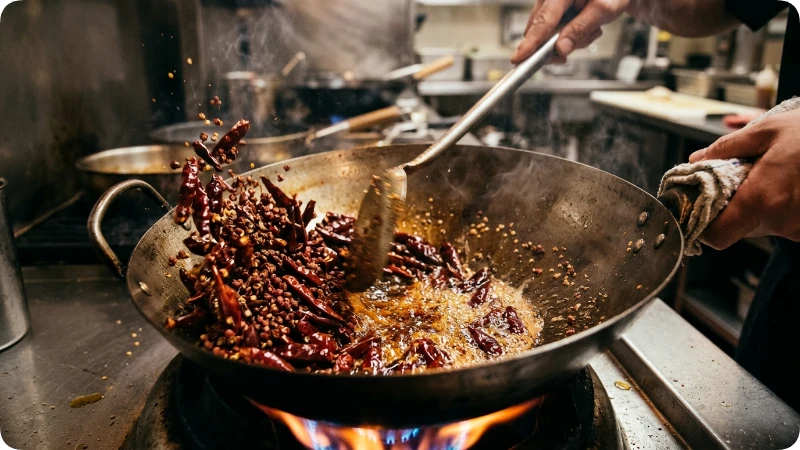
- Managing Oil Temperature for Chilis: Dried chilis and Sichuan peppercorns burn easily in scorched oil, imparting an acrid, bitter flavor that ruins the dish. Dropping the heat to medium before adding them allows their essential oils to infuse the fat safely before re-raising the heat for the wet aromatics.
- Preventing Sauce Clumping: Cornstarch naturally settles to the bottom of the sauce bowl while resting. Always remix the sauce slurry immediately before pouring it into the wok.
- The Timing of Peanuts: Add roasted peanuts only after extinguishing the burner. Folding them into the hot sauce off-heat ensures they retain their crisp crunch rather than absorbing moisture and becoming soggy.
Tips and Troubleshooting
- Problem: The dried chilis turned black and the dish smells scorched.
- Cause: Oil was too hot when the dried chilis were added, or they sat in the pan too long.
- Prevention: Reduce burner heat to medium before adding chilis and stir constantly; remove immediately once they turn burgundy.
- Fix: Discard the scorched chilis and burned oil, wipe the wok clean with dry paper towels, and begin Step 4 again with fresh oil and aromatics.
- Problem: The chicken released large amounts of liquid and boiled instead of searing.
- Cause: The wok was not heated sufficiently before adding the meat, or the pan was overloaded.
- Prevention: Ensure the dry wok is lightly smoking before adding oil, and maintain maximum heat during the initial sear. If doubling the recipe, sear the chicken in two separate batches.
- Fix: Remove the chicken with a slotted spoon, boil off the excess liquid in the wok over high heat until dry, add 1 teaspoon of oil, and return the chicken to finish searing.
- Problem: The sauce became gelatinous or broke into greasy pools.
- Cause: Too much cornstarch was used, or the sauce simmered too long over high heat, breaking down the starch chains.
- Prevention: Adhere to the measured 1 teaspoon of cornstarch in the sauce slurry and cook for only 30 to 45 seconds until just thickened.
- Fix: Whisk in 1 to 2 tablespoons of warm chicken stock or water over medium-low heat to loosen and re-stabilize the emulsion.
Variations and Add-Ins
- Takeout-Style Vegetables: Traditional Sichuan Kung Pao focuses strictly on chicken, scallions, and peanuts. If you prefer the American takeout-style profile, add 1/2 cup diced green bell peppers and 1/2 cup diced celery to the wok along with the garlic and ginger in Step 5.
- Tofu Kung Pao: Substitute 14 ounces (400 g) of extra-firm tofu for the chicken. Press the tofu dry between paper towels for 15 minutes, cut into 1/2-inch cubes, toss with 1 tablespoon cornstarch, and pan-fry in oil until golden and crisp on all sides before proceeding with Step 4.
- Shrimp Kung Pao: Use 1 pound (454 g) of peeled, deveined raw medium shrimp. Reduce the searing time in Step 3 to 1 to 2 minutes total until pink and just curled, then remove immediately to avoid rubbery overcooking.
Safe Storage, Cooling, and Reheating
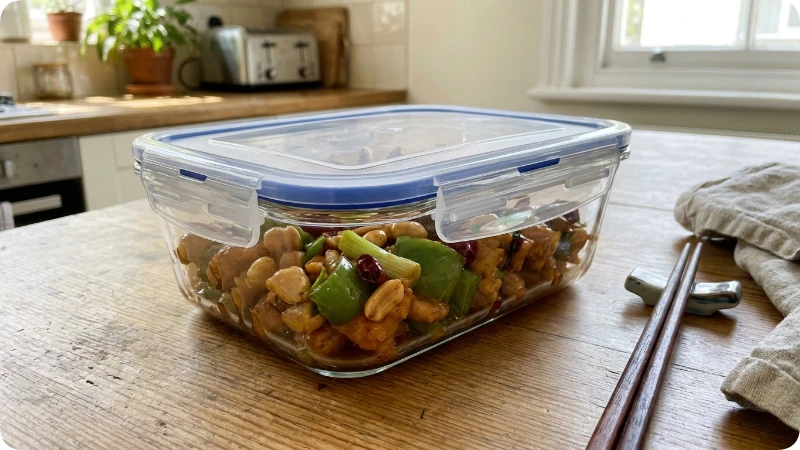
Stir-fried poultry dishes require careful handling to maintain safe food storage standards:
- Cooling: Transfer leftover Kung Pao Chicken from the hot wok into a wide, shallow container within 1 hour of cooking to allow rapid cooling. Do not let cooked poultry sit at room temperature for longer than 2 hours.
- Refrigeration: Store tightly covered in an airtight container at or below 40°F (4°C) for up to 3 to 4 days. Note that roasted peanuts will naturally soften over time in the refrigerator.
- Freezing: Freezing is not recommended for assembled Kung Pao Chicken. Cornstarch-bound sauces tend to weep water upon thawing, and peanuts will lose their crisp texture.
- Reheating: Reheat in a skillet or wok over medium heat with 1 to 2 tablespoons of water or chicken broth, tossing frequently until the chicken reaches a verified internal temperature of 165°F (74°C). Alternatively, microwave in a covered, microwave-safe bowl in 1-minute intervals at 70% power until steaming hot throughout.
FAQs
Are you supposed to eat the dried chilis and Sichuan peppercorns?
In traditional Sichuan dining, whole chilis and peppercorns are used primarily to infuse the cooking oil and aromatics with flavor. While edible, diners typically leave the whole dried chilis and woody peppercorn husks on the side of their plate.
Can I make this dish without alcohol?
Yes. Replace the Shaoxing wine in the marinade with an equal amount of unsalted chicken broth mixed with 1/4 teaspoon white rice vinegar.
Why does my chicken lack the restaurant-style silky texture?
Restaurant stir-fries rely on velveting massaging liquid into the meat before locking it in with a light coat of cornstarch. Omitting the cornstarch or skipping the 20-minute resting period allows natural juices to escape during high-heat cooking, resulting in tougher meat.
Can I use raw peanuts instead of roasted peanuts?
Yes, but raw peanuts must be fried first. Fry raw, skinless peanuts in 1 tablespoon of oil over medium-low heat for 3 to 4 minutes until light golden and fragrant, then drain and set aside to cool and crisp before using in Step 8.
Summary
This authentic Kung Pao Chicken recipe provides a classic Sichuan stir-fry featuring cubed chicken thighs, dried red chilis, Sichuan peppercorns, and roasted peanuts. Coated in a balanced Chinkiang vinegar-sugar glaze, the guide outlines starch velveting, heat control to prevent bitter burned chilis, food safety storage parameters, and practical troubleshooting for residential stovetops.

Leo Campbell is the founder, recipe developer, and culinary voice behind Recipe Morsil. With nearly a decade of hands-on home cooking and professional baking experience, Leo tests every recipe multiple times to ensure reliable, fail-proof results in real home kitchens. When he’s not fine-tuning spices or testing cook times, he’s helping home cooks build confidence one bite at a time.
Connect with Leo via [Instagram/Email] or explore his verified recipes below.