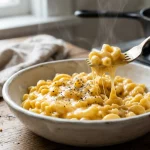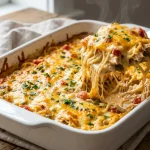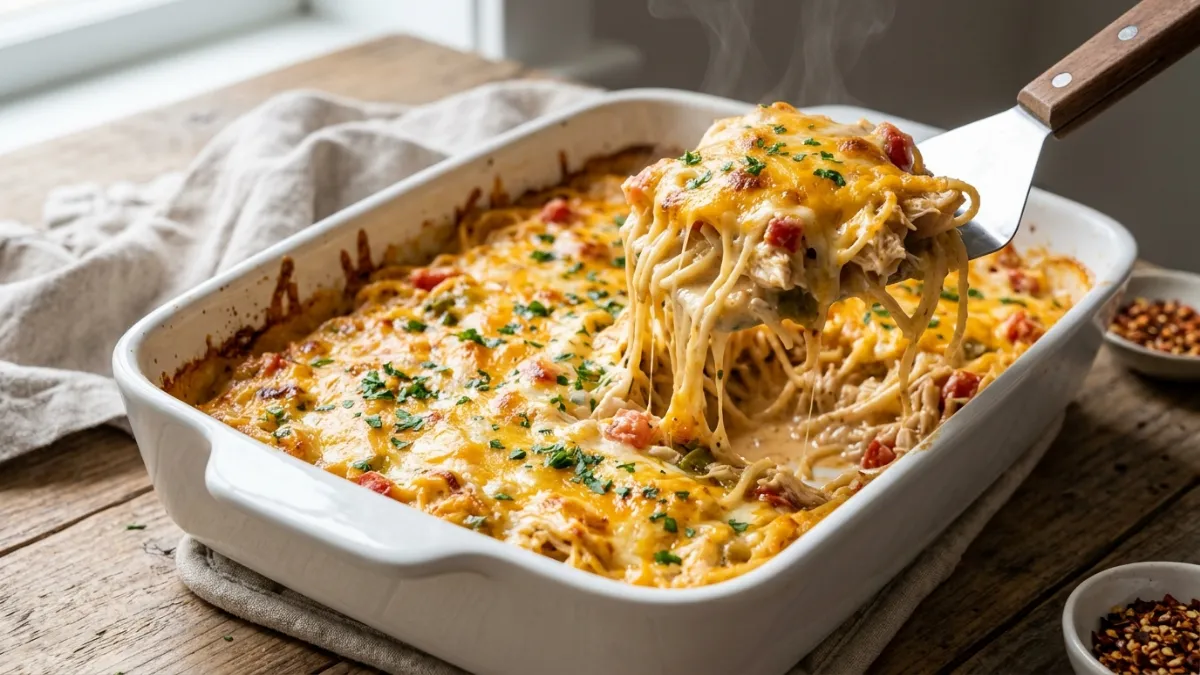
This comforting cheesy chicken spaghetti combines tender shredded chicken, tender pasta, and diced tomatoes with green chiles in a velvety, melted-cheese sauce. Baked in a standard 9×13-inch casserole dish until bubbling and golden, it transforms simple pantry staples and leftover or rotisserie chicken into an easy, crowd-pleasing family dinner.
Recipe Development Note: This recipe is an editorial formulation based on traditional American casserole techniques and food-safety reheating guidelines. It is an untested kitchen proposal in this specific published format; home cooks should always use an instant-read food thermometer to verify internal temperatures.
Easy Baked Cheesy Chicken Spaghetti
A rich, creamy pasta bake featuring shredded chicken tossed in a savory cheese sauce with diced tomatoes and mild green chiles, finished with a melted cheddar crust.
- Yield: 8 generous servings
- Prep Time: 20 minutes
- Cook Time: 30 minutes
- Inactive Resting Time: 10 minutes
- Total Elapsed Time: 1 hour
Equipment
- 9×13-inch (approx. 3-quart / 23×33 cm) baking dish
- 6- to 8-quart stockpot (for boiling pasta)
- Large mixing bowl or large Dutch oven (for combining)
- Colander
- Instant-read digital thermometer
- Box grater (if grating cheese from blocks)
Ingredients
Pasta & Base:
- 12 ounces (340 g) dry regular spaghetti, snapped in half
- 1 tablespoon fine salt (for pasta water)
- 4 cups (about 1 to 1.25 pounds / 500 g) cooked chicken, shredded or diced into bite-sized pieces
Sauce & Mix-Ins:
- 1 can (10.5 ounces / 298 g) condensed cream of mushroom soup (or cream of chicken)
- 1 can (10.5 ounces / 298 g) condensed cream of chicken soup
- 1 can (10 ounces / 283 g) diced tomatoes with mild green chiles (such as Ro-Tel), undrained
- 1/2 cup (120 ml) low-sodium chicken broth
- 1/2 cup (120 ml) sour cream
- 1 teaspoon garlic powder
- 1 teaspoon onion powder
- 1/2 teaspoon freshly cracked black pepper
- 1/4 teaspoon fine sea salt (adjust depending on broth sodium level)
- 12 ounces (340 g) processed melting cheese (such as Velveeta), cut into 1/2-inch cubes
Cheese Topping:
- 2 cups (8 ounces / 225 g) sharp cheddar cheese, freshly shredded (divided: 1 cup folded in, 1 cup for topping)
Instructions
- Preheat and Prep the Dish: Preheat the oven to 350°F (177°C). Grease a 9×13-inch baking dish with cooking spray or butter. Set aside.
- Par-Boil the Spaghetti: Bring 4 quarts of water and 1 tablespoon of salt to a rolling boil in a large stockpot. Add the halved spaghetti strands. Cook for 2 minutes less than the minimum package instructions (typically 7 to 8 minutes for regular spaghetti) so the pasta remains firm to the bite. Drain thoroughly in a colander; do not rinse.
- Assemble the Sauce: In a large mixing bowl (or directly in the warm stockpot used for boiling pasta), combine the cream of mushroom soup, cream of chicken soup, undrained diced tomatoes with green chiles, low-sodium chicken broth, sour cream, garlic powder, onion powder, black pepper, and salt. Whisk until uniform.
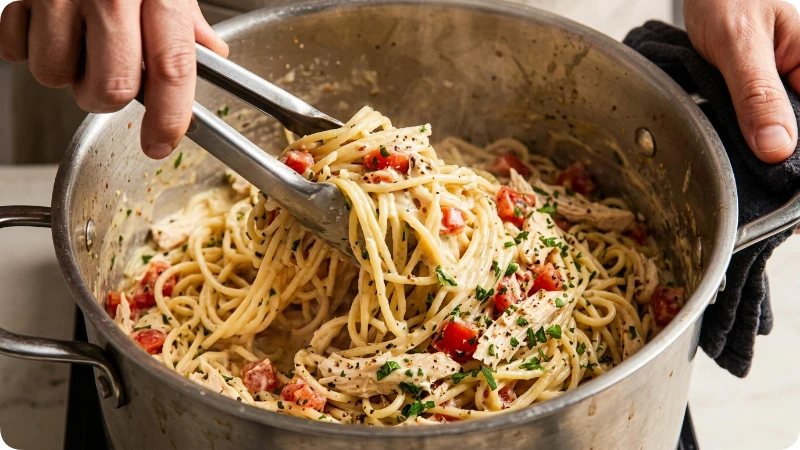
- Incorporate Chicken and Cheeses: Stir in the cubed melting cheese, 1 cup of the shredded sharp cheddar, and the cooked shredded chicken. Add the warm, drained spaghetti. Using tongs or a sturdy wooden spoon, toss thoroughly until the pasta is completely coated and the cheese cubes are evenly distributed throughout the mixture.
- Transfer to Baking Dish: Pour the mixture into the prepared 9×13-inch baking dish, spreading it into an even, flat layer. Sprinkle the remaining 1 cup of shredded sharp cheddar evenly across the top.
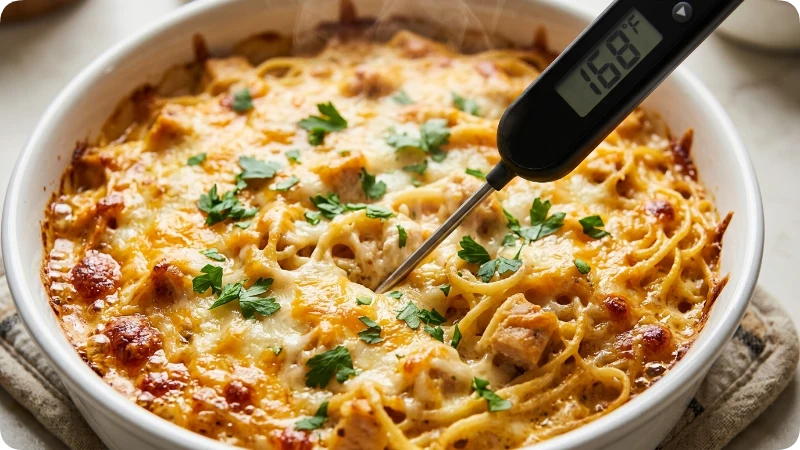
- Bake to Doneness: Bake uncovered at 350°F (177°C) for 28 to 32 minutes. The casserole should be bubbling actively along the edges, the cubed cheese completely melted into the sauce, and the top cheddar melted with light golden spots.
- Verify Safe Internal Temperature: Insert an instant-read probe thermometer into the center of the casserole. The reading must register at least 165°F (74°C) to ensure the dish is heated safely throughout.
- Rest and Serve: Remove the dish from the oven and let it rest on a trivet or wire rack for 10 minutes before serving. This allows the hot cheese sauce to thicken slightly and adhere cleanly to the pasta strands.
Key Ingredients and Substitutions
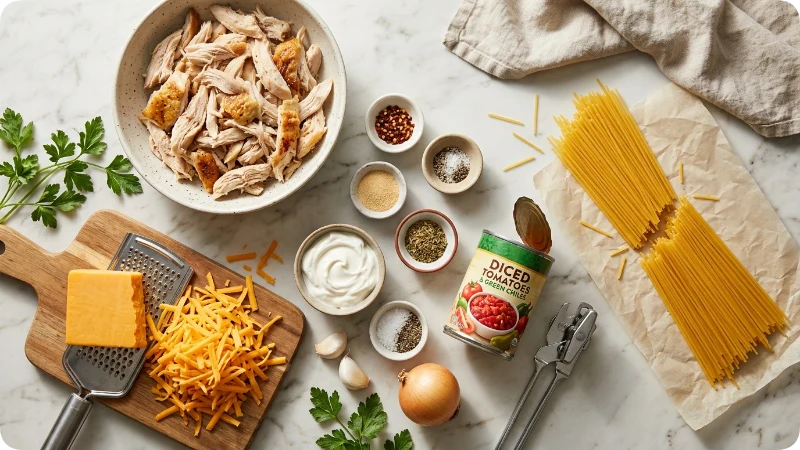
- Spaghetti: Snapping standard dry spaghetti in half before boiling makes tossing the heavy sauce and serving portions much cleaner. You can substitute fettuccine or short extruded pasta (such as penne, rotini, or medium shells) ounce-for-ounce. Boil any alternative pasta 2 minutes shy of al dente to prevent overcooking in the oven.
- Cooked Chicken: Shredded store-bought rotisserie chicken saves time and adds deep savory flavor. Alternatively, use leftover baked or poached chicken breast or thighs. If using raw chicken, you must poach or pan-sear it until it reaches 165°F (74°C) before dicing and folding it into the casserole.
- Melting Cheese: Processed cheese melts smoothly without separating or turning grainy under baking temperatures. If you prefer to avoid processed cheese, substitute with 8 ounces of freshly shredded Monterey Jack or mild cheddar melted gently into a light roux-based white sauce on the stove before mixing.
- Condensed Soups: A blend of cream of mushroom and cream of chicken delivers balanced savory depth. You can use two cans of cream of chicken or cream of celery without altering the liquid balance.
Before You Begin: Workflow and Pan Sizing
- Pan Dimensions: Use a true 9×13-inch baking dish with at least a 3-quart capacity. A smaller 8×11-inch or 2-quart dish will overflow as the sauce bubbles in the oven. Place a rimmed sheet pan on the bottom oven rack if your casserole dish is shallow.
- Pasta Timing: Coordinate boiling the spaghetti so it drains immediately before you combine the ingredients. The residual heat from freshly drained, warm spaghetti helps soften the cubed melting cheese, making it easier to distribute evenly.
Step-by-Step Cooking Decisions
Why Under-Boiling the Pasta Is Essential
Pasta continues to absorb moisture and cook whenever it is immersed in hot liquid. If spaghetti is boiled to full tenderness on the stove, it will absorb excess sauce during its 30 minutes in the 350°F oven, resulting in mushy, disintegrating noodles and a dry casserole. Draining the pasta 2 minutes shy of package al dente ensures it finishes cooking in the flavorful sauce without breaking down.
Balancing the Sauce Viscosity
The inclusion of 1/2 cup of chicken broth prevents the condensed soups and cheese from turning into a thick paste during baking. As the starches from the pasta release into the sauce, the liquid reduces, yielding a creamy, pourable consistency that clings to the noodles rather than pooling or drying out.
Troubleshooting Common Problems
| Problem | Root Cause | Prevention & Fix |
| Pasta is mushy or broken | Spaghetti was overcooked during boiling, or stirred too aggressively. | Boil 2 minutes under al dente. Use tongs to gently fold pasta into sauce rather than vigorous stirring. |
| Casserole is dry after baking | Liquid evaporated from over-baking, or pasta absorbed excess sauce. | Tent the dish loosely with foil during the first 15 minutes of baking if your oven runs hot. Stir in an extra 1/4 cup broth before baking if the mixture looks pasty. |
| Top cheese browned before the center is hot | Oven rack was placed too high, or oven runs hotter than calibrated. | Bake on the middle rack. If the top browns before reaching 165°F (74°C) in the center, shield the dish loosely with aluminum foil for the remaining bake time. |
| Sauce separated or looks greasy | Pre-shredded bag cheese with anti-caking agents was used, or the oven was too hot. | Use freshly grated block cheddar for the topping, and keep baking temperature steady at 350°F (177°C). |
Storage, Reheating, and Make-Ahead Guidance
- Make-Ahead: Assemble the casserole completely in the baking dish, cover tightly with plastic wrap and aluminum foil, and refrigerate for up to 24 hours. When ready to bake, remove the plastic wrap, cover with foil, and bake at 350°F (177°C) for 20 minutes; then uncover and bake for an additional 20 to 25 minutes until bubbling and 165°F (74°C) in the center.
- Cooling and Refrigeration: Cool leftovers at room temperature for no more than 1 hour. Transfer to an airtight container or cover the dish tightly and refrigerate at 40°F (4°C) or below for 3 to 4 days.
- Reheating: Reheat individual portions in the microwave on medium-high (70% power) in 60-second intervals, adding 1 tablespoon of milk or chicken broth to restore the creaminess of the sauce. To reheat the whole dish, cover with foil and warm in a 350°F (177°C) oven for 20 to 25 minutes until heated through to 165°F (74°C).
- Freezing: Assemble the dish in a freezer-safe foil pan, omit the top cheddar cheese, cover tightly with a layer of plastic wrap and heavy-duty foil, and freeze for up to 2 months. Thaw completely in the refrigerator for 24 hours before adding the top cheddar and baking as directed.
FAQs
Can I add vegetables to this chicken spaghetti?
Yes. Sautéed diced bell peppers, sweet yellow onions, sliced mushrooms, or drained canned corn fold in seamlessly. Sauté raw vegetables in a little butter before mixing so they don’t release excess water into the casserole during baking.
Can I use uncooked chicken in this recipe?
No. Adding raw chicken directly into the pasta mixture will not cook reliably or evenly in the 30-minute bake time and will release unwanted liquid into the sauce. Always use fully cooked, shredded or diced poultry.
What should I serve alongside chicken spaghetti?
Because this dish is rich and cheesy, it pairs well with crisp, acidic sides such as a green garden salad with vinaigrette, steamed green beans, roasted broccoli, or garlic bread.
This satisfying cheesy chicken spaghetti brings the best of weeknight comfort food together with minimal prep and simple ingredients. Keep an eye on your pasta boil time, bake until bubbling and fully heated, and you will have a dependable, delicious meal ready for the table.
Summary
This easy cheesy chicken spaghetti casserole combines shredded chicken, par-boiled pasta, diced tomatoes, and a creamy cheese sauce in a 9×13-inch dish. Baked at 350°F (177°C) until bubbling and reaching a safe internal 165°F (74°C), it delivers a crowd-pleasing, golden-topped comfort dinner with reliable texture and rich flavor.

Leo Campbell is the founder, recipe developer, and culinary voice behind Recipe Morsil. With nearly a decade of hands-on home cooking and professional baking experience, Leo tests every recipe multiple times to ensure reliable, fail-proof results in real home kitchens. When he’s not fine-tuning spices or testing cook times, he’s helping home cooks build confidence one bite at a time.
Connect with Leo via [Instagram/Email] or explore his verified recipes below.