Quick Answer: The secret to the creamiest stovetop mac and cheese in 20 minutes is building a quick butter-flour roux and gently melting freshly shredded sharp cheddar off the heat to prevent graininess.
This simple mac and cheese recipe delivers an ultra-smooth, velvety cheese sauce paired with tender elbow macaroni entirely on the stovetop. Built on a classic, foolproof butter-and-flour roux whisked with whole milk and melted sharp cheddar, it skips the dry, curdled texture of baked casseroles and comes together in just 20 minutes. It is the fastest, most reliable way to make classic comfort food from scratch using staple ingredients.
Recipe Testing Disclosure: This recipe is an untested editorial proposal formulated using classical French culinary sauce ratios and established home-cooking principles. While technically aligned with standard emulsion benchmarks, it has not undergone formal multi-trial kitchen validation.
Creamy 20-Minute Stovetop Macaroni and Cheese
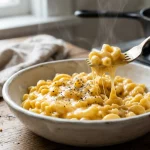
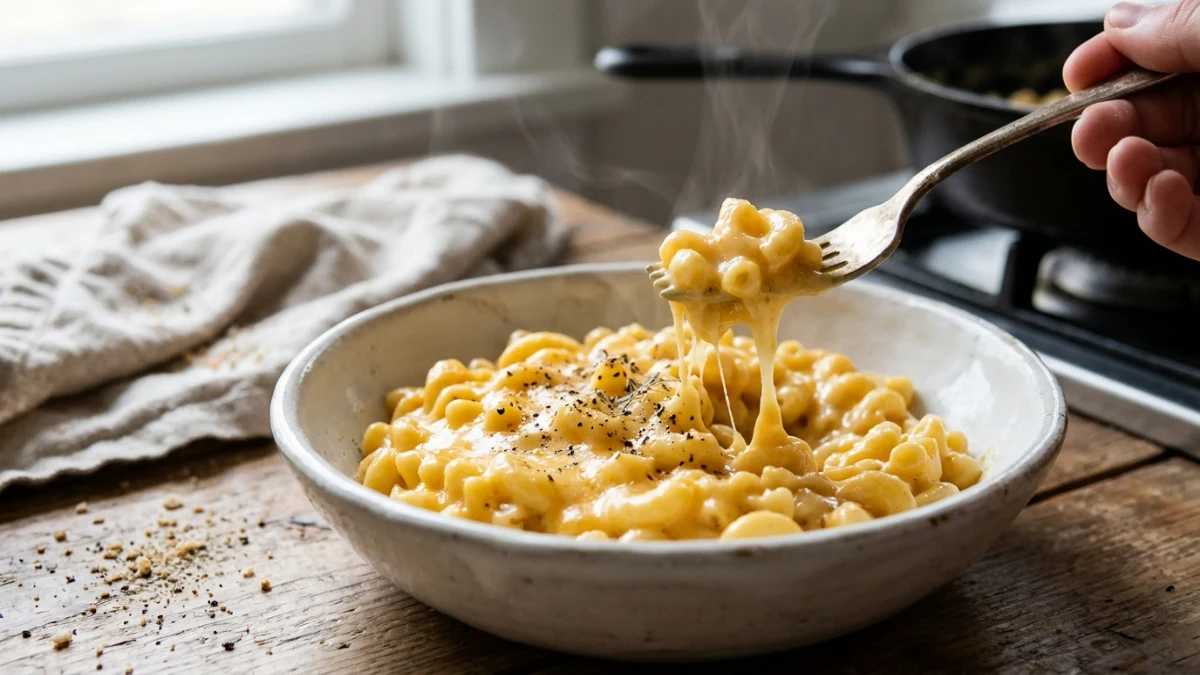
Tender elbow macaroni folded into a smooth, glossy cheddar cheese sauce made from scratch on the stovetop.
- Yield: Approximately 4 cups (900 g) prepared mac and cheese
- Servings: 4 side servings (approx. 1 cup each) or 2 generous main servings
- Prep Time: 5 minutes
- Cook Time: 15 minutes
- Inactive Time: 0 minutes
- Total Elapsed Time: 20 minutes
- Essential Equipment: 4-quart saucepan or Dutch oven (for pasta and sauce assembly), 2-quart saucepan (optional, if boiling pasta concurrently), colander, wire whisk, box grater
Ingredients
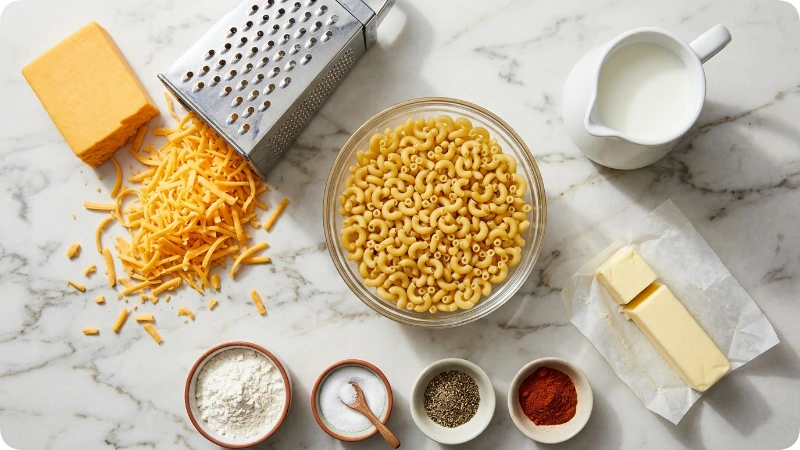
Pasta
- 8 ounces (227 g) dry elbow macaroni
- 2 quarts (1.9 L) water
- 1 tablespoon fine sea salt (for the pasta cooking water)
Cheese Sauce Base
- 2 tablespoons (28 g) unsalted butter
- 2 tablespoons (16 g) all-purpose flour
- 2 cups (480 mL) whole milk, warmed slightly or at room temperature
- 1/2 teaspoon fine sea salt
- 1/4 teaspoon garlic powder
- 1/4 teaspoon ground dry mustard (mustard powder)
- 1/8 teaspoon ground black pepper or white pepper
- 1 pinch ground cayenne pepper (optional, for subtle depth)
Cheese
- 8 ounces (227 g) sharp cheddar cheese, freshly shredded from a block (approx. 2 cups firmly packed; divided into 1 3/4 cups for melting, 1/4 cup reserved for garnish)
Instructions
1. Cook the Pasta
- Boil the macaroni: Bring 2 quarts of water and 1 tablespoon of salt to a rolling boil in a 4-quart pot over high heat. Add the elbow macaroni and cook, stirring occasionally to prevent sticking, until al dente—firm to the bite with no chalky core, approximately 7 to 8 minutes (check package timing). Drain the pasta thoroughly in a colander. Do not rinse. Set aside.
2. Prepare the Béchamel Base
- Make the roux: Return the empty 4-quart pot to the stove over medium heat. Add 2 tablespoons of unsalted butter. Once the butter is completely melted and foaming, sprinkle in 2 tablespoons of all-purpose flour. Whisk continuously for 60 to 90 seconds until the mixture bubbles, loses its raw flour smell, and turns a pale golden straw color. Do not let it brown.
- Whisk in the milk: Slowly pour in the 2 cups of whole milk in a thin, steady stream while whisking vigorously to prevent lumps. Whisk in the 1/2 teaspoon fine sea salt, garlic powder, ground dry mustard, black pepper, and optional cayenne.
- Thicken the sauce: Cook over medium heat, whisking constantly and scraping the bottom and corners of the pot, until the sauce comes to a gentle simmer (small bubbles breaking the surface) and thickens enough to coat the back of a spoon, about 3 to 5 minutes.
3. Finish with Cheese and Assemble
- Melt the cheese off-heat: Remove the pot completely from the heat source. Allow the sauce to rest off the burner for 30 seconds so the temperature drops slightly below boiling (below 180°F / 82°C). Add 1 3/4 cups of the freshly shredded cheddar cheese in two batches, whisking gently in one direction until completely melted, glossy, and emulsified.
- Combine and finish: Add the drained macaroni into the warm cheese sauce. Fold with a silicone spatula or large spoon until every noodle is coated. Let sit for 1 to 2 minutes off the heat so the pasta absorbs a small amount of sauce. Top with the reserved 1/4 cup shredded cheese, let it melt from residual heat, and serve immediately.
Ingredient Notes and Functional Substitutions
- Elbow Macaroni: The classic shape works best because the hollow tube and ridged exterior capture the sauce inside and out. Substitutions: Medium shells, cavatappi, or campanelle work at a 1:1 weight ratio. Avoid long strands like spaghetti, which do not hold cheese sauces evenly.
- Sharp Cheddar Cheese: Provides the punchy, characteristic flavor of traditional mac and cheese. Always shred cheese directly from a block using a box grater. Critical Note: Avoid pre-bagged shredded cheese; manufacturers coat it with starches and cellulose (anti-caking agents) that inhibit smooth melting and cause gritty, grainy sauces.
- Whole Milk: Milkfat is essential for stabilizing the sauce emulsion and providing a velvety mouthfeel. Substitutions: 2% reduced-fat milk can be used, though the sauce will be slightly thinner. If using skim milk, the sauce risks watery separation. For extra decadence, substitute 1/2 cup of the whole milk with heavy whipping cream.
- Dry Ground Mustard: This does not make the dish taste like prepared mustard; instead, the natural compounds in ground mustard seed act as a gentle emulsifier while the mild acidity cuts through dairy heaviness.
Before You Begin: The Mise en Place Checklist
Stovetop cheese sauces move rapidly once the roux is formed. Setting up ingredients beforehand ensures a smooth result:
- Grate the Cheese in Advance: Grate your 8 ounces of cheese before lighting the burner. Adding cold cheese directly from the refrigerator to a hot pan drops the sauce temperature too quickly; shredded cheese sitting on the counter for 10 minutes melts faster and more uniformly.
- Warm the Milk: Cold milk straight from the fridge added to a hot roux can shock the butter fat and form stubborn flour lumps. Microwave the milk in a glass measuring cup for 30 to 45 seconds until it is lukewarm to the touch before starting your roux.
How to Make It: Mastering the Stovetop Emulsion
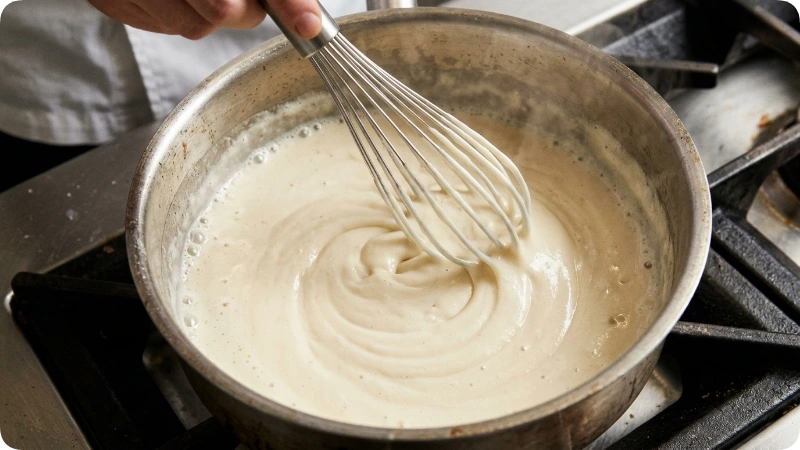
- Cooking the Roux Correctly: The initial mixture of equal parts fat and flour coats starch granules with fat molecules, preventing them from clumping when liquid is introduced. Cooking it for a full minute eliminates the raw, pasty taste of flour without scorching the butter.
- The Gradual Pour: Dumping all the liquid in at once creates floating dough pockets. Add the first half-cup of milk while whisking rapidly until a thick paste forms, then pour in the remaining milk in a steady stream.
- The Off-Heat Rule: Dairy proteins (casein) tighten and squeeze out fat when exposed to boiling temperatures (above 185°F / 85°C), resulting in a broken, oily sauce with gritty curds. Taking the pot entirely off the burner before adding the cheddar protects the sauce’s emulsion.
Tips and Troubleshooting
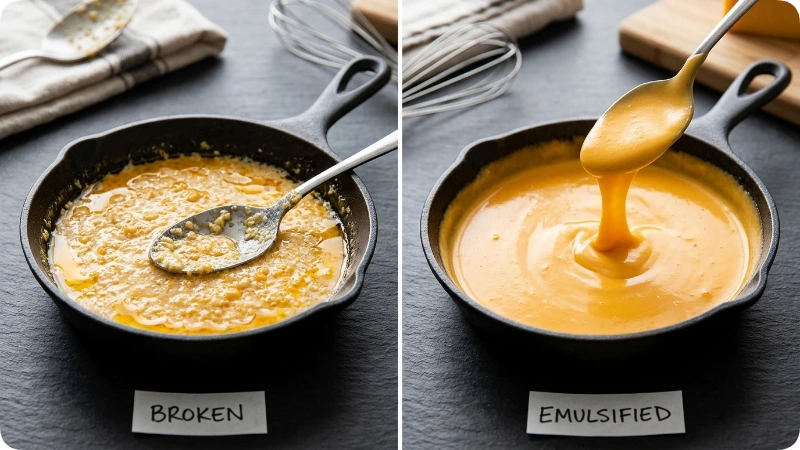
- Problem: The sauce turned out gritty, grainy, or separated with visible oil puddles.
- Cause: Pre-shredded bagged cheese was used, or the cheese was added while the pot was still boiling over direct heat.
- Prevention: Shred cheese from a block and remove the pan from heat before folding in cheese.
- Fix: Remove from heat immediately, add 1 to 2 tablespoons of cold whole milk or evaporated milk, and whisk vigorously to help re-emulsify the fats. If severely curdled, it cannot be fully restored to glossy smoothness.
- Problem: The sauce is too thin or runny after mixing with pasta.
- Cause: The white sauce was not simmered long enough to activate the flour’s starch gelatinization before adding cheese, or the pasta was under-drained.
- Prevention: Ensure the sauce coats the back of a wooden spoon before pulling it off heat; shake the colander vigorously to remove water trapped inside the pasta tubes.
- Fix: Let the pot sit undisturbed off the heat for 3 to 4 minutes; the pasta will naturally absorb excess liquid and the sauce will tighten as it cools slightly.
- Problem: Flour lumps in the white sauce.
- Cause: Milk was added too quickly or was ice-cold.
- Prevention: Whisk continuously while pouring lukewarm milk in a steady, thin ribbon.
- Fix: Pour the sauce through a fine-mesh sieve back into the pot before adding the cheese, pressing out lumps with the back of a ladle.
Variations and Add-Ins
- Three-Cheese Blend: Replace half of the sharp cheddar (4 oz / 113 g) with an equal weight of Gruyère or Monterey Jack for superior stretch, and add 2 tablespoons of finely grated Parmigiano-Reggiano for deeper umami.
- Crispy Breadcrumb Topping (Stovetop Style): To add crunch without baking, melt 1 tablespoon of butter in a small skillet over medium heat. Add 1/2 cup panko breadcrumbs and a pinch of salt. Toast for 3 to 4 minutes until deep golden brown, then scatter over individual bowls right before serving.
- Bacon and Pea Stir-In: Cook 4 slices of chopped thick-cut bacon until crisp; drain on paper towels. Fold the crispy bacon and 1/2 cup of thawed, drained sweet green peas directly into the finished pasta alongside the cheese in Step 6.
Storage, Freezing, and Reheating
Stovetop macaroni and cheese is at its peak immediately after preparation, as the starch emulsion continues to set as it cools.
- Refrigeration: Store cooled leftovers in a shallow, airtight container in the refrigerator (at or below 40°F / 4°C) for up to 3 to 4 days.
- Freezing: Freezing is not recommended for this specific roux-and-cheddar stovetop base. Freezing destabilizes milk emulsions; upon thawing, the sauce tends to separate into a watery liquid and spongy curds.
- Reheating: Reheat gently on the stovetop over low heat. Add 1 to 2 tablespoons of whole milk per cup of pasta to loosen the starches that tightened in the cold. Stir constantly until the pasta reaches an internal serving temperature of 165°F (74°C). In the microwave, heat in 30-second bursts at 50% power, adding a splash of milk and stirring between cycles to prevent oil separation.
FAQs
Can I make this baked instead of stovetop?
Yes. Transfer the completed stovetop pasta and sauce into a greased 2-quart baking dish. Top with an additional 1/2 cup of shredded cheddar and 1/2 cup of buttered breadcrumbs. Bake at 375°F (190°C) for 15 to 20 minutes until bubbling around the edges. Avoid baking longer, or the sauce will dry out.
Why is my sauce bland?
Pasta absorbs a significant amount of salt during boiling. If the cooking water was under-salted, the finished dish will lack flavor. Ensure your pasta water tastes distinctly salty, and adjust the finished sauce with an extra pinch of sea salt and ground mustard if needed.
Can I use evaporated milk instead of regular milk?
Yes. Evaporated milk contains concentrated milk proteins with less water, making the sauce naturally creamier and more resistant to breaking. Substitute evaporated milk 1:1 for whole milk.
Can I double this recipe?
Yes. Double all ingredients equally (1 lb pasta, 4 tbsp butter, 4 tbsp flour, 4 cups milk, 16 oz cheese). Use a large 6-to-8-quart Dutch oven to accommodate the volume, and increase the sauce simmering time by approximately 3 to 5 minutes to account for the larger liquid volume.
Summary
This guide provides a simple stovetop mac and cheese recipe delivering creamy, unbaked comfort food in 20 minutes. Built on a classic butter-flour roux and freshly grated sharp cheddar, the article details proper emulsion temperatures, the risk of pre-shredded cheese, troubleshooting sauce graininess, and safe reheating protocols.

Leo Campbell is the founder, recipe developer, and culinary voice behind Recipe Morsil. With nearly a decade of hands-on home cooking and professional baking experience, Leo tests every recipe multiple times to ensure reliable, fail-proof results in real home kitchens. When he’s not fine-tuning spices or testing cook times, he’s helping home cooks build confidence one bite at a time.
Connect with Leo via [Instagram/Email] or explore his verified recipes below.