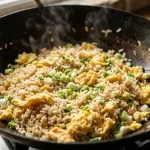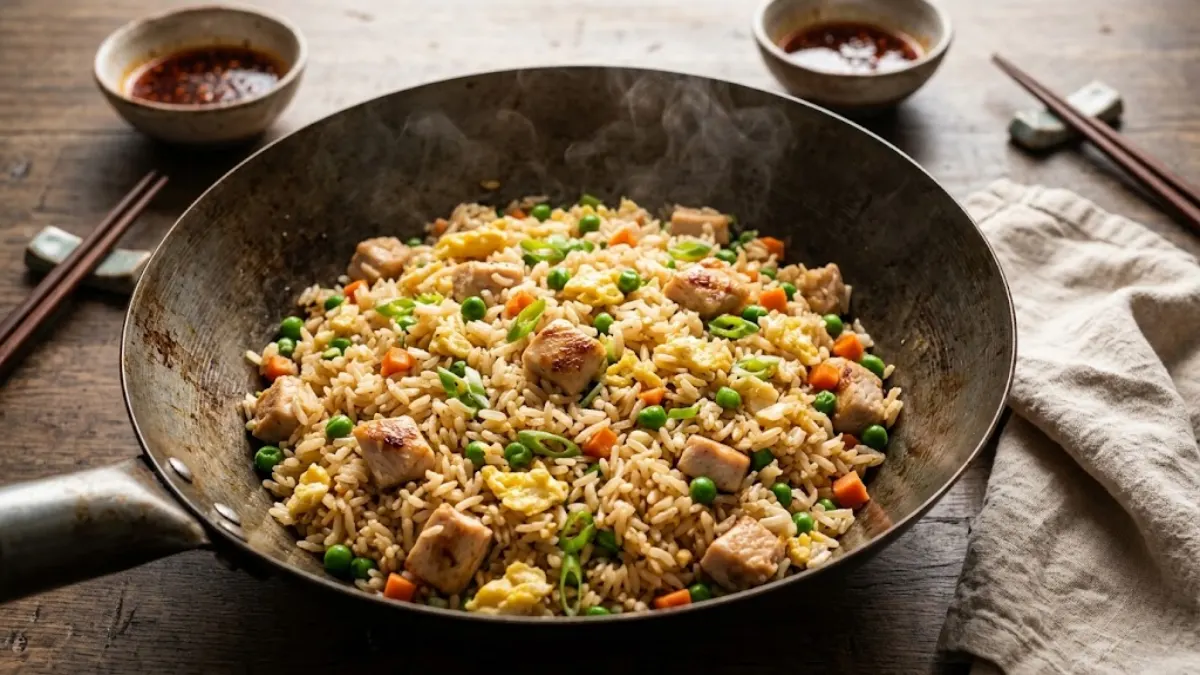
This classic chicken fried rice combines tender marinated chicken breast, fluffy scrambled eggs, sweet peas, and crisp carrots tossed with chilled long grain white rice in a savory soy sesame glaze. Cooked over high heat in a broad skillet or wok, each ingredient is seared individually to prevent steaming, yielding distinct grains with a light, toasted chew rather than a heavy, gummy texture. It delivers restaurant quality flavor on a standard home range in less than twenty minutes of active cooking.
Recipe Testing Status: This recipe is an untested proposal formulated from established Chinese American stir fry ratios and USDA food safety guidelines. Because domestic stove heat outputs vary, cook times and batch sizes may require slight adjustment to maintain high searing temperatures.
Complete Recipe Card
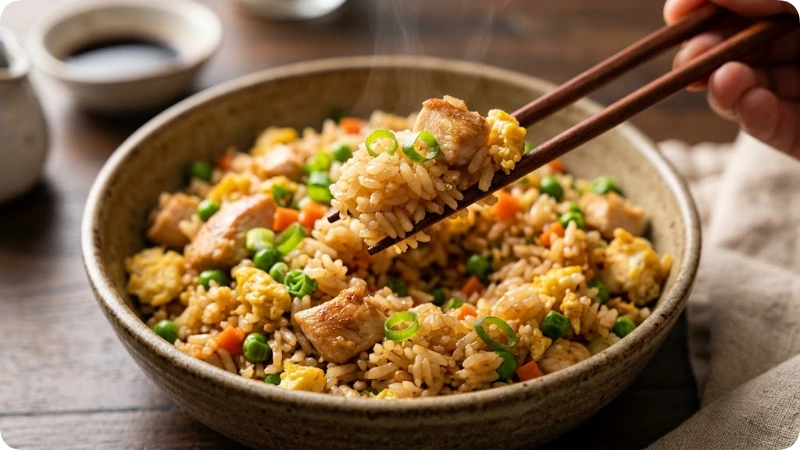
A fast stovetop stir fry of tender chicken cubes, fluffy eggs, and chilled long grain rice seasoned with soy sauce, garlic, and toasted sesame oil.
Yield: Approximately 6 cups total yield
Serving Basis: 4 servings at roughly 1.5 cups per serving
Prep Time: 20 minutes
Cook Time: 12 minutes
Inactive or Cooling Time: 4 hours minimum for chilling freshly cooked rice or overnight
Total Elapsed Time: 32 minutes active cooking plus chilling
Essential Equipment: 14 inch flat bottom carbon steel wok or 12 inch heavy stainless steel skillet, small mixing bowls, flat wooden spatula, digital food thermometer.
Ingredients
Chicken and Marinade Component:
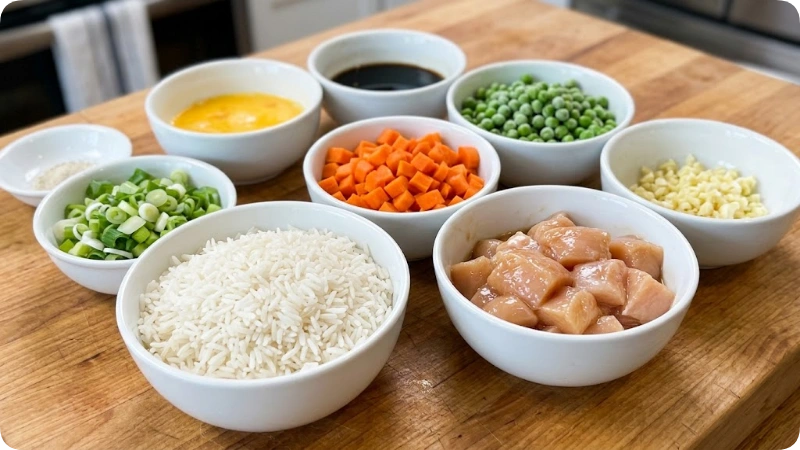
- Boneless skinless chicken breast or thighs: 12 ounces, cut into uniform half inch cubes
- Low sodium soy sauce: 1 tablespoon
- Toasted sesame oil: 1 teaspoon
- Cornstarch: 1 teaspoon
- Ground white pepper: one quarter teaspoon
Egg Component:
- Large eggs: 2 eggs, beaten until uniform
- Fine sea salt: 1 small pinch
- High heat cooking oil such as canola or peanut oil: 1 teaspoon
Aromatics and Vegetables Component:
- Yellow onion: half of a medium onion, finely diced to about half a cup
- Carrots: 1 medium carrot, peeled and cut into quarter inch dice to about half a cup
- Garlic: 2 cloves, finely minced
- Fresh ginger: 1 teaspoon, peeled and finely grated
- Frozen green peas: half a cup, unthawed
- Scallions: 3 stalks, thinly sliced with green and white sections separated
Rice and Seasoning Sauce Component:
- Cooked long grain white rice such as Jasmine: 4 cups chilled and gently broken apart
- High heat cooking oil such as canola or peanut oil: 2 tablespoons total, divided
- Low sodium soy sauce: 2 tablespoons
- Dark soy sauce: 1 teaspoon, optional for deep color
- Oyster sauce: 1 tablespoon
- Toasted sesame oil: 1 teaspoon
Step by Step Instructions
Prep the Ingredients and Sauce
- Marinate the Chicken: In a medium bowl, combine the diced chicken with 1 tablespoon low sodium soy sauce, 1 teaspoon toasted sesame oil, 1 teaspoon cornstarch, and one quarter teaspoon white pepper. Toss until the liquid is fully absorbed and the meat is evenly coated. Set aside on the counter for 10 minutes while preparing the remaining ingredients.
- Combine the Finishing Sauce: In a small bowl, stir together 2 tablespoons low sodium soy sauce, 1 teaspoon dark soy sauce, 1 tablespoon oyster sauce, and 1 teaspoon toasted sesame oil. Place this bowl next to your stove.
Cook the Eggs and Proteins
- Scramble the Eggs: Place your skillet or wok over medium high heat until hot. Add 1 teaspoon high heat oil and coat the surface. Pour in the beaten eggs with a pinch of salt. Let the eggs set for 10 seconds, then push gently across the pan with a spatula to form soft, tender curds. The eggs should remain soft and not brown. Slide the eggs onto a clean plate and set aside.
- Sear the Chicken: Return the pan to high heat and add 1 tablespoon of cooking oil. When the oil begins to shimmer, spread the marinated chicken into a single layer across the bottom and sides of the pan. Let sear undisturbed for 90 seconds to build color. Stir fry constantly for another 2 to 3 minutes until the exterior is browned and the center registers 165°F (74°C) on a food thermometer. Transfer the cooked chicken to the plate with the eggs.
Stir-Fry, Season, and Finish
- Saute the Aromatics: Lower the heat slightly to medium high. Add the remaining 1 tablespoon of cooking oil to the empty pan. Add the diced onion and diced carrots. Cook, stirring frequently, for 2 minutes until the onions become translucent and the carrots lose their raw crunch. Add the minced garlic, grated ginger, and sliced scallion whites. Stir continuously for 30 to 45 seconds until fragrant, taking care not to burn the garlic.
- Fry the Rice: Add the cold, broken up rice directly to the pan over the aromatics. Turn the heat to high. Use the flat edge of your spatula to press down on any remaining rice clusters to break them apart. Toss and fold continuously for 2 to 3 minutes until the rice is thoroughly heated, making a gentle crackling sound as surface moisture evaporates.
- Incorporate Add-ins and Sauce: Return the cooked chicken, scrambled eggs, and unthawed green peas to the pan. Drizzle the prepared seasoning sauce evenly over the rice.
- Final Toss and Finish: Stir fry vigorously on high heat for 1 to 2 minutes, using a folding motion to break up the eggs into smaller flakes and evenly distribute the dark sauce until every grain is tinted amber. Remove from heat. Fold in the reserved sliced scallion greens. Serve hot.
Ingredient Notes and Substitutions
Rice Variety: Long grain white varieties like Jasmine work best. Jasmine provides aroma and a distinct grain structure that dries without crumbling. Short grain or sushi rice contains higher levels of sticky starch, which makes the grains cling together and causes the stir fry to clump.
Chicken Cuts: Boneless skinless chicken breasts remain lean and clean when diced. Boneless thighs offer higher fat and stay tender under high heat. Both must reach a safe internal temperature of 165 degrees Fahrenheit.
Soy Sauce: Low sodium soy sauce provides savory flavor without making the dish overly salty. Dark soy sauce adds a deep caramel color and mild sweetness. If omitted, add 1 additional teaspoon of regular low sodium soy sauce.
Oyster Sauce: Adds body and richness to the seasoning glaze. For a vegetarian option or shellfish allergy, substitute mushroom flavored vegetarian stir fry sauce in the same quantity.
Cooking Oil: Use a neutral oil with a high smoke point like peanut, canola, or vegetable oil. Do not use unrefined olive oil or butter for the initial sear, as both will burn quickly over high heat.
Before You Begin
Cooling and Drying the Rice: Freshly steamed rice holds excess moisture inside its starch granules. Using hot rice directly produces a soggy texture. Cook long grain rice in advance, spread it onto a baking sheet to let steam escape for 10 minutes, and refrigerate uncovered for at least 4 hours or overnight. Cool air firms the exterior of each grain.
Same Day Alternative: If you do not have cold leftover rice, cook fresh rice using 15 percent less water than normal. Spread the hot cooked rice across a baking sheet and place it in the freezer for 15 minutes to rapidly remove steam and chill the exterior.
Mise en Place: Stir frying is a continuous process that takes roughly 12 minutes total. All vegetables must be chopped, sauces mixed, eggs beaten, and chicken marinated before turning on the burner.
How to Make It Critical Stages
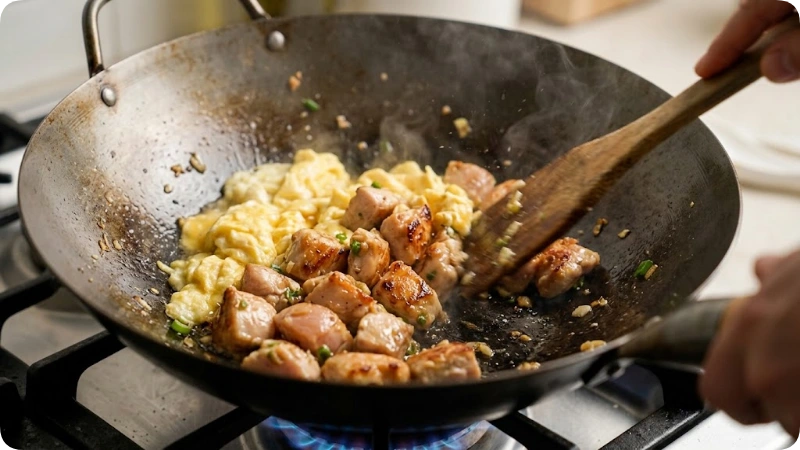
The Cornstarch Layer: Tossing the chicken with cornstarch and soy sauce creates a light protective layer around the meat. When hit with high heat, this barrier locks in moisture and keeps the poultry juicy during its second pass in the pan.
Cooking in Batches: Scrambling the eggs and searing the chicken separately before frying the rice is essential on domestic stovetops. Crowding raw meat, eggs, and cold rice into a single home pan drops the surface temperature, causing ingredients to boil in their own juices rather than fry.
Drizzling the Sauce: Pour the seasoning sauce over the rice, not directly onto the bare pan metal where the soy sugars would scorch. Tossing rapidly ensures even absorption without waterlogging the rice.
Tips and Troubleshooting
Problem: The fried rice is mushy or clumped together. Cause: Using freshly cooked hot rice, adding too much liquid sauce, or using short grain sticky rice. Prevention: Use cold day old rice and break up rice clumps by hand before dropping into the pan. Fix: Spread the rice wide across the pan on high heat without stirring for 60 seconds to evaporate excess water.
Problem: The chicken is dry and tough. Cause: Cut into pieces that were too small, cooked over low heat for too long, or overcooked during the final reheat. Prevention: Cut into uniform half inch cubes, sear quickly over high heat until 165 degrees Fahrenheit is reached, and reintroduce only during the final 90 seconds.
Problem: The garlic tastes bitter. Cause: Adding garlic to scorching hot dry metal before the vegetables. Prevention: Add garlic and ginger after the moisture from onions and carrots has tempered the direct heat.
Variations and Alternative Methods
Sheet Pan Oven Method: If cooking for 6 or more people, toss 6 cups of cold rice, cooked chicken, vegetables, and sauce with 3 tablespoons of oil on two large rimmed baking sheets. Bake at 425 degrees Fahrenheit or 218 degrees Celsius for 15 to 18 minutes, stirring halfway through, until edges are crisp. Stir in cooked eggs at the end.
Protein Swaps: Swap the chicken for peeled raw shrimp, searing for 2 minutes until pink, or use diced cooked roast pork, warming it through for 1 minute.
Serving Suggestions
Chicken fried rice is a complete meal containing starches, protein, and vegetables. To round out the table, serve with:
- Steamed baby bok choy or broccoli tossed with garlic
- Hot and sour soup or simple egg drop soup
- Chili oil or hot mustard on the side for added heat
Make Ahead Storage Freezing and Reheating
Food Safety on Cooked Rice: Cooked rice contains spores of Bacillus cereus that can survive boiling. If rice sits at warm room temperature, these spores can produce toxins. Cool cooked rice rapidly and store in the refrigerator at or below 40 degrees Fahrenheit or 4 degrees Celsius within 2 hours of cooking.
Refrigerator Storage: Store cooled leftover chicken fried rice in shallow airtight containers in the refrigerator for up to 3 to 4 days.
Freezing: Place cooled fried rice in freezer bags, press out air, and freeze for up to 2 months.
Reheating: Reheat in a hot skillet with 1 teaspoon of oil and 1 tablespoon of water, tossing over medium high heat until hot. For the microwave, place in a bowl, cover with a damp paper towel, and heat on high for 2 to 3 minutes, stirring halfway through, until the center reaches 165 degrees Fahrenheit.
FAQs
Can I make fried rice with warm rice?
It is not recommended. Freshly steamed rice contains high surface moisture. When tossed in a hot skillet with sauce, the soft grains break apart, turning the dish into a wet mush instead of separate, toasted grains.
Why is my fried rice pale compared to restaurant versions?
Takeout restaurants often use dark soy sauce for color and cook over high heat open flames in carbon steel woks, which lightly sears the grains. Adding 1 teaspoon of dark soy sauce will fix pale color.
Can I substitute brown rice for white rice?
Yes. Cold cooked long grain brown rice works well and holds its shape due to the outer bran layer. Add 1 additional teaspoon of cooking oil because brown rice absorbs fats differently.
What is the best pan if I do not own a wok?
A wide 12 inch heavy stainless steel or cast iron skillet is the best choice. Avoid nonstick pans for high heat searing, as nonstick coatings break down at the high temperatures required for authentic stir frying.
Summary
This guide provides a structured method for making classic chicken fried rice on a standard home stove. The foundation of successful fried rice relies on controlling moisture and starch structure.
Using chilled, day old long grain rice allows the exterior starches to firm up through retrogradation, which keeps individual grains separate and distinct during stir frying. The recipe uses a light cornstarch and soy sauce marinade to insulate diced chicken breast, keeping the meat tender during high heat searing.

Leo Campbell is the founder, recipe developer, and culinary voice behind Recipe Morsil. With nearly a decade of hands-on home cooking and professional baking experience, Leo tests every recipe multiple times to ensure reliable, fail-proof results in real home kitchens. When he’s not fine-tuning spices or testing cook times, he’s helping home cooks build confidence one bite at a time.
Connect with Leo via [Instagram/Email] or explore his verified recipes below.