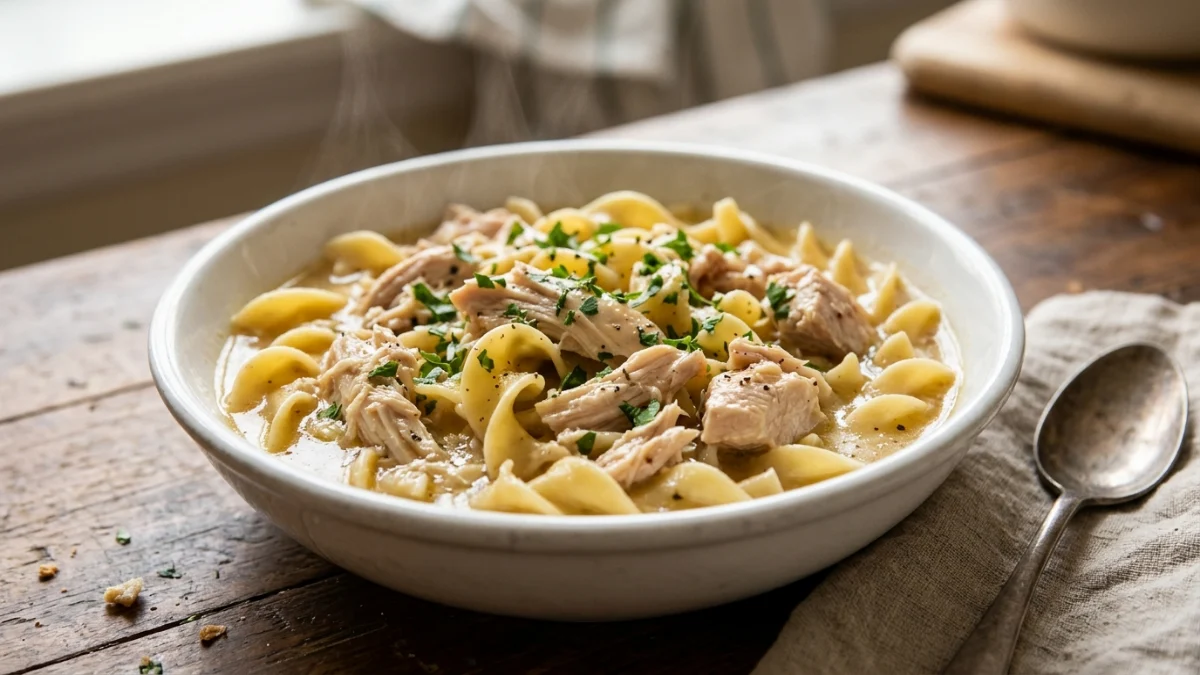
This chicken and noodles recipe combines tender pieces of chicken, wide egg noodles, and savory chicken broth in a thick, comforting sauce. Everything cooks on the stovetop in one large pot, making it a practical choice for a cozy family dinner when you want a warm, satisfying meal without preparing several separate dishes.
Complete Chicken and Noodles Recipe Card
Illustrative food reference, not a photograph of a kitchen-tested version of this recipe.
Recipe status: Untested proposal. Verify the cooking time, liquid balance, and final consistency in your kitchen before publishing as a tested recipe.
Description: A stovetop chicken and noodles dish featuring tender chicken, wide egg noodles, and a savory, flour-thickened broth.
- Yield: Approximately 6 servings; estimated, not measured.
- Prep time: 15 minutes.
- Cook time: 30 to 35 minutes.
- Inactive time: None planned.
- Total time: Approximately 45 to 50 minutes.
- Equipment: One 5- to 6-quart heavy-bottomed pot or Dutch oven, cutting board, knife, measuring cups and spoons, whisk, tongs, and an instant-read food thermometer.
Ingredients
Chicken and noodles
- 1½ pounds boneless, skinless chicken breasts, thawed
- 8 cups (64 fluid ounces) chicken broth, preferably lower-sodium
- 1 medium yellow onion, finely chopped
- 2 tablespoons unsalted butter
- 1 teaspoon dried thyme
- ½ teaspoon black pepper
- ½ teaspoon salt, plus more if needed
- 12 ounces dried wide egg noodles
- 2 tablespoons chopped fresh parsley, optional
Thickener
- ⅓ cup all-purpose flour
- ½ cup cold water
Instructions
1. Prepare the pot. Melt the butter in a 5- to 6-quart pot over medium heat. Add the chopped onion and cook for 4 to 5 minutes, stirring occasionally, until softened. Add the thyme, black pepper, and salt.
2. Cook the chicken. Pour in the chicken broth and add the chicken breasts. Bring the liquid to a gentle boil, then reduce the heat to maintain a steady simmer. Partially cover the pot and cook for approximately 15 to 20 minutes, depending on the thickness of the chicken. Check the thickest part of each breast with a food thermometer; chicken must reach 165°F before it is removed from the heat.
3. Shred the chicken. Transfer the cooked chicken to a clean plate using tongs. Let it rest briefly, then shred it into bite-sized pieces with two forks. Keep it covered while preparing the noodles.
4. Cook the egg noodles. Bring the broth back to a gentle boil. Add the dried egg noodles and cook according to the package’s stovetop directions, stirring occasionally to prevent sticking. Start checking for tenderness at the earliest cooking time on the package.
5. Mix the thickener. While the noodles cook, whisk the flour and cold water in a small bowl until the mixture is smooth and free of dry lumps.
6. Thicken the broth. Reduce the heat to medium-low. Slowly pour the flour mixture into the pot while stirring continuously. Simmer gently for 2 to 4 minutes, stirring often, until the broth thickens enough to coat the noodles. Do not let the mixture scorch on the bottom.
7. Add the chicken back. Return the shredded chicken to the pot and stir gently. Heat until the chicken is steaming hot throughout. Check with a thermometer if necessary, particularly if the chicken has cooled considerably.
8. Adjust and serve. Remove the pot from the heat. Stir in the optional parsley and taste the broth. Add a little salt or black pepper if needed. Let the dish stand for 2 3 minutes so the sauce can settle, then serve warm.
Recipe Notes
- For thicker chicken and noodles: Let the dish simmer briefly after adding the flour mixture, stirring frequently. The sauce will also thicken as it stands.
- For a looser consistency: Stir in additional hot broth a little at a time until the noodles are coated but not dry.
- For seasoning: Start with the listed salt because broth brands differ in sodium content.
- For noodle timing: Package instructions vary. Avoid cooking the noodles far beyond their recommended time, as they may become too soft.
- For safety: Use a food thermometer to verify that the chicken reaches 165°F. Do not rely on color alone.
Ingredient Notes and Substitutions
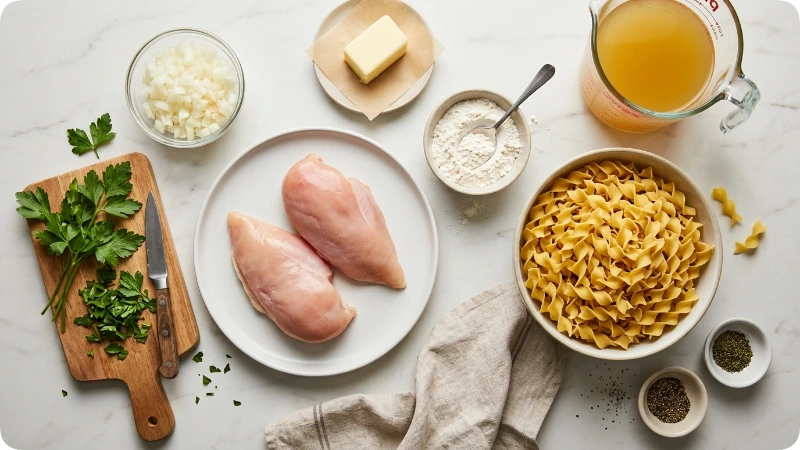
Wide egg noodles
Wide egg noodles give this dish its familiar, substantial texture. Their shape helps them hold the thickened broth. Different brands and noodle thicknesses absorb liquid differently, so the final consistency may vary.
Possible substitution: Medium egg noodles can be used as a different pasta shape, but the cooking time and amount of broth absorbed may change. Follow the package directions and check the texture as the noodles cook.
Chicken breasts
Boneless, skinless chicken breasts are convenient to shred after simmering. Their thickness affects cooking time, which is why the thermometer check is essential.
Possible substitution: Boneless, skinless chicken thighs may work in the same general method, but their cooking time and texture can differ. Verify that the chicken reaches 165°F and assess the noodle and sauce consistency before serving. This substitution is proposed and has not been kitchen-tested.
Chicken broth
Lower-sodium broth makes it easier to control the salt level. Regular broth is also suitable, but additional salt may not be necessary.
Possible substitution: Chicken stock can be used in place of broth. Differences in concentration and seasoning may affect the final flavor.
All-purpose flour
Flour thickens the broth and gives the dish a more substantial, gravy-like consistency. Mixing it with cold water before adding it to the hot pot helps reduce lumps.
A gluten-free flour blend is not a verified one-to-one substitution for this particular recipe. Its thickening performance can vary, so the finished texture would need separate testing.
Before You Begin
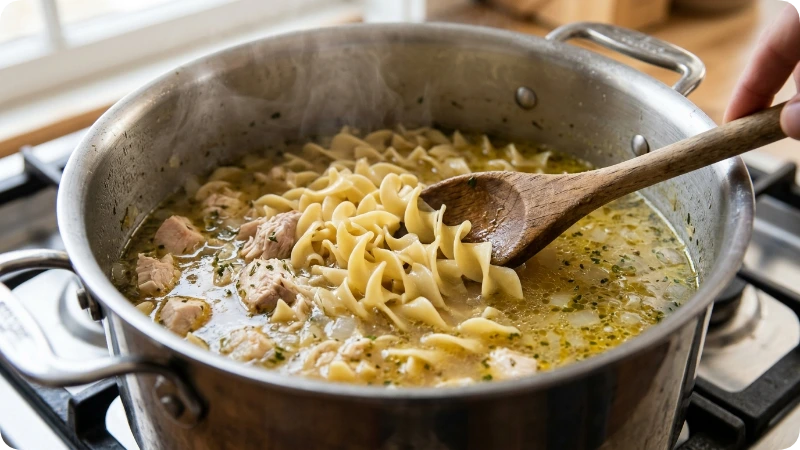
Thaw the chicken safely
If your chicken is frozen, thaw it in the refrigerator before starting. You can also thaw it in cold water in a leakproof package, changing the water every 30 minutes, or use the microwave’s defrost setting and cook it immediately afterward. Do not thaw chicken on the counter.
Prepare the ingredients
- Chop the onion before heating the pot.
- Measure the broth and seasonings.
- Keep the flour and cold water separate until you’re ready to mix the thickener.
- Read the egg noodle package directions before adding them to the pot.
These simple preparations help keep the cooking sequence organized because the noodles should be added only after the chicken has been cooked and removed.
How to Make Chicken and Noodles Successfully
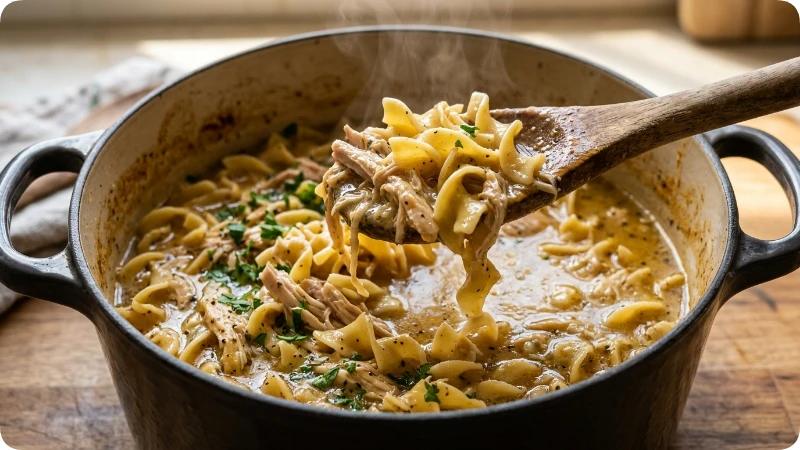
1. Build flavor with softened onion
Cooking the onion in butter before adding the broth softens its sharp flavor and provides a savory base. Keep the heat moderate so the onion softens without browning too heavily.
2. Simmer rather than aggressively boil the chicken
A steady simmer cooks the chicken while allowing the broth to remain manageable. A vigorous boil can make the liquid evaporate faster and cause more splashing. Chicken thickness varies, so use the thermometer reading rather than the clock alone to determine when it is safe to remove.
3. Add noodles after cooking the chicken
The noodles need less cooking time than the chicken breasts. Cooking the chicken first makes it easier to remove and shred without overcooking the pasta. Stir the noodles periodically, especially near the bottom and corners of the pot.
4. Thicken gradually
The flour-and-water mixture should be smooth before it enters the broth. Pouring it in slowly while stirring helps distribute the flour evenly. Allow a few minutes of gentle simmering for the sauce to thicken.
Remember that the noodles continue absorbing liquid as the dish rests. Aim for a consistency that is slightly looser than your desired final result.
Tips and Troubleshooting
| Problem | Likely cause | What to do |
| The sauce is too thin | The flour mixture has not simmered long enough, or the noodles released less starch than expected. | Simmer gently for another minute or two while stirring. Check again before making any further adjustment. |
| The dish is too thick | The noodles absorbed more broth than expected. | Add hot broth gradually and stir until the sauce loosens. |
| The noodles are mushy | They cooked too long or remained in hot liquid after becoming tender. | Remove the pot from the heat as soon as the noodles are tender. Mushy noodles cannot be restored to their original texture. |
| The sauce has flour lumps | The flour and water were not fully combined, or the thickener was added too quickly. | Whisk thoroughly before adding the thickener. Small remaining lumps may be broken up with a whisk, although the texture may not become completely smooth. |
| The dish tastes too salty | The broth was already heavily seasoned. | Add unsalted broth or water gradually. Do not add more salt until the flavor is balanced. |
| The chicken is not cooked through | The breasts were thicker than expected or the simmer was too gentle. | Continue cooking and check the thickest part with a thermometer until it reaches 165°F. |
Variations and Alternative Methods
The following are ideas for future kitchen testing, not verified variations of the base recipe.
Creamier chicken and noodles
A small amount of heavy cream could be added near the end of cooking to create a creamier sauce. The exact amount and its effect on the final thickness have not been tested for this formula. Add gradually and adjust the consistency with broth if needed.
Chicken and noodles with vegetables
Diced carrots or celery could add color and texture. They would need to be cooked until appropriately tender, which may change the timing and liquid balance. Verify the amount and cooking sequence before treating this as a tested variation.
Using leftover cooked chicken
Cooked chicken can reduce the preparation time, but the recipe would need a revised method because the raw-chicken simmering stage is no longer necessary. Use approximately the same amount of chicken only as a starting proposal, and determine the broth quantity and timing through kitchen testing. Add the cooked chicken near the end and heat it to 165°F.
Scaling the recipe
Doubling the ingredients arithmetically does not guarantee the same cooking time or texture. A doubled batch needs a pot with adequate capacity, enough room to stir the noodles, and a fresh check of broth absorption and thickening. Do not automatically double the cooking time.
What to Serve with Chicken and Noodles
Chicken and noodles are filling enough to serve as the main course. These sides can add contrast without competing with the savory sauce:
- Steamed green beans: Provide a fresh, crisp contrast to the soft noodles.
- Roasted broccoli: Adds a lightly browned vegetable side.
- Simple green salad: Brings a cool, fresh texture to the meal.
- Dinner rolls: Useful for soaking up the remaining broth or sauce.
For a balanced plate, choose one vegetable side and add bread if desired.
Make-Ahead, Storage, Freezing, and Reheating
Make-ahead preparation
You can chop the onion and measure the dry seasonings in advance. Keep prepared ingredients covered and refrigerate any cut ingredients that require refrigeration.
For the best noodle texture, prepare the finished dish close to serving time. Egg noodles can continue absorbing liquid while stored, making the sauce thicker and the noodles softer.
Refrigerating leftovers
- Transfer leftovers into shallow containers and refrigerate promptly.
- Refrigerate within 2 hours of cooking, or within 1 hour when the surrounding temperature exceeds 90°F.
- Keep the refrigerator at 40°F or below.
- Use refrigerated leftovers within 3 to 4 days.
Freezing
The finished dish can be frozen as a practical option, although the noodles may soften after thawing and reheating. For better texture, consider storing the cooked chicken and broth separately from freshly prepared noodles. The separate-component method is a quality recommendation and has not been tested for this recipe.
Freeze leftovers in airtight containers. For best quality, USDA guidance lists 3 4 months for frozen leftovers generally; chicken-and-noodle dishes may have a different quality window depending on their composition.
Reheating
- Transfer the desired portion to a saucepan.
- Add a small amount of broth or water if the noodles have absorbed much of the sauce.
- Heat over medium-low heat, stirring frequently.
- Check that the entire portion reaches 165°F before serving.
You can also use a microwave-safe dish. Cover it loosely, stir during heating, and check the temperature in several places.
FAQs
Is chicken and noodles the same as chicken noodle soup?
Not necessarily. Chicken noodle soup usually has a thinner, more broth-forward consistency. Chicken and noodles often has a thicker sauce or gravy that coats the noodles. Recipes vary by household and region.
Can I use frozen egg noodles?
Possibly, but frozen noodles can have different cooking instructions and liquid requirements from dried noodles. Follow the package directions and check the consistency before adding the thickener. The frozen-noodle version needs separate kitchen verification.
Why did my chicken and noodles become so thick?
Egg noodles absorb liquid as they cook and rest. The flour thickener also continues affecting the sauce’s consistency. Add hot broth gradually until you reach the desired texture.
Can I make this recipe without flour?
Yes, but removing the flour changes the base formula. The broth will be thinner unless another thickening method is used. A replacement thickener needs its own quantities and method verification.
How do I know when the chicken is safe to eat?
Use a food thermometer to confirm that the thickest part of every chicken breast reaches 165°F. Appearance alone is not a reliable safety test.
Final Summary
This chicken and noodles recipe is a comforting American-style dinner made with boneless chicken breasts, wide egg noodles, chicken broth, onion, herbs, and a simple flour thickener. The chicken simmers in seasoned broth until it reaches a safe internal temperature of 165°F, then gets shredded and returned to the pot after the noodles cook.
A smooth flour-and-water mixture thickens the broth into a savory sauce that clings to the noodles.

Leo Campbell is the founder, recipe developer, and culinary voice behind Recipe Morsil. With nearly a decade of hands-on home cooking and professional baking experience, Leo tests every recipe multiple times to ensure reliable, fail-proof results in real home kitchens. When he’s not fine-tuning spices or testing cook times, he’s helping home cooks build confidence one bite at a time.
Connect with Leo via [Instagram/Email] or explore his verified recipes below.