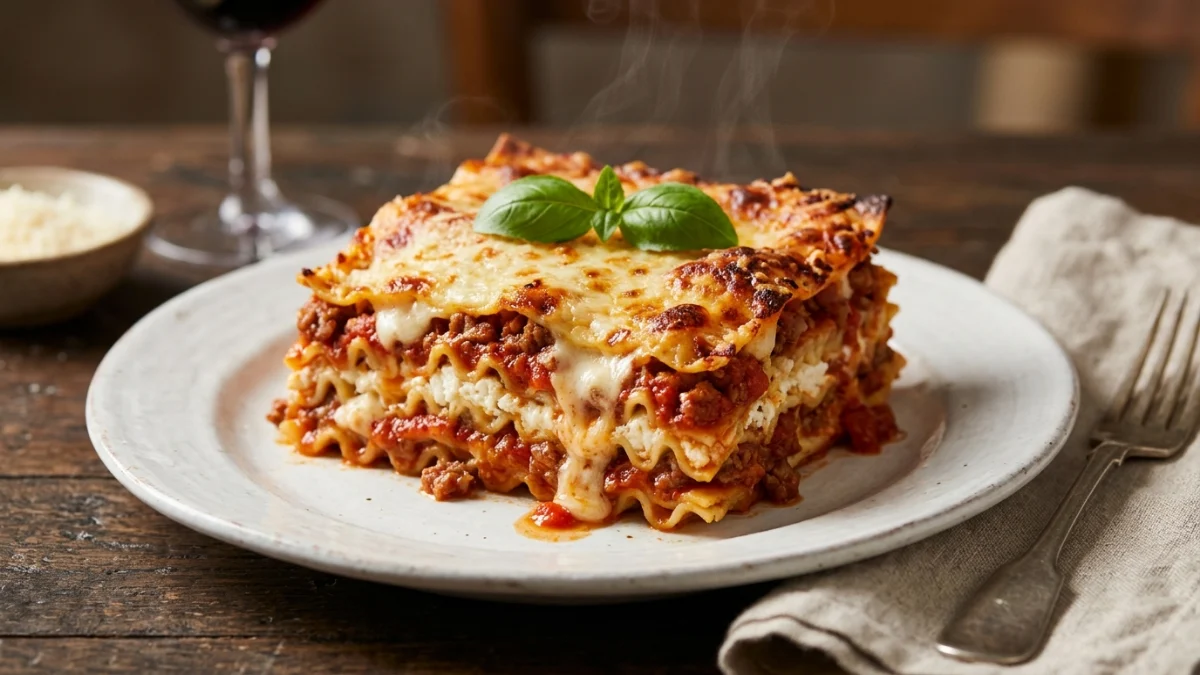
Quick Answer: Layer seasoned beef marinara with tender noodles, egg-bound seasoned ricotta, and mozzarella, then bake at 375°F (covered 30 min, uncovered 15–20 min) until melted and bubbly.
Nothing beats the comforting luxury of a classic Italian-American lasagna, stacked high with layers of hearty ground beef marinara, herb-flecked ricotta, and bubbly, golden-brown mozzarella. While traditional recipes often demand hours of slow simmering, this streamlined approach uses smart pantry staples and an egg-bound whole-milk ricotta mixture to achieve restaurant-worthy richness without spending your entire afternoon over a hot stove. It cuts into clean, show-stopping slices straight out of the baking dish, making it the ultimate cozy weeknight centerpiece or crowd-pleasing Sunday dinner.
A Quick Note from Our Kitchen: This recipe is formulated around classic Italian-American layering standards and standard casserole heat-transfer ratios. For neat, picture-perfect squares that hold their shape without sliding apart, let the lasagna rest on your counter for 15 to 20 minutes before slicing!
Easy Baked Meat and Cheese Lasagna
- Yield: One 9×13-inch casserole; 8 to 10 hearty portions
- Prep Time: 25 minutes
- Cook Time: 1 hour (20 minutes stovetop simmer, 45–50 minutes oven bake)
- Inactive Resting Time: 20 minutes
- Total Elapsed Time: 1 hour 45 minutes
- Essential Equipment: Standard 9×13-inch baking dish (minimum 3-quart capacity and 2.5-inch depth), 10-to-12-inch deep skillet or Dutch oven, large pot for boiling pasta, colander, mixing bowl, aluminum foil.
Ingredients
Meat Sauce Component:
- 1 tablespoon olive oil
- 1 pound (454 g) 85/15 ground beef (or 80/20)
- 1/2 pound (227 g) mild Italian ground sausage (casing removed)
- 1 medium yellow onion, finely diced (approx. 1 cup)
- 4 cloves garlic, minced
- 1 can (28 oz / 794 g) crushed tomatoes
- 1 can (15 oz / 425 g) tomato sauce
- 2 tablespoons tomato paste
- 1 tablespoon Italian seasoning (dried oregano, basil, thyme, and rosemary)
- 1 teaspoon kosher salt (Diamond Crystal; use 3/4 tsp if using table or fine salt)
- 1/2 teaspoon freshly ground black pepper
Ricotta & Cheese Layer Component:
- 15 oz (425 g) whole-milk ricotta cheese, drained of excess surface water
- 1 large egg, lightly beaten
- 1/2 cup (50 g) grated Parmesan cheese (or Pecorino Romano)
- 1/4 cup finely chopped fresh Italian parsley
- 1/4 teaspoon kosher salt
- 1/4 teaspoon freshly ground black pepper
- 16 oz (454 g) low-moisture mozzarella cheese, shredded (approx. 4 cups), divided
Pasta Component:
- 12 regular lasagna noodles (approx. 10–12 oz), plus 2 extra to account for breakage
- 1 tablespoon kosher salt (for pasta boiling water)
Instructions
Prepare the Components
- Parboil the pasta. Bring 4 quarts of water and 1 tablespoon of salt to a rolling boil in a large pot. Add 14 lasagna noodles and cook, stirring occasionally to prevent sticking, until just pliable but distinctly firm (approx. 2 minutes less than package al dente directions, roughly 7–8 minutes). Drain in a colander, rinse gently with cold tap water to stop cooking, and lay them flat in a single layer on parchment paper or clean baking sheets to prevent sticking.
- Brown the meat. Heat 1 tablespoon of olive oil in a deep skillet or Dutch oven over medium-high heat. Add the ground beef and Italian sausage. Cook for 6 to 8 minutes, breaking the meat into small crumbles with a wooden spoon, until browned and cooked through with no pink remaining (reaching a safe minimum temperature of 160°F / 71°C). Drain off all but 1 tablespoon of rendered fat from the skillet.
- Build the sauce. Reduce heat to medium. Add the diced onion to the meat and cook for 3 to 4 minutes until translucent. Add the minced garlic and cook for 1 minute until fragrant. Stir in the tomato paste, crushed tomatoes, tomato sauce, Italian seasoning, 1 teaspoon salt, and 1/2 teaspoon pepper. Bring to a gentle simmer, reduce heat to low, cover partially, and let simmer for 15 minutes to allow flavors to meld. Remove from heat.
- Mix the cheese filling. In a medium bowl, combine the drained ricotta cheese, beaten egg, grated Parmesan, chopped parsley, 1/4 teaspoon salt, and 1/4 teaspoon pepper. Stir thoroughly with a spatula until evenly integrated.
Assemble the Lasagna
- Preheat oven. Position an oven rack in the center position and preheat your oven to 375°F (190°C).
- Layer the dish:
- Base: Spread 1 cup of meat sauce evenly over the bottom of the 9×13-inch baking dish to prevent sticking.
- Layer 1: Lay 4 lasagna noodles lengthwise over the sauce, slightly overlapping edges if necessary to fit the dish.
- Layer 2: Spread half of the ricotta cheese mixture evenly over the noodles. Ladle 1.5 cups of meat sauce over the ricotta, then sprinkle with 1 cup of shredded mozzarella.
- Layer 3: Lay down 4 more noodles. Spread the remaining half of the ricotta mixture over the pasta. Top with 1.5 cups of meat sauce and 1 cup of mozzarella.
- Layer 4 (Top): Lay the final 4 noodles across the top. Spread the remaining meat sauce evenly over the noodles, ensuring noodles are completely covered to avoid dry edges. Sprinkle the top evenly with the remaining 2 cups of mozzarella cheese (and optional extra grated Parmesan, if desired).
Bake, Rest, and Serve
- Bake covered. Spray a large sheet of aluminum foil with cooking spray (to prevent cheese from sticking) and tent it tightly over the baking dish. Bake at 375°F (190°C) for 30 minutes.
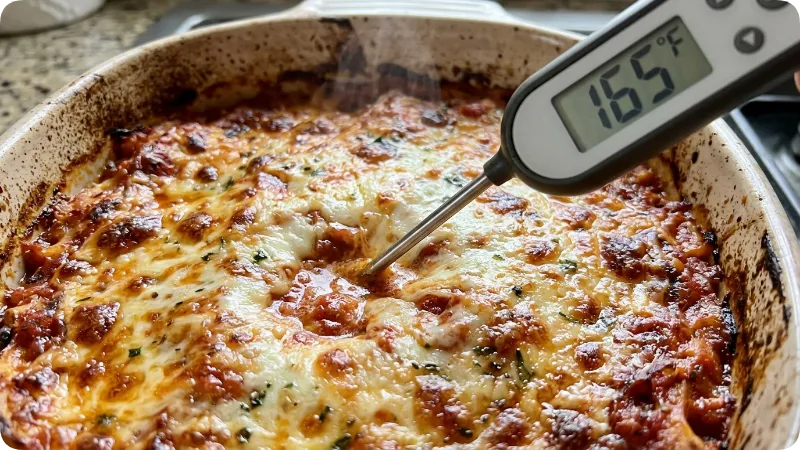
- Bake uncovered. Carefully remove the foil. Return the dish to the oven and bake uncovered for 15 to 20 minutes, or until the edges are vigorously bubbling, the cheese is melted and patches of golden-brown form, and an instant-read thermometer inserted into the center reads at least 165°F (74°C).
- Rest and serve. Remove the lasagna from the oven and set it on a wire cooling rack. Let it rest undisturbed for 20 minutes before slicing into neat squares.
Ingredient Notes and Substitutions
- Ricotta Cheese: Whole-milk ricotta is essential for structure and creaminess. Part-skim ricotta contains higher moisture and less milk fat, which can result in a watery bake. If your ricotta looks wet when opened, drain it in a fine-mesh strainer lined with a paper towel for 15 minutes before mixing.
- Mozzarella: Always choose blocks of whole-milk, low-moisture mozzarella and shred it yourself. Pre-shredded bagged cheese is coated in potato starch and anti-caking agents that hinder a smooth, cohesive melt. Fresh mozzarella packed in water should be avoided here; its excess liquid causes soupy layers.
- Meat Selection: Combining lean ground beef with mild Italian sausage provides an ideal balance of fat, acidity, and classic fennel-garlic seasoning. If substituting with 100% ground beef or ground turkey, increase the Italian seasoning to 1.5 tablespoons and ensure ground poultry is cooked to an internal temperature of 165°F (74°C).
- Noodles: Standard wavy, ruffled lasagna noodles give classic thickness and trap sauce well. No-boil (oven-ready) noodles can be substituted, but you must ensure they are submerged under liquid and add 1/4 cup of water or thin broth around the dish edges before baking to account for absorption.
Before You Begin
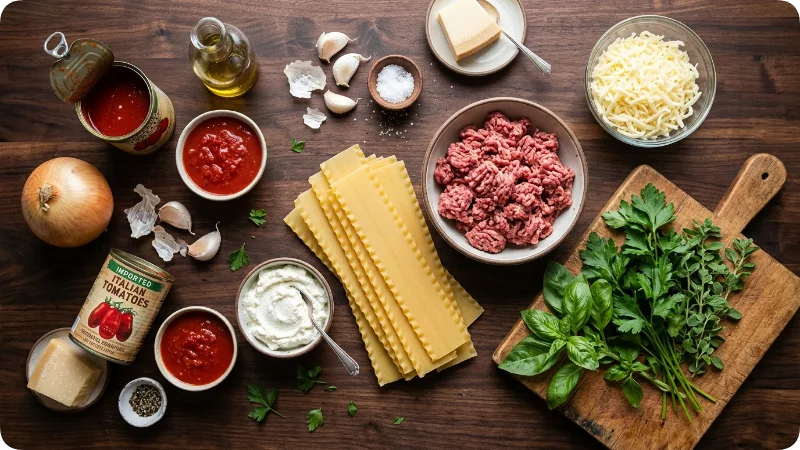
- Pre-Cooking Timeline: Boil the pasta water while browning the meat on an adjacent burner. This parallel task saves 15 minutes of kitchen time.
- Noodle Handling: Boiled lasagna sheets tear easily when hot and will fuse together if left in a warm colander. Laying them out flat immediately after draining eliminates handling frustration during assembly.
- Pan Depth Check: Use a dish with walls at least 2.5 inches high. Shallow 2-inch casseroles risk bubbling over and smoking in your oven. Place a rimmed sheet pan on the rack below the dish as a safeguard against drips.
How to Make It
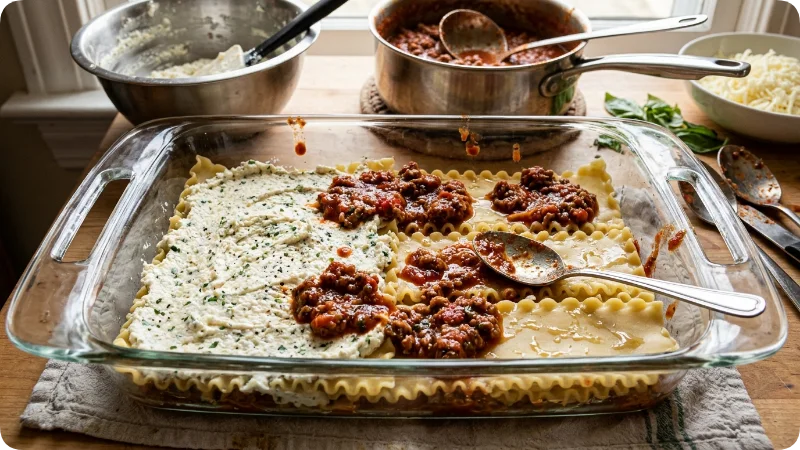
- Why Sauce Goes First: A thin layer of meat sauce on the bottom of the dish provides moisture that hydrates the bottom noodles and acts as a barrier, preventing dry pasta from scorching or sticking to the hot baking dish.
- The Role of the Egg: Whisking a whole egg into the ricotta is a functional requirement, not merely a flavor choice. The egg proteins coagulate under oven heat, setting the ricotta into a creamy, sliceable custard layer rather than melting into thin liquid.
- The Crucial 20-Minute Rest: Never cut into a lasagna straight out of the oven. Boiling-hot melted cheese and tomato sauce have no structural integrity. A 20-minute rest allows the melted fats to firm slightly and the starches in the noodles to set, yielding clean, distinct squares rather than a collapsed heap on the plate.
Tips and Troubleshooting
- Watery or Soupy Lasagna:
- Cause: High-moisture cheese (fresh mozzarella or wet part-skim ricotta), under-simmered runny tomato sauce, or slicing the dish immediately without resting.
- Prevention: Simmer the sauce until thick and glossy; drain wet ricotta; always rest the casserole 20 minutes before cutting.
- Fix: Cannot be fixed once sliced, but returning the remaining casserole uncovered to a 350°F (177°C) oven for 10–15 minutes can evaporate excess surface moisture.
- Burnt or Scorched Cheese on Top:
- Cause: Foil removed too early or oven rack positioned too close to the top heating element.
- Prevention: Keep tightly covered with oiled foil for the first 30 minutes; bake strictly in the center rack position.
- Fix: If browning too rapidly during the uncovered stage, loosely lay the foil back over the top without crimping it.
- Hard, Rubbery Top Noodles:
- Cause: Pasta corners left exposed to direct hot oven air without a protective layer of sauce and cheese.
- Prevention: Spread the top layer of sauce and shredded cheese all the way to the very outer rim of the dish, completely blanketing the final sheet of noodles.
Variations, Alternative Methods, and Scaling
- No-Boil (Oven-Ready) Flat Sheets:
- Adjustment: Eliminate Step 1 entirely. Increase tomato sauce by 1/2 cup (or stir 1/2 cup water directly into the cooked meat sauce) to ensure adequate hydration. Assemble identically and increase the covered baking time from 30 minutes to 35–40 minutes until noodles are tender when pierced with a paring knife.
- Vegetarian Spin:
- Adjustment: Replace ground beef and sausage with 1.5 pounds of finely chopped cremini mushrooms, shredded zucchini, and finely diced carrots sautéed until all released liquid has completely evaporated, then simmer with tomatoes as directed.
- Freezer Pan Scaling:
- Adjustment: Assemble the dish in two standard 8.5×8.5-inch square foil pans instead of one 9×13-inch pan. Bake one fresh (reduce covered bake time to 25 minutes) and freeze the second (see storage directions below).
Serving Suggestions
- Serve with a crisp, bitter green salad dressed in red wine vinaigrette (such as romaine, radicchio, and shaved fennel) to cut through the rich cheese and meat.
- Pair with warm, crusty garlic bread or toasted ciabatta to mop up residual meat sauce.
Make-Ahead, Storage, and Reheating
- Make-Ahead (Unbaked): Assemble the lasagna completely, cover tightly with plastic wrap and then foil, and refrigerate for up to 24 hours before baking. When baking from cold, remove plastic wrap, replace foil, and add 10 to 15 minutes to the covered baking time.
- Storage (Cooked Leftovers): Cool completely to room temperature (within 2 hours of baking for food safety). Store sliced portions in airtight glass containers in the refrigerator for up to 4 days.
- Freezing:
- Unbaked: Freeze in a freezer-safe dish wrapped in double layers of plastic wrap and heavy-duty aluminum foil for up to 3 months. Thaw completely in the refrigerator for 24–36 hours before baking as directed.
- Baked: Freeze individual sliced squares wrapped in parchment and foil for up to 2 months.
- Reheating: Reheat individual portions in an oven-safe dish covered with foil at 350°F (177°C) for 15–20 minutes until the center reaches 165°F (74°C). Microwave individual portions on medium power in 1.5-minute bursts until heated through.
FAQs
Do I really have to boil lasagna noodles before baking?
Yes, for standard ruffled noodles, parboiling for 7 to 8 minutes guarantees tender pasta without risking a dry sauce. While some cooks assemble standard noodles dry with extra liquid, it frequently leads to unpredictable chewiness or a watery casserole.
Can I make lasagna without an egg in the ricotta?
You can omit the egg if you have an allergy, but the ricotta layer will remain loose, grainy, and spoonable rather than holding firm, clean strata when cut into portions.
Why did my cheese stick to the aluminum foil?
As mozzarella melts, its milk proteins bond to ungreased aluminum. Always mist the underside of the foil lightly with neutral cooking spray, or tent the foil slightly so it does not rest directly on the surface of the cheese.
How do I know the lasagna is fully cooked through?
Check that the sauce is bubbling vigorously around all edges and an instant-read thermometer inserted into the exact dead center reads at least 165°F (74°C).
Summary
This guide delivers a classic Italian-American lasagna featuring rich ground beef and sausage marinara, creamy herb-seasoned ricotta, and melted mozzarella. With streamlined prep, parboiled noodles, and clear layering checkpoints, it ensures dependable structure, safe temperatures, and cohesive slices for family dinners without unnecessary culinary complexity.

Leo Campbell is the founder, recipe developer, and culinary voice behind Recipe Morsil. With nearly a decade of hands-on home cooking and professional baking experience, Leo tests every recipe multiple times to ensure reliable, fail-proof results in real home kitchens. When he’s not fine-tuning spices or testing cook times, he’s helping home cooks build confidence one bite at a time.
Connect with Leo via [Instagram/Email] or explore his verified recipes below.