Quick Answer: Roast a patted-dry, seasoned whole chicken at 425°F (218°C) for 60 to 75 minutes until the skin turns deep golden and an instant-read thermometer reaches 165°F.
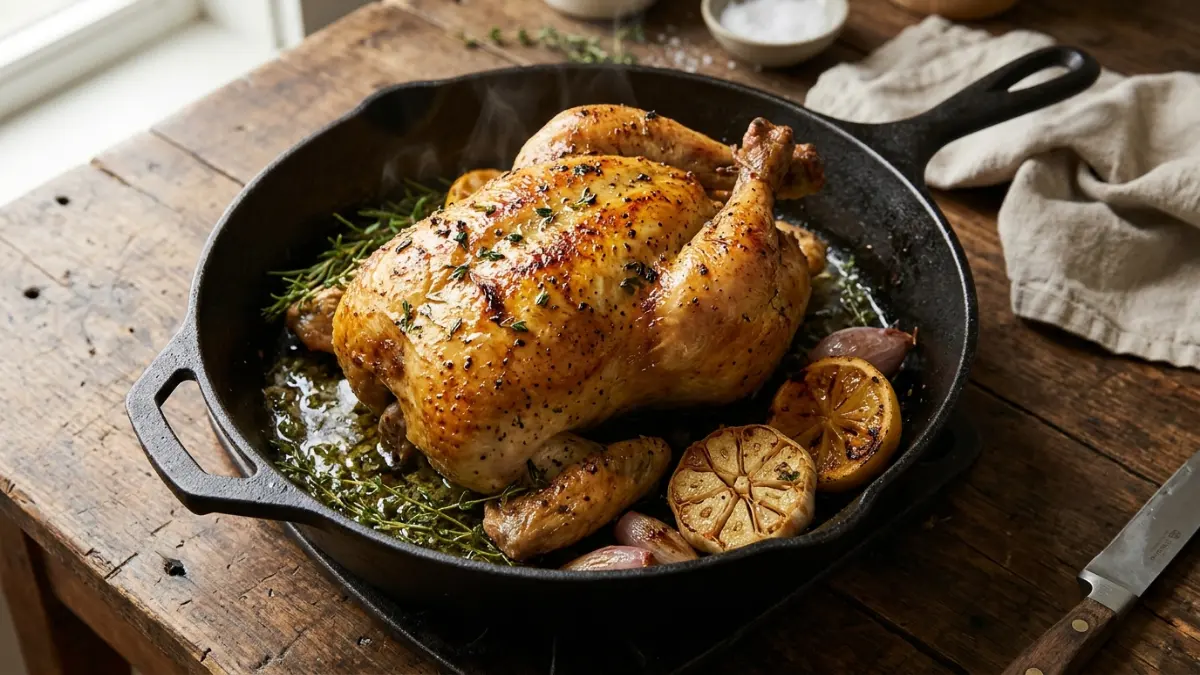
A classic whole roast chicken is the ultimate hallmark of simple, comforting home cooking: crackling golden skin, tender, deeply seasoned meat, and a skillet full of rich, savory pan drippings. Built with just a whole bird, kosher salt, cracked pepper, fragrant aromatics, and a slick of olive oil, this foolproof high-heat method locks in natural poultry moisture while rendering out excess fat for maximum crunch. Whether you are hosting Sunday supper or meal-prepping protein for the week, it delivers reliable, steakhouse-quality results straight from your home oven with effortless elegance.
A Quick Note from Our Kitchen: This recipe is modeled after standard high-heat roasting thermodynamics and USDA food-safety benchmarks. For the crispiest skin and juiciest bite, pat the cavity and skin completely dry with paper towels before seasoning, and always let the roasted bird rest for 10 to 15 minutes before carving so the juices redistribute evenly!
Whole Herb-Butter Roasted Chicken
- Yield: 1 whole roasted chicken (approx. 2.5 lbs cooked meat and bone)
- Serving Basis: 4 servings (approx. 6–8 oz carved meat per portion)
- Prep Time: 20 minutes
- Inactive Prep Time: 1 hour (or up to 24 hours optional refrigeration)
- Cook Time: 60–75 minutes
- Resting Time: 15 minutes
- Total Elapsed Time: 1 hour 35 minutes (excluding overnight chill)
- Required Equipment: 12-inch heavy cast-iron skillet or heavy-duty roasting pan with low sides, paper towels, instant-read digital meat thermometer, kitchen twine.
Ingredients
- 1 whole chicken (approx. 4 lbs / 1.8 kg), giblets and neck removed from cavity
- 1 tablespoon kosher salt (Diamond Crystal preferred; use 1.5 teaspoons if using Morton kosher or fine sea salt), divided: 2 teaspoons for exterior, 1 teaspoon for cavity
- 1 teaspoon freshly cracked black pepper, divided
- 2 tablespoons unsalted butter, softened to room temperature (or extra virgin olive oil)
- 1 small yellow onion, quartered
- 1 medium lemon, halved
- 4 sprigs fresh thyme
- 3 cloves garlic, lightly crushed and peeled
Instructions
- Dry and season the chicken. Remove the chicken from packaging. Remove any giblets from the cavity. Thoroughly pat the exterior skin and the interior cavity dry with paper towels. Rub 1 teaspoon of the kosher salt and 1/2 teaspoon of black pepper inside the cavity.
- Chill uncovered (optional but recommended). For the crispest skin, set the chicken uncovered on a plate or rack in the refrigerator for at least 1 hour (up to 24 hours). If roasting immediately, let the bird sit at cool room temperature for 20 minutes while the oven heats.
- Preheat the oven. Adjust your oven rack to the lower-middle position and preheat the oven to 425°F (218°C / gas mark 7).
- Stuff and tie. Place the quartered onion, halved lemon, thyme sprigs, and crushed garlic inside the cavity. Tie the legs together loosely with kitchen twine to promote even cooking, and tuck the wingtips behind the shoulders.
- Coat the exterior. Gently spread the softened butter (or rub olive oil) over the entire exterior skin of the bird. Evenly sprinkle the remaining 2 teaspoons of kosher salt and 1/2 teaspoon of black pepper over all exposed surfaces.
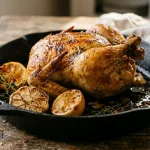
- Roast. Set the chicken breast-side up in a 12-inch heavy cast-iron skillet or shallow roasting pan. Transfer to the oven. Roast at 425°F (218°C) for 60 to 75 minutes. The skin should turn deep golden brown and render clear juices.
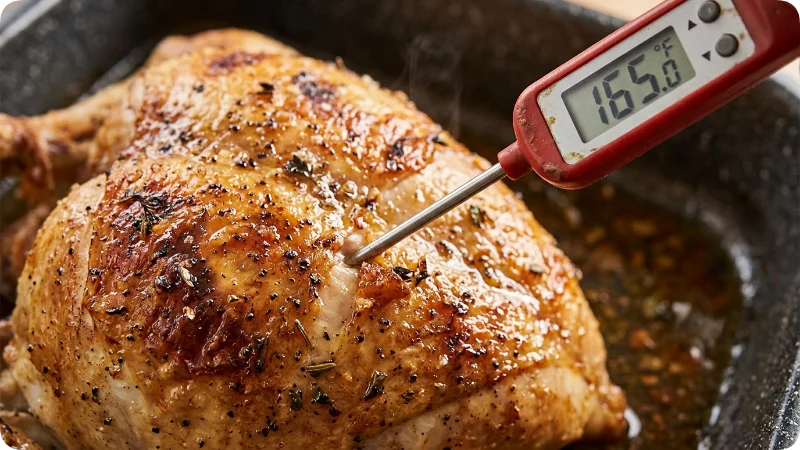
- Verify safe internal temperature. Insert an instant-read thermometer into the deepest part of the breast (avoiding bone) until it reads a minimum of 165°F (74°C). Check the thickest part of the inner thigh (avoiding bone), which should read 170°F–175°F (77°C–79°C) for optimal texture. If temperature is lower, return the pan to the oven in 5-minute increments.
- Rest and carve. Transfer the chicken to a carving board or warm platter. Let it rest undisturbed for 15 minutes to allow internal juices to redistribute before carving.
Ingredient Notes and Substitutions
- Whole Chicken: Select an air-chilled, untrimmed 3.5 to 4.5 lb broiler/fryer chicken. Air-chilled poultry absorbs less water during processing, allowing the skin to crisp significantly faster.
- Salt Varieties: Salt grain volume varies dramatically. If substituting table salt for kosher salt, reduce the total volume by roughly half (1.5 teaspoons total) to prevent over-salting.
- Fat Medium: Softened butter provides rich milk solids that caramelize and brown the skin; extra virgin olive oil or high-heat avocado oil offers a clean flavor profile with a higher smoke point.
- Cavity Aromatics: Fresh rosemary or oregano can replace thyme. If omitting lemon, add an extra quartered shallot or halved head of garlic.
Before You Begin
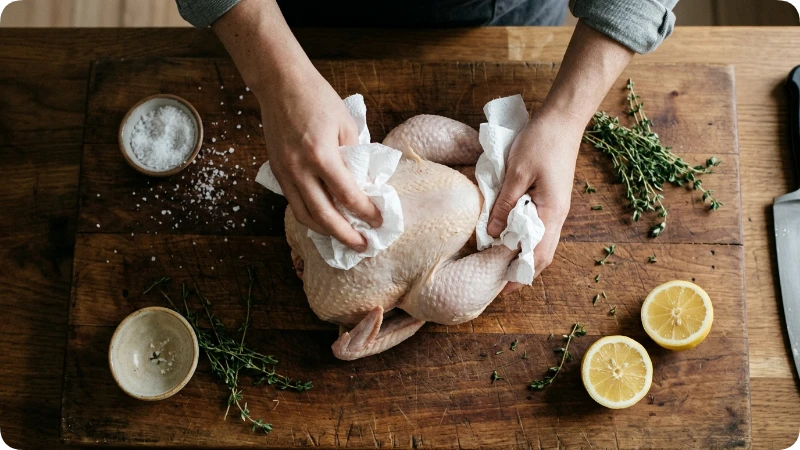
- Thawing Safety: If frozen, fully thaw the bird in the refrigerator (allow roughly 24 hours for every 4 pounds). Never thaw poultry at room temperature on the counter.
- Moisture Elimination: Surface moisture is the enemy of browning. Moisture turns to steam in the oven, softening the skin rather than allowing it to crisp. Patting dry with paper towels is mandatory.
- Air-Drying Phase: If schedule permits, letting the salted chicken rest uncovered in the refrigerator overnight draws moisture out through osmosis, dissolves the salt into the muscle tissue, and tautens the skin.
How to Make It
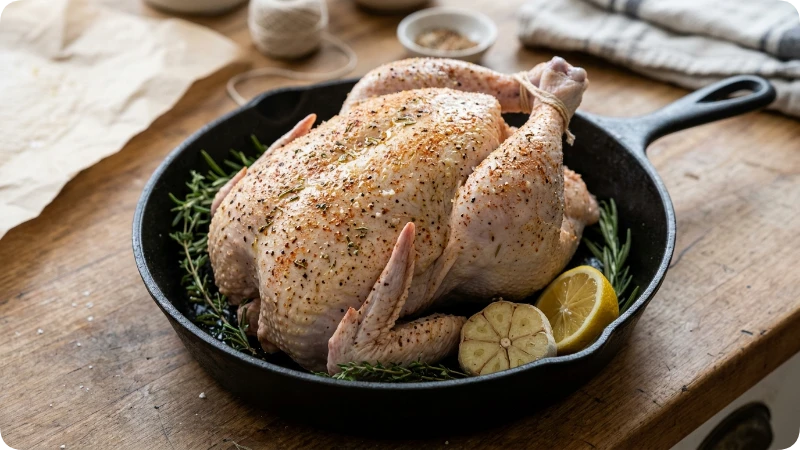
- Trussing Rationale: Tying the drumsticks together prevents hot air from freely circulating inside an empty cavity, which would otherwise dry out the delicate breast meat before the dark thigh meat cooks through. Tucking the wings protects the thin wingtips from burning.
- Pan Selection: Use a low-sided pan (like a cast-iron skillet or rimmed sheet pan) rather than a high-walled roasting pan. High metal walls trap evaporating steam around the bottom half of the bird, yielding soggy skin along the thighs.
- Visual Doneness vs. Safety: Deep golden browning and clear-running juices indicate that rendering is well underway, but they are subjective cues. Confirm safety exclusively using a calibrated probe thermometer.
Tips and Troubleshooting
- Skin is pale but time is up:
- Cause: Excess surface moisture at the start, or pan walls too tall.
- Fix: Move the pan to the upper-middle rack and roast 5–10 minutes longer, or briefly switch to a low broil for 1–2 minutes while watching continuously.
- Skin is darkening too fast (around 40 minutes):
- Cause: High oven hotspots or high sugar content in butter.
- Fix: Loosely tent a sheet of aluminum foil over the top of the breast; do not crimp the foil, which traps steam.
- Breast reaches 165°F before thighs are done:
- Cause: Uneven heat exposure.
- Fix: Remove the bird at 165°F in the breast to prevent dryness. Dark meat is safe at 165°F, though texture improves when thighs reach 175°F. Next time, let the bird sit at room temperature for 20 minutes before roasting, oriented with legs pointing toward the back of the oven.
Storage and Reheating
- Refrigeration: Cool leftover meat to room temperature within 2 hours of cooking. Carve remaining meat from the carcass, pack in airtight containers, and refrigerate for up to 3 to 4 days.
- Freezing: Wrap carved, skinless or skin-on meat tightly in freezer paper, then seal inside a freezer-safe bag for up to 3 months. Thaw overnight in the refrigerator.
- Reheating: Reheat shredded or sliced meat in a skillet with 2 tablespoons of chicken broth or pan juices over medium-low heat until steaming (165°F internal). To re-crisp skin on whole carved pieces, place on a wire rack over a baking sheet and bake at 375°F (190°C) for 10–12 minutes.
FAQs
Should I wash the whole chicken before cooking?
No. Washing raw poultry splashes water droplets containing Campylobacter and Salmonella onto countertops, utensils, and nearby foods up to three feet away. Heat destroys bacteria during cooking; washing increases cross-contamination risk.
Can I roast vegetables in the same pan beneath the chicken?
Yes. Cut root vegetables (carrots, potatoes, parsnips) into 1.5-inch chunks and toss with 1 tablespoon of oil. Scatter them evenly across the bottom of the skillet to create a natural roasting rack. Ensure they are tender and cooked through before serving.
What should I do with the pan drippings?
Skim excess clear fat from the surface of the skillet juices. Place the skillet over medium heat on the stovetop, deglaze with 1/2 cup of dry white wine or low-sodium chicken stock, scrape up the browned fond with a wooden spoon, and simmer until reduced by half for an effortless pan sauce.
Summary
This guide delivers a classic whole roasted chicken featuring crisp skin and tender meat using high-heat roasting in a heavy skillet. It provides clear timing, salt ratios, and USDA safety checkpoints, paired with practical drying techniques and direct troubleshooting steps to ensure dependable results for home cooks.

Leo Campbell is the founder, recipe developer, and culinary voice behind Recipe Morsil. With nearly a decade of hands-on home cooking and professional baking experience, Leo tests every recipe multiple times to ensure reliable, fail-proof results in real home kitchens. When he’s not fine-tuning spices or testing cook times, he’s helping home cooks build confidence one bite at a time.
Connect with Leo via [Instagram/Email] or explore his verified recipes below.