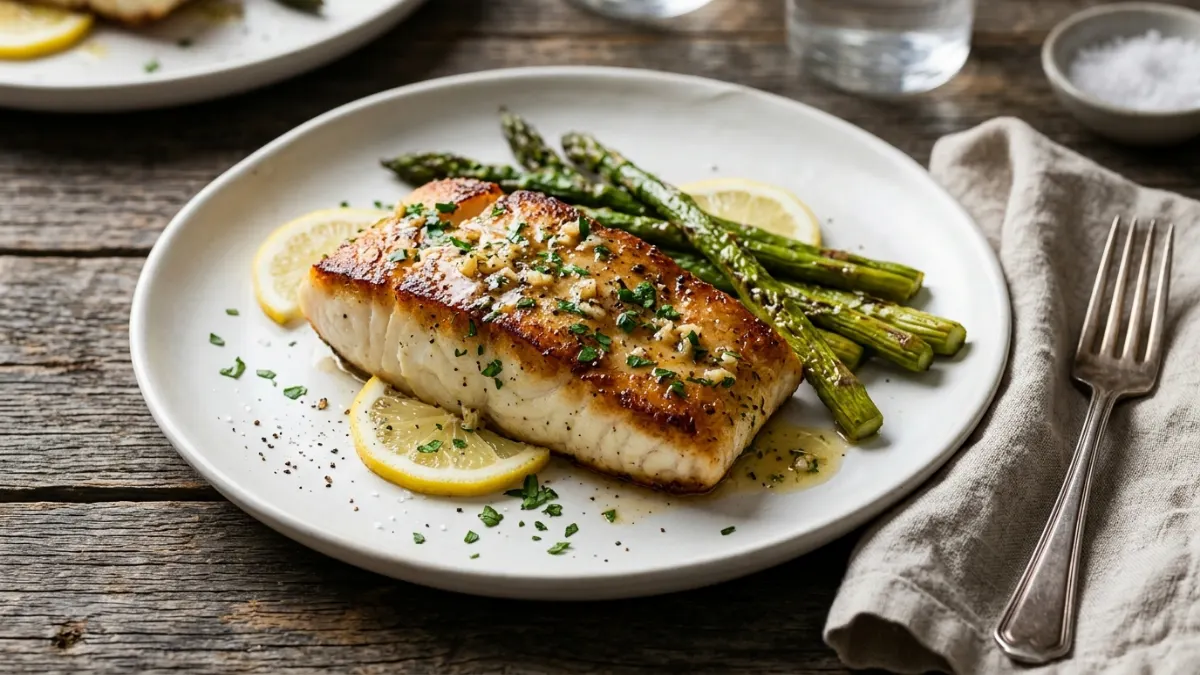
Quick Answer: Pan-sear thick Chilean sea bass fillets in a hot oven-safe skillet until golden brown, finish in a 400°F (200°C) oven until the internal temperature reaches 145°F (63°C), and baste with lemon-garlic herb butter.
Chilean sea bass (Patagonian toothfish) has a high natural oil content and large, velvety flakes that stay moist under high heat. Searing the fillets in a heavy skillet builds a crisp, golden crust while finishing them briefly in the oven cooks the thick center evenly without drying out the edges. A quick pan sauce of unsalted butter, fresh garlic, lemon juice, and parsley balances the richness of the fish in under 25 minutes.
Recipe Testing Note: This recipe is an untested proposal developed from established seafood cooking ratios and USDA food-safety benchmarks. Exact oven roasting times will vary depending on fillet thickness and starting temperature; rely on an instant-read thermometer rather than clock time alone.
Pan-Seared Chilean Sea Bass with Lemon Herb Butter
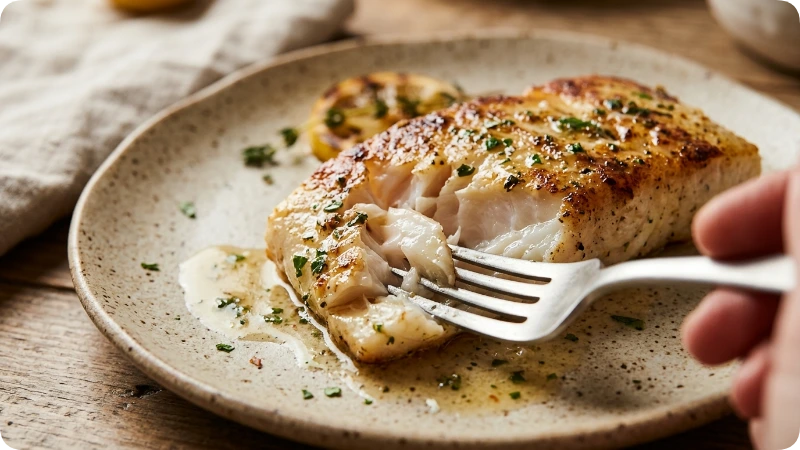
Thick, buttery Chilean sea bass fillets seared to a golden crust and basted with a bright garlic, lemon, and parsley butter sauce.
- Yield: 4 servings (four 6-ounce / 170 g fillets)
- Prep Time: 10 minutes
- Cook Time: 12 to 15 minutes
- Inactive Time: 3 minutes (resting)
- Total Time: 25 to 28 minutes
- Equipment: 12-inch heavy oven-safe skillet (such as cast iron or stainless steel), fish spatula, instant-read digital thermometer, paper towels
Ingredients
For the Fish:
- 4 Chilean sea bass fillets (6 ounces / 170 g each, about 1 ½ inches / 3.8 cm thick), thawed if frozen and patted completely dry
- 1 teaspoon kosher salt
- ½ teaspoon freshly ground black pepper
- 1 ½ tablespoons neutral high-heat oil (such as avocado, grapeseed, or canola oil)
For the Lemon Herb Butter Sauce:
- 3 tablespoons (42 g) unsalted butter, cut into 3 pieces
- 2 medium garlic cloves, finely minced
- 2 tablespoons fresh lemon juice (from about 1 medium lemon)
- 1 tablespoon finely chopped fresh flat-leaf parsley
- Optional garnish: thin lemon wheels and extra chopped parsley
Instructions
Prep and Sear the Chilean Sea Bass
- Preheat and prep the fish: Place an oven rack in the center position and preheat the oven to 400°F (200°C). Pat the Chilean sea bass fillets thoroughly dry on all sides with paper towels. Season evenly all over with the 1 teaspoon kosher salt and ½ teaspoon black pepper.
- Heat the skillet: Set a 12-inch oven-safe skillet over medium-high heat and add the 1 ½ tablespoons neutral oil. Heat until the oil shimmers and begins to wisp lightly with smoke (about 2 minutes).
- Sear the first side: Place the fillets in the skillet presentation-side down (or skin-side down if using skin-on fillets), leaving at least 1 inch of space between pieces. Press gently with a fish spatula for 5 seconds so the surface makes full contact with the pan. Cook undisturbed for 3 to 4 minutes until a deep golden-brown crust forms and the fish releases easily from the skillet.
Finish Roasting in the Oven
- Flip and transfer to the oven: Carefully flip each fillet using a fish spatula. Transfer the entire skillet to the preheated 400°F (200°C) oven and roast for 6 to 9 minutes, depending on thickness, until the fish flakes easily with a fork and an instant-read thermometer inserted into the thickest part reads 145°F (63°C).
Make the Pan Baste and Serve
- Make the pan baste: Using oven mitts, carefully remove the hot skillet from the oven and place it back on the stovetop over low heat (keep a towel draped over the hot handle as a reminder). Add the 3 tablespoons butter and minced garlic to the pan. Once the butter melts and foams, stir in the 2 tablespoons lemon juice and 1 tablespoon chopped parsley, cooking for 30 to 45 seconds until the garlic is fragrant but not browned.
- Baste, rest, and serve: Tilt the skillet slightly and spoon the warm lemon-herb butter repeatedly over the fillets for 20 to 30 seconds. Transfer the fish to warm plates, spoon any remaining pan sauce over the top, rest for 3 minutes, and serve with optional lemon wheels.
Notes & Alternatives
- Skin-On vs. Skinless: Both work well. If using skin-on fillets, score the skin lightly in two places before seasoning to prevent curling, and start searing skin-side down.
- Sustainability Note: Because Patagonian toothfish populations have historically faced overfishing, look for Marine Stewardship Council (MSC) certification or check current Monterey Bay Aquarium Seafood Watch recommendations when purchasing.
Ingredient Notes and Substitutions
- Chilean Sea Bass Fillets: Center-cut fillets of uniform thickness (around 1 ½ inches / 3.8 cm) cook at the same rate. Thin tail pieces cook faster and should be checked with a thermometer 2 to 3 minutes earlier.
- Neutral High-Heat Oil: Extra-virgin olive oil has a lower smoke point and can burn during the initial high-heat sear. Stick with avocado, canola, or grapeseed oil for searing, then add butter after the oven roast for flavor.
- Unsalted Butter: Using unsalted butter lets you control the final salt level after the pan juices concentrate. If substituting salted butter, reduce the kosher salt on the fish to ¾ teaspoon.
Before You Begin
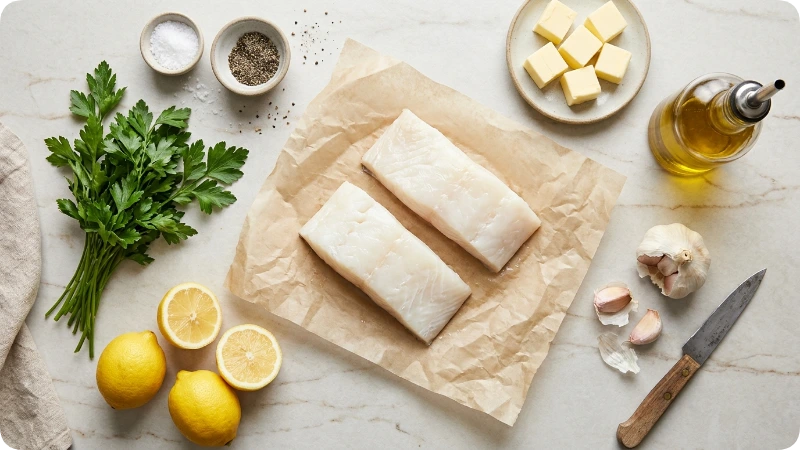
- Thawing Frozen Fillets: Most Chilean sea bass sold in North America is previously frozen at sea. Thaw frozen fillets overnight in the refrigerator on a paper-towel-lined plate. Never thaw fish at room temperature.
- Surface Moisture Check: Moisture is the enemy of browning. Even after thawing, blot the fillets firmly with fresh paper towels right before seasoning so the fish sears rather than steams.
- Pan Safety Setup: Keep a dry kitchen towel or silicone handle cover ready next to the stove so you do not accidentally grab the hot skillet handle after removing it from the 400°F (200°C) oven.
How to Make Pan-Seared Chilean Sea Bass
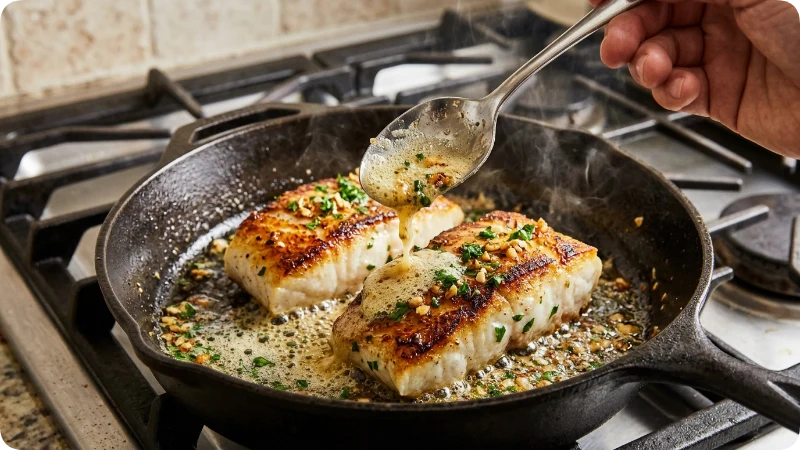
Getting a Clean Sear Without Sticking
Cold fish placed in a lukewarm pan bonds to metal surfaces. Wait until the oil shimmers across the entire skillet before laying the fillets down away from you to avoid oil splatter. Leave the fish undisturbed for the first 3 to 4 minutes; as proteins brown and firm up, the crust naturally releases from the pan.
Finishing in the Oven
Because Chilean sea bass fillets are often 1 ½ to 2 inches thick, cooking them entirely on the stovetop risks burning the exterior before the center heats through. Moving the skillet to a 400°F (200°C) oven surrounds the thick fillets with steady, even heat.
Basting Off High Heat
Adding butter and garlic at the very end over low stovetop heat prevents the milk solids in the butter from scorching and keeps the garlic sweet and aromatic rather than bitter.
Tips and Troubleshooting
- Fish Sticks When Trying to Flip
- Cause: The skillet was not hot enough when the fish went in, or the crust has not finished searing.
- Prevention: Preheat the oil until shimmering and pat the fillets completely dry.
- Fix: Give the fish another 45 to 60 seconds; if it still resists, slide a thin, flexible metal fish spatula firmly underneath to separate the crust cleanly.
- Dry or Chalky Texture
- Cause: Overcooking past 145°F (63°C).
- Prevention: Start checking internal temperature at the 6-minute mark in the oven.
- Fix: Once fish proteins tighten and expel moisture, the texture cannot be reversed, though spooning extra warm lemon-herb butter over each portion helps restore richness.
- Burnt Garlic in the Pan Sauce
- Cause: Residual heat from the 400°F (200°C) skillet was too high when the garlic hit the pan.
- Prevention: Drop the burner to low and let the butter melt before stirring in the minced garlic.
- Fix: If the garlic turns dark brown and bitter, wipe out the skillet carefully and make a fresh 1-minute butter-lemon sauce in the clean pan.
Serving Suggestions
Serve Chilean sea bass alongside dishes that soak up the lemon-herb pan sauce without competing with its delicate sweetness. Good pairings include garlic mashed potatoes, steamed jasmine rice, roasted asparagus, or sautéed baby spinach.
Make-Ahead, Storage, and Reheating
- Make-Ahead: You can mince the garlic, chop the parsley, juice the lemon, and pat the fillets dry up to 4 hours ahead; keep the fish covered on a rack or paper towels in the refrigerator until ready to season and sear.
- Storage: Cool leftovers within 2 hours and store in an airtight container in the refrigerator for up to 2 days.
- Freezing: Freezing cooked Chilean sea bass is not recommended, as thawing breaks down the delicate, moist flakes and makes the texture watery.
- Reheating: Reheat gently in a covered skillet over low heat with a splash of water or broth (or in a 275°F / 135°C oven covered with foil) for 8 to 10 minutes until warmed through to 145°F (63°C). Avoid high-power microwaving, which toughens the fish.
FAQs
What temperature should Chilean sea bass be cooked to?
According to USDA food-safety guidelines, finfish should be cooked to an internal temperature of 145°F (63°C) at the thickest point, or until the flesh is opaque and separates easily with a fork.
Do you eat the skin on Chilean sea bass?
Yes, Chilean sea bass skin is edible when seared until crisp. However, because the skin is quite thick and holds a layer of subcutaneous fat, many home cooks prefer skinless fillets or remove the skin after cooking if it remains soft.
Can I substitute another fish if Chilean sea bass is unavailable?
Black cod (sablefish) is the closest culinary substitute due to its similarly high fat content, velvety flake, and rich flavor. Thick-cut halibut or sea scallops also work with this pan-searing method, though halibut is much leaner and cooks slightly faster.
Summary
This pan-seared Chilean sea bass recipe uses a hot oven-safe skillet to build a golden crust before finishing the thick fillets in a 400°F oven to a safe 145°F internal temperature. Finished with a quick lemon-garlic herb butter pan baste, it delivers tender, flaky fish and clear troubleshooting tips in under 30 minutes.

Leo Campbell is the founder, recipe developer, and culinary voice behind Recipe Morsil. With nearly a decade of hands-on home cooking and professional baking experience, Leo tests every recipe multiple times to ensure reliable, fail-proof results in real home kitchens. When he’s not fine-tuning spices or testing cook times, he’s helping home cooks build confidence one bite at a time.
Connect with Leo via [Instagram/Email] or explore his verified recipes below.