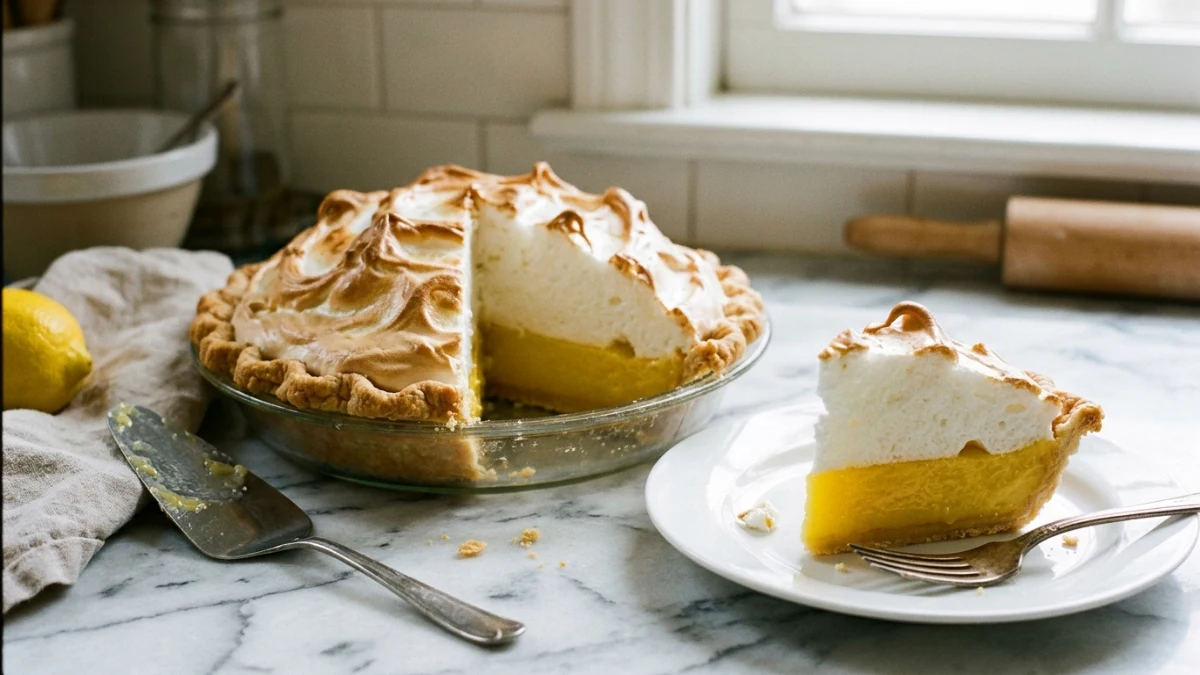
Quick Answer: Bake a crisp butter pie crust, fill it with a tangy stovetop lemon curd, and top with billowy meringue while the filling is still hot so it seals cleanly and bakes to a golden peak.
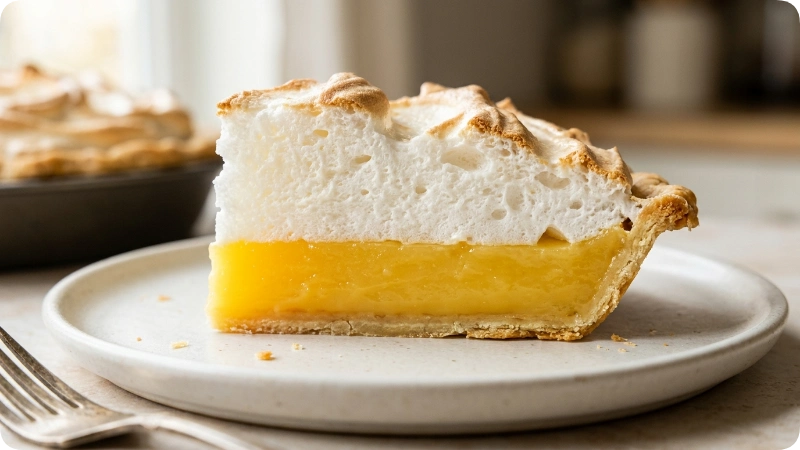
A classic lemon meringue pie is the ultimate bakery showstopper, pairing a bright, silky-smooth citrus custard with cloud-like toasted meringue atop a shatteringly crisp butter crust. While homemade lemon pie often suffers from runny filling or sliding, watery meringue, this foolproof approach uses straightforward pastry science to guarantee clean slices every time. By boiling the cornstarch-thickened lemon curd until fully set and spreading the whipped meringue directly onto the steaming-hot filling, the egg whites cook from underneath to form a seamless seal. Whether you are baking for a holiday feast or Sunday supper, this timeless dessert delivers restaurant-worthy height and vibrant, tart-sweet balance straight from your home oven.
A Quick Note from Our Kitchen: This recipe is formulated around classic pastry emulsion science and starch-gelatinization standards. To prevent watery “weeping” and keep your meringue fluffy and secure, always spread the whipped egg whites onto the hot lemon filling all the way to the inner edge of the crust so it anchors cleanly before baking!
Lemon Meringue Pie Recipe
A traditional three-layer pie featuring a pre-baked pastry shell, freshly squeezed lemon filling, and stable baked meringue.
- Yield: One 9-inch pie (8 standard slices)
- Active Prep Time: 45 minutes
- Cook Time: 35 minutes (crust + filling + oven finishing)
- Inactive Cooling Time: 4 hours (cooling to room temperature is required for structural setting)
- Total Elapsed Time: 5 hours 20 minutes
- Essential Equipment: Standard 9-inch pie plate (preferably standard metal or tempered glass; avoid deep-dish), rolling pin, parchment paper, pie weights (or dried beans), medium heavy-bottomed non-reactive saucepan, balloon whisk, stand mixer or electric hand mixer, silicone spatula.
Ingredients
Pastry Crust
- 1 1/4 cups (155g) all-purpose flour
- 1/2 teaspoon fine sea salt
- 1 tablespoon (12g) granulated white sugar
- 1/2 cup (1 stick / 113g) unsalted butter, chilled and cut into 1/2-inch cubes
- 3 to 4 tablespoons (45–60ml) ice-cold water
Lemon Curd Filling
- 1 cup (200g) granulated white sugar
- 1/3 cup (40g) cornstarch
- 1/4 teaspoon fine sea salt
- 1 1/2 cups (360ml) cold water
- 4 large egg yolks (reserve egg whites for meringue)
- 1/2 cup (120ml) freshly squeezed lemon juice (from 3 to 4 medium lemons)
- 1 tablespoon finely grated lemon zest
- 2 tablespoons (28g) unsalted butter, softened
Meringue Topping
- 4 large egg whites, room temperature (approx. 120ml)
- 1/2 teaspoon cream of tartar
- 1/2 cup (100g) granulated white sugar
- 1/2 teaspoon pure vanilla extract
Instructions
Blind-Bake the Pastry Crust
- Make and chill the dough: Whisk the flour, salt, and sugar in a large bowl. Cut in the cold butter using a pastry cutter or clean fingers until the pieces resemble small peas. Drizzle with ice water, 1 tablespoon at a time, tossing gently until a shaggy dough forms. Shape into a flat disk, wrap in plastic, and chill for 1 hour.
- Par-bake the shell: Preheat your oven to 400°F (204°C). Roll the dough into a 12-inch circle on a lightly floured surface, transfer it into a 9-inch pie plate, crimp the edges, prick the base with a fork, line with parchment paper, and fill to the brim with pie weights. Bake at 400° for 15 minutes, remove the weights and parchment, lower the oven to 375°F (190°C), and bake an additional 10 to 12 minutes until light golden. Set aside and lower the oven temperature to 350°F (177°C).
Cook the Lemon Curd Filling
- Whisk the base and temper yolks: In a medium heavy-bottomed saucepan, whisk together 1 cup sugar, cornstarch, and salt. Gradually whisk in the cold water until completely smooth. In a separate small bowl, lightly whisk the 4 egg yolks.
- Thicken and finish the curd: Place the saucepan over medium heat and whisk continuously until the mixture turns translucent, thickens, and bubbles actively (about 5 to 7 minutes). Boil gently for 1 full minute while whisking vigorously to activate the cornstarch. Remove from heat, slowly whisk about 1/2 cup of the hot slurry into the egg yolks to temper them, then pour the mixture back into the saucepan. Return to medium-low heat and cook, whisking constantly, until it returns to a rolling simmer (about 1 to 2 minutes). Remove from heat immediately, stir in the lemon juice, lemon zest, and 2 tablespoons softened butter until glossy, and keep hot.
Whip the Meringue and Assemble
- Whip to stiff peaks: Immediately place the 4 room-temperature egg whites and cream of tartar in a clean, grease-free mixing bowl. Beat on medium-low until frothy, then increase speed to medium-high. Once soft peaks form, slowly add 1/2 cup sugar, 1 tablespoon at a time, beating continuously. Add the vanilla extract and beat on high until stiff, glossy peaks form and sugar granules have dissolved (rub a tiny pinch between your fingers to check).
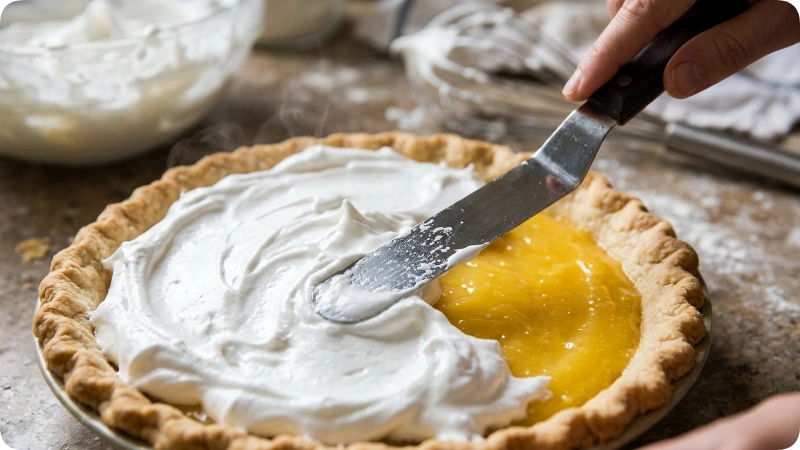
- Seal and swirl: Pour the hot lemon filling directly into the pre-baked crust. Immediately spoon the meringue over the steaming filling, starting at the edges. Use an offset spatula to anchor the meringue completely onto the crust’s inner border to prevent shrinking. Pile the remaining meringue in the center and create decorative swirls with the back of a spoon.
Bake and Cool to Set
- Brown the meringue: Bake at 350°F (177°C) for 15 to 20 minutes, until the meringue peaks are evenly golden brown.
- Cool completely: Remove the pie and set it on a wire rack at room temperature out of drafts for at least 4 hours. Do not slice early; the cornstarch requires gradual cooling to firm up properly.
Ingredient Notes and Substitutions
- Lemons: Use fresh lemons. Bottled lemon juice lacks aromatic oils, contains preservatives that mute flavor, and alters the acidity level required for a clean set.
- Cornstarch: This is the primary structural thickener. Do not substitute flour 1:1; all-purpose flour has weaker gelatinizing strength and produces a cloudy, paste-like texture. If substituting potato starch, use equal weight, but take care not to over-boil it as prolonged heat breaks down potato starches faster than cornstarch.
- Cream of Tartar: An acidic salt that lowers the pH of the egg whites, reinforcing the protein network and preventing weeping (syneresis). If unavailable, replace with 1/2 teaspoon of fresh lemon juice or distilled white vinegar.
- Butter: Unsalted butter ensures consistent seasoning. If using salted butter, reduce the sea salt in both the crust and filling by half.
Before You Begin: Workflow and Timing
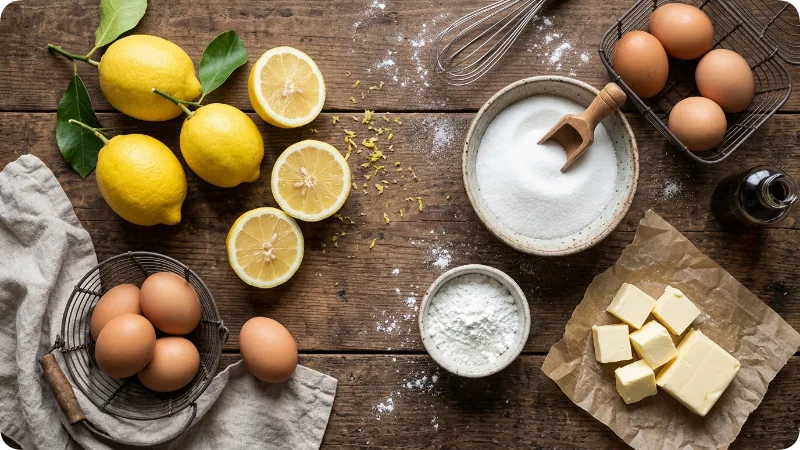
- Separate eggs when cold: Eggs separate more cleanly when straight from the refrigerator because the yolks are firmer. Separate them first, cover the whites, and let them warm to room temperature (about 30 minutes) before whipping.
- Synchronize filling and meringue: The most critical step in a lemon meringue pie is making sure the filling is boiling-hot when the meringue is spread onto it. Do not cook the filling and set it aside to cool before making the meringue. Have the meringue ready or whip it immediately as the filling comes off the stove.
How to Make It: Key Decisions and Visual Cues
Par-Baking the Crust
A blind-baked crust is essential. Lemon filling is wet and will leave unbaked dough raw and soggy on the bottom. The crust must be fully dry and pale golden before the hot filling is added.
The Cornstarch Boil
Cornstarch requires sustained heat to deactivate alpha-amylase (an enzyme found in egg yolks that breaks down starches into water over time). Whisking through 1 to 2 minutes of active, sputtering simmering after incorporating the yolks ensures the starch bonds set permanently and prevents the filling from liquefying after a day in the fridge.
The workflow follows five sequential steps: cook the lemon base, temper the egg yolks, simmer for one minute, assemble the pie while the filling is still hot, and finish with a final bake.
Anchoring the Meringue
Spread the meringue so it seals against the inner rim of the pastry. If gaps are left between the egg whites and the baked crust, the meringue will shrink inward during baking and pool moisture around the perimeter.
Troubleshooting Guide
- Filling is runny after cooling:
- Cause: Under-boiling the cornstarch mixture, or failing to neutralize yolk enzymes with sufficient boiling.
- Prevention: Cook until thick bubbles break across the surface for a full 60 seconds after tempering yolks.
- Fix: Cannot be fixed once cooled without re-cooking, which degrades the crust.
- Meringue weeping (liquid layer under meringue):
- Cause: Meringue was spread over a cold or lukewarm filling, leaving the base of the foam undercooked.
- Prevention: Pour hot filling directly into the crust and top with meringue immediately.
- Beading (amber droplets on top of meringue):
- Cause: Overcooking the meringue or undissolved sugar in the whipped whites.
- Prevention: Add sugar slowly, 1 tablespoon at a time, during whipping to ensure total dissolution; pull the pie when tips are golden brown, not dark.
Make-Ahead, Storage, and Serving
- Make-Ahead: The pastry dough can be made up to 3 days in advance and kept refrigerated, or frozen for up to 2 months.
- Storage: Lemon meringue pie is best consumed the day it is made. Store leftovers uncovered or loosely tented with foil (ensure foil does not touch the meringue) in the refrigerator for up to 2 days.
- Freezing: Do not freeze lemon meringue pie. Freezing breaks down both the cornstarch gel in the filling and the delicate air cell structure of the meringue, creating a wet, separated mess upon thawing.
- Slicing: For clean, uniform slices, dip a thin chef’s knife into a tall glass of warm water and wipe it clean with a damp towel between every cut.
FAQs
Can I make Swiss or Italian meringue instead?
Yes. While this recipe uses an oven-baked French meringue, an Italian or Swiss meringue (which cooks the egg whites over steam or with hot sugar syrup) creates an exceptionally stable topping. If using Italian or Swiss meringue, apply it to a cooled filling and toast the exterior with a kitchen torch rather than baking.
Why did my meringue shrink away from the crust?
Meringue shrinks when it loses moisture rapidly during baking without being anchored. Spreading the foam completely against the pastry edge forms a seal that prevents it from pulling back into the center.
Can I reduce the sugar in the filling?
You can reduce the sugar in the filling by up to 25% without collapsing the structure. However, lowering sugar increases the perceived acidity significantly and can slightly affect how the starch gel sets.
How do I prevent my pie crust from getting soggy?
Ensure the crust is fully blind-baked and pale golden before adding filling. Pouring the filling in while hot ensures surface gelatinization occurs immediately, preventing liquid from soaking down into the pastry base.
Summary
This classic lemon meringue pie pairs a fully blind-baked butter crust with a tart stovetop curd and a stable, golden meringue. Sealing the whipped whites against the crust over steaming-hot curd ensures clean slices without weeping. Cool at room temperature for at least 4 hours before slicing for optimal texture and hold.

Leo Campbell is the founder, recipe developer, and culinary voice behind Recipe Morsil. With nearly a decade of hands-on home cooking and professional baking experience, Leo tests every recipe multiple times to ensure reliable, fail-proof results in real home kitchens. When he’s not fine-tuning spices or testing cook times, he’s helping home cooks build confidence one bite at a time.
Connect with Leo via [Instagram/Email] or explore his verified recipes below.