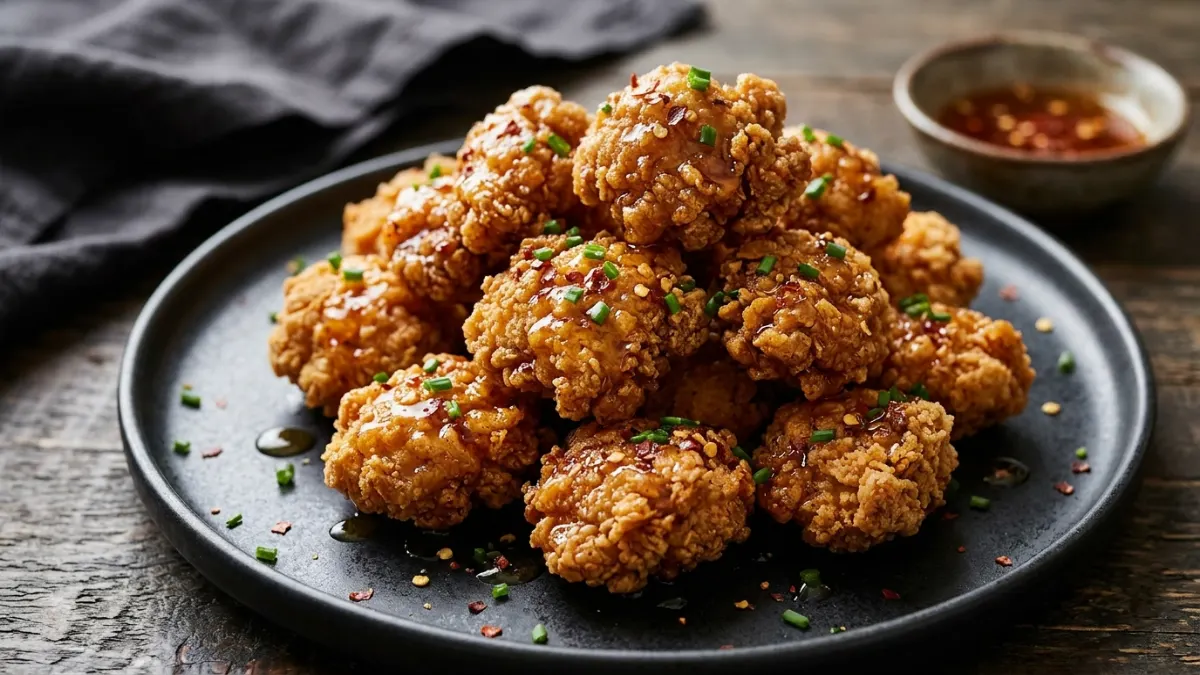
Quick Answer: Hot honey chicken pairs ultra-crisp, buttermilk-dredged chicken bites with a warm stovetop glaze of sweet clover honey, hot sauce, red pepper flakes, and cayenne.
Crispy hot honey chicken delivers the ultimate flavor collision: deeply seasoned, shatteringly crisp fried poultry coated in a sticky, sweet-and-spicy glaze. The secret to its signature crunch is a 50/50 blend of all-purpose flour and cornstarch, creating a textured, craggy crust engineered to hold up under the warm honey without getting soft or soggy. Balanced with floral honey sweetness, tangy hot sauce, and a slow-building chile kick, this easy crowd-pleaser brings Nashville-style excitement straight to your home kitchen using simple everyday staples.
A Quick Note from Our Kitchen: This recipe is built on classic high-starch frying science and balanced sweet-heat emulsion ratios. For the crispiest bite, drizzle the warm hot honey over the chicken right before serving so every piece stays crackling-crisp!
Hot Honey Chicken Recipe Card
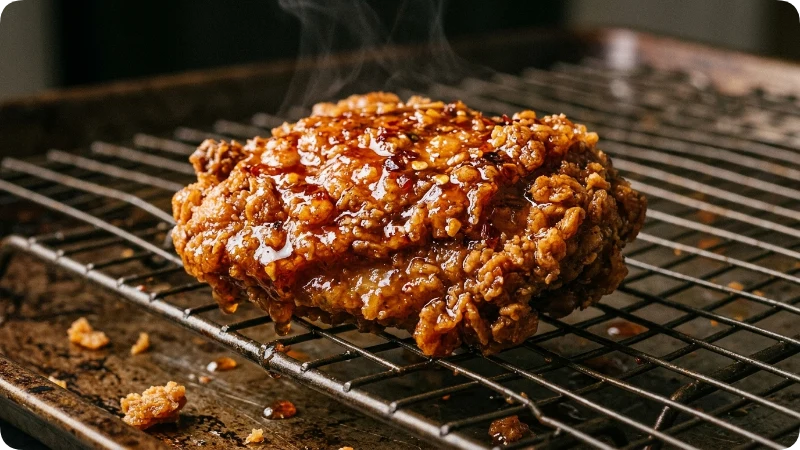
Description: Marinated boneless chicken thighs double-dredged in seasoned cornstarch-flour, fried until golden, and coated in a warm infused chile-honey glaze.
- Yield: 4 servings (approx. 1.5 lb cooked chicken bites, glazed)
- Prep Time: 20 minutes
- Cook Time: 20 minutes
- Marinating Time: 30 minutes
- Total Elapsed Time: 1 hour 10 minutes
- Essential Equipment: Heavy Dutch oven or 5-quart deep pot, candy/deep-fry thermometer, digital instant-read meat thermometer, wire cooling rack set inside a rimmed baking sheet, 10-inch stainless steel or enameled skillet.
Ingredients
Chicken and Marinade
- 1.75 lbs (795 g) boneless, skinless chicken thighs, trimmed of excess fat and cut into 1.5-inch pieces
- 1 cup (240 ml) whole buttermilk
- 1 tablespoon (15 ml) Louisiana-style hot sauce
- 1 teaspoon (6 g) fine sea salt
- 0.5 teaspoon (1.5 g) garlic powder
- 0.5 teaspoon (1 g) freshly cracked black pepper
Dry Dredge
- 1 cup (125 g) all-purpose flour
- 1 cup (120 g) cornstarch
- 1 tablespoon (8 g) smoked paprika
- 1.5 teaspoons (9 g) fine sea salt
- 1 teaspoon (3 g) garlic powder
- 1 teaspoon (3 g) onion powder
- 0.5 teaspoon (1 g) cayenne pepper
- 1 teaspoon (4 g) baking powder
Hot Honey Glaze
- 0.75 cup (255 g) clover honey (or standard mild wildflower honey)
- 2 tablespoons (30 g) unsalted butter
- 1.5 tablespoons (22.5 ml) Louisiana-style hot sauce
- 1.5 teaspoons (3 g) crushed red pepper flakes
- 0.5 teaspoon (1 g) cayenne pepper
- 0.5 teaspoon (2.5 ml) apple cider vinegar
- 0.25 teaspoon fine sea salt
For Frying
- 2 quarts (1.9 L) peanut oil or canola oil (for deep frying)
Step-by-Step Instructions
Marinating and Coating
- Marinate the Chicken: In a large mixing bowl, whisk together the buttermilk, 1 tablespoon hot sauce, 1 teaspoon fine sea salt, 0.5 teaspoon garlic powder, and 0.5 teaspoon black pepper. Add the cut chicken pieces, turning to submerge completely. Cover and refrigerate for 30 minutes (up to 4 hours maximum).
- Prepare the Dry Dredge & Station: In a wide shallow dish, whisk together the flour, cornstarch, smoked paprika, 1.5 teaspoons salt, garlic powder, onion powder, cayenne pepper, and baking powder. Place a wire cooling rack inside a rimmed baking sheet next to the dredging station. Set another wire rack inside a second sheet for holding finished fried chicken.
- Dredge the Chicken: Drizzle 3 tablespoons of the buttermilk marinade directly into the dry flour mixture and toss with a fork to create shaggy bits (these yield extra-crispy exterior flakes). Working with 4–5 pieces at a time, lift chicken from the marinade, let excess liquid drip off, and press firmly into the dry dredge, turning to coat every crevice. Transfer coated pieces to the first wire rack and rest undisturbed for 10 minutes to allow the starches to hydrate and adhere.
Frying the Chicken
- Heat the Frying Oil: Pour the peanut or canola oil into a large Dutch oven until it reaches a depth of roughly 2.5 to 3 inches, leaving at least 3 inches of clearance to the rim. Attach a deep-fry thermometer. Heat over medium-high heat until the oil reaches 360°F (182°C).
- Fry in Batches: Carefully lower 5 to 6 pieces of chicken into the hot oil. The oil temperature will drop; adjust heat to maintain a constant frying temperature between 325°F and 335°F (163°C–168°C). Fry for 4 to 5 minutes, turning occasionally with a spider or tongs. Check doneness by inserting a digital meat thermometer into the thickest part of the largest piece: it must read a minimum of 165°F (74°C) for safe consumption (thighs benefit from 170°F–175°F for maximum tenderness).
- Drain on Rack: Transfer the cooked chicken to the second clean wire rack set over a baking sheet to drain. Avoid paper towels, which trap steam and soften the crust. Repeat with the remaining chicken in batches, allowing the oil to recover to 360°F before adding each new batch.
Glazing and Serving
- Simmer the Glaze: While the final batch fries, combine honey, unsalted butter, hot sauce, red pepper flakes, cayenne, apple cider vinegar, and 0.25 teaspoon salt in a small saucepan over medium-low heat. Stir until the butter is melted and small bubbles appear around the edges (approx. 2 to 3 minutes). Do not boil hard; remove from heat.
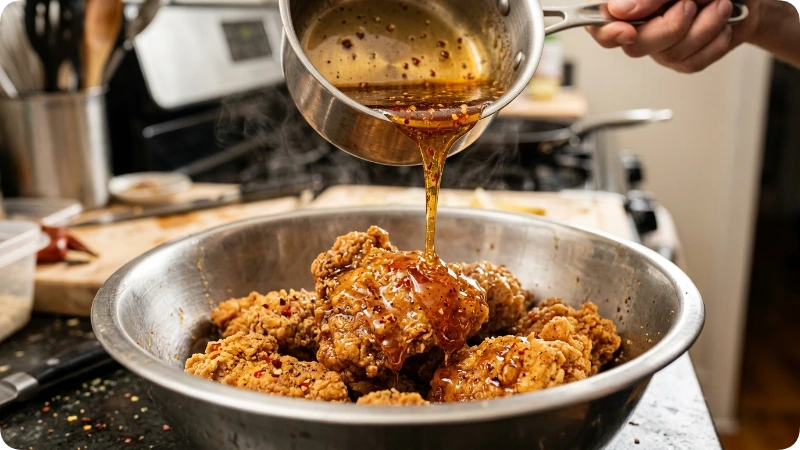
- Glaze and Serve: Place the hot fried chicken into a large stainless steel bowl. Pour half of the warm hot honey glaze over the chicken and gently toss to coat. Serve immediately, passing the remaining glaze on the side for dipping.
Ingredient Notes & Substitutions
- Boneless, Skinless Chicken Thighs: Chicken thighs contain higher intramuscular fat than breasts, keeping them juicy during high-heat frying and forgiving slight variations in cook time. If using boneless chicken breast, cut into slightly larger 2-inch chunks and reduce fry time to 3.5 to 4 minutes, strictly monitoring for a 165°F (74°C) internal temperature to prevent drying out.
- Cornstarch (1:1 Ratio): A standard all-purpose flour dredge absorbs moisture quickly once glazed. Incorporating 50% cornstarch weakens the gluten matrix, producing a glass-like, rigid crust that retains its crunch when coated in hot honey. Potato starch can replace cornstarch 1:1.
- Honey: Mild clover or orange blossom honey works best. Deep, robust honeys (like buckwheat) overpower the spices with molasses-like notes.
- Vinegar-Based Hot Sauce: Use standard aged red cayenne pepper sauce (such as Frank’s or Crystal). The natural acetic acid cuts through the dense sweetness of honey, preventing the sauce from tasting cloying.
Before You Begin: Frying Setup
Before heating any oil, arrange your counter in a strict linear flow from left to right:
- Marinating bowl with raw poultry.
- Dredge pan and raw coated chicken rest rack.
- Stovetop Dutch oven with deep-fry thermometer secured.
- Finished wire resting rack set in a rimmed sheet pan.
Ensure the oil level is at least 3 inches below the pot rim to accommodate foaming when cold chicken is introduced. Keep children and pets away from the cooking zone, and never leave heating oil unattended.
How to Make It: Key Cooking Stages
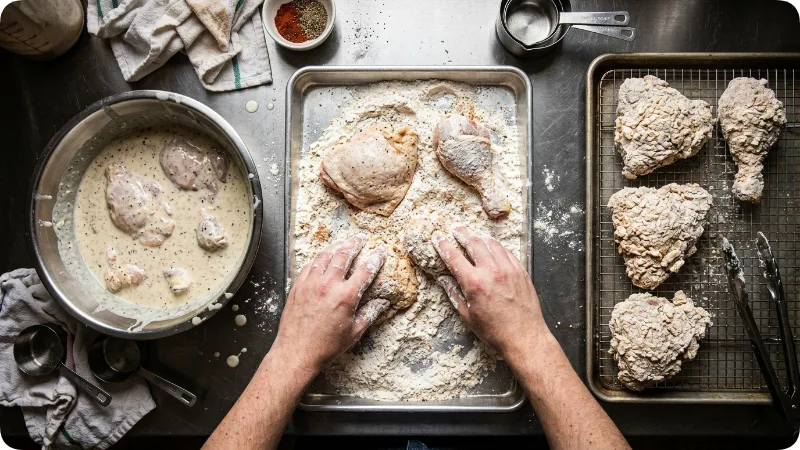
- Start with the raw marinated thighs.
- Coat them in the flour and cornstarch dredge, then let them rest for 10 minutes to hydrate.
- Deep-fry in oil heated to 325°F–335°F for 4 to 5 minutes, removing the chicken once the internal temperature reaches at least 165°F.
- Drain on an elevated wire rack, then immediately toss in the warm chile-honey glaze.
The 10-Minute Hydration Rest
Allowing dredged chicken to sit on a wire rack for 10 minutes prior to frying is essential. The starch granules absorb the buttermilk layer, turning pasty rather than powdery. Dropping dry-floured chicken straight into hot oil causes loose flour to slough off, burning at the bottom of your pot and ruining the oil clarity.
Managing Frying Temperatures
When room-temperature or cold chicken enters 360°F oil, the temperature immediately plummets by 25°F to 35°F. Pre-heating to 360°F ensures that the active frying stage settles into the target 325°F to 335°F sweet spot. If oil drops below 315°F, the crust absorbs oil heavily before crisping; if it climbs above 350°F, the exterior darkens before the poultry reaches 165°F inside.
Emulsifying the Glaze
Gently warming honey with melted butter creates a light fat emulsion. The fat coats the tongue, moderating the sting of the cayenne and capsaicin, while lending a glossy, clinging sheen to the chicken skin rather than pooling into a watery puddle at the bottom of the bowl.
Tips & Troubleshooting
- Problem: The crust slides off the chicken during frying.
- Cause: Chicken was too wet when entering the flour, or flour didn’t hydrate.
- Fix: Let the excess buttermilk drip thoroughly off each piece before dredging, and do not skip the 10-minute rest on the wire rack before frying.
- Problem: Chicken is dark brown outside but undercooked inside.
- Cause: Oil temperature was too hot (exceeding 360°F during frying).
- Fix: Cannot be fixed mid-fry safely. Transfer undercooked chicken to a 350°F (177°C) oven on a wire rack until an internal thermometer reaches 165°F (74°C). Lower burner heat on the Dutch oven for remaining batches.
- Problem: The chicken becomes soggy within minutes of glazing.
- Cause: The chicken was drained on flat paper towels (steaming itself) or coated in boiling-hot, unreduced sauce.
- Fix: Always drain on an elevated wire rack. Toss with glaze immediately before serving rather than letting pieces sit in sauce.
Alternative Cooking Methods
Air Fryer Method
- Preparation: Use the same buttermilk marinade and dredge formula.
- Setup: Spray both sides of the dredged chicken generously with high-smoke-point oil spray (such as avocado oil) until no dry white flour spots remain.
- Execution: Preheat air fryer to 390°F (199°C). Place chicken in a single layer with at least 0.5-inch space between bites. Air fry for 12 to 14 minutes, shaking or flipping at the 7-minute mark. Verify internal temperature reaches 165°F (74°C).
- Expected Difference: Crunch is slightly drier and less rich than deep-frying, but holds glaze well.
Serving Suggestions
- Classic Pairings: Serve over warm, flaky buttermilk biscuits, alongside dill pickle spears to cut sweetness, or atop creamy coleslaw.
- Glaze Coverage: This recipe produces approximately 1 cup of hot honey glaze. Allocate 0.5 cup for tossing 1.75 lbs of chicken bites, leaving 0.5 cup warm for table dipping or drizzling over sides.
Make-Ahead, Storage, and Reheating
- Make-Ahead: Chicken can remain in the buttermilk marinade for up to 4 hours in the refrigerator. The hot honey glaze can be made up to 1 week in advance and stored in an airtight glass jar at room temperature.
- Refrigeration: Store leftover unglazed (or glazed) chicken in a shallow, airtight container in the refrigerator for up to 3 days.
- Reheating for Maximum Crispness: Never microwave fried chicken, as it gelatinizes starches and produces a soft, rubbery crust. Arrange leftovers on a wire rack set over a rimmed baking sheet. Bake in an oven or toaster oven preheated to 375°F (190°C) for 8 to 10 minutes until heated through (165°F internal) and re-crisped. Warm extra honey glaze in a small pan to re-drizzle.
- Freezing: Freeze unglazed, fully cooled fried chicken on a baking sheet until solid (2 hours), then transfer to a freezer bag for up to 2 months. Reheat directly from frozen at 375°F (190°C) for 15 to 18 minutes.
FAQs
Can I make this with bone-in chicken pieces?
Yes, but cooking times and oil temperature must change. Use bone-in thighs or drumsticks, drop oil temperature to 320°F (160°C), and fry for 12 to 15 minutes until the internal temperature reaches 165°F (74°C) at the bone.
How do I adjust the heat level of the hot honey?
Control heat by reducing the cayenne pepper in the glaze to 0.25 teaspoon and using 0.5 teaspoon red pepper flakes for mild heat. For extreme heat, steep 0.5 teaspoon of habanero powder or sliced fresh habanero chiles into the warming honey for 5 minutes, then strain.
What is the best oil for deep-frying chicken?
Peanut oil is the culinary gold standard due to its 450°F (232°C) smoke point, neutral taste, and clean heat transfer. Canola, corn, or vegetable oil are suitable neutral alternatives. Avoid unrefined oils or olive oil, which burn at deep-fry temperatures.
Can I reuse the frying oil?
Yes. Let oil cool completely to room temperature, pour it through a fine-mesh sieve lined with a coffee filter into its original container, and store in a dark, cool cupboard. It can safely be reused 2 to 3 times for poultry frying.
Final Summary
This hot honey chicken recipe delivers crunchy, tender bite-sized fried chicken thighs glazed in an infused sweet-and-spicy honey butter sauce. Combining buttermilk marination, a 1:1 flour-cornstarch dredge, and temperature-controlled deep-frying ensures a durable crust that stays crisp under glaze. Standalone instructions, safety cues, and storage directions provide reliable home execution.

Leo Campbell is the founder, recipe developer, and culinary voice behind Recipe Morsil. With nearly a decade of hands-on home cooking and professional baking experience, Leo tests every recipe multiple times to ensure reliable, fail-proof results in real home kitchens. When he’s not fine-tuning spices or testing cook times, he’s helping home cooks build confidence one bite at a time.
Connect with Leo via [Instagram/Email] or explore his verified recipes below.