Quick Answer: For ultra-juicy boneless skinless chicken thighs, pat them completely dry and sear in a hot, heavy skillet for 6–8 minutes per side until deeply golden and registering 175°F.
Boneless, skinless chicken thighs are the ultimate weeknight dinner hack, naturally rich, incredibly flavorful, and far more forgiving than lean chicken breasts. Because dark meat is packed with connective tissue and intramuscular fat, it bastes itself from the inside out, melting into melt-in-your-mouth tenderness instead of drying out. The key to restaurant-quality stovetop results is patting the meat dry and letting it sear undisturbed in a screaming-hot cast-iron skillet. Coated in a smoky, savory spice rub, these juicy thighs develop a gorgeous caramelized crust in under 20 minutes, making them the perfect high-protein centerpiece for grain bowls, crisp salads, or weeknight pastas.
A Quick Note from Our Kitchen: This recipe is built on poultry meat-science standards and high-heat Maillard browning principles. For the best tenderness and texture, cook dark meat chicken thighs until an instant-read thermometer reads between 175°F and 180° F. The extra heat breaks down the collagen while keeping the meat exceptionally juicy!
Recipe Card: Skillet-Seared Boneless Skinless Chicken Thighs
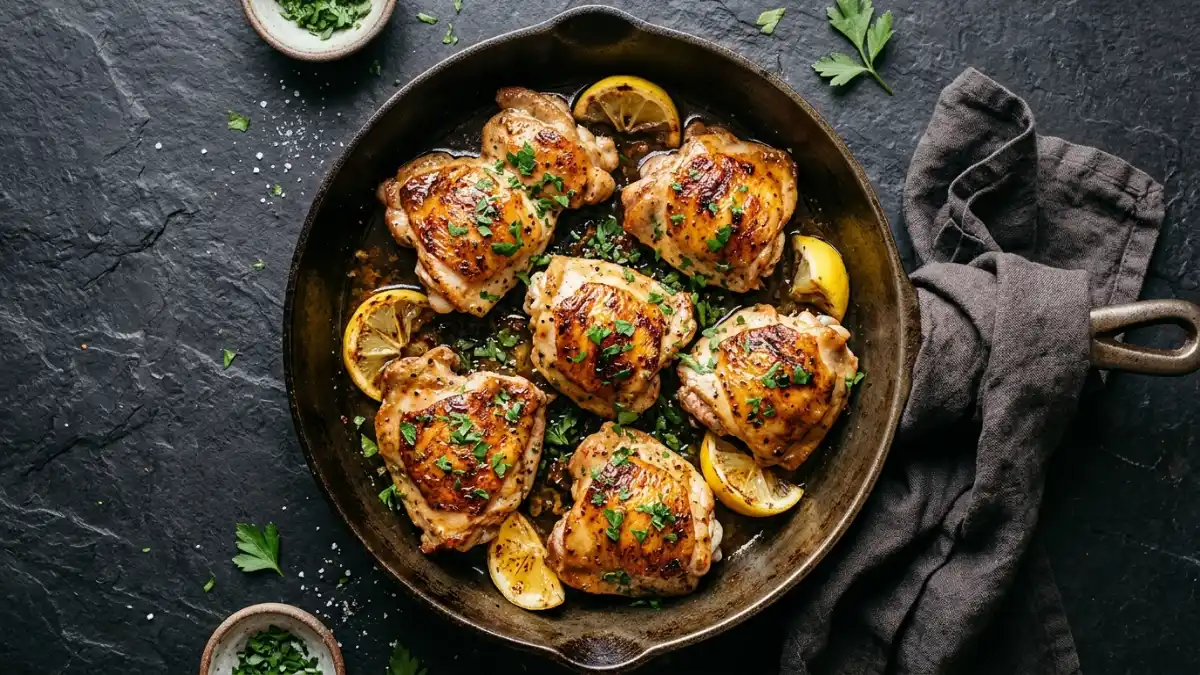
- Description: Pan-seared boneless skinless chicken thighs seasoned with a savory herb-and-spice rub, cooked in a skillet until golden-brown and tender.
- Yield: 6 to 8 thighs (serves 4; approximately 1 to 2 thighs per 4- to 5-ounce cooked portion)
- Active Prep Time: 10 minutes
- Cook Time: 14 minutes
- Inactive Resting Time: 5 minutes
- Total Elapsed Time: 29 minutes
- Essential Equipment: 12-inch heavy cast-iron skillet or heavy stainless steel pan, paper towels, digital instant-read meat thermometer, kitchen tongs
Ingredients
The Chicken:
- 1.75 to 2 lbs (800 to 900 g) boneless, skinless chicken thighs (approx. 6 to 8 thighs), trimmed of excess hanging fat
Seasoning Blend:
- 1.5 tsp (9 g) kosher salt (Diamond Crystal; if using table salt or Morton kosher salt, reduce to 1 tsp / 6 g)
- 1 tsp (2.3 g) smoked paprika
- 1 tsp (2.8 g) garlic powder
- 1 tsp (2.4 g) onion powder
- 1/2 tsp (0.5 g) dried oregano
- 1/2 tsp (0.5 g) dried thyme
- 1/2 tsp (1.4 g) freshly cracked black pepper
Cooking Fat & Finishing:
- 1.5 tbsp (22 ml) neutral high-smoke-point oil (avocado, canola, or vegetable oil), divided
- 1 tbsp (14 g) unsalted butter (optional, for basting during the final minute)
- 1 fresh lemon, cut into wedges (optional, for serving)
Instructions
Prep & Seasoning
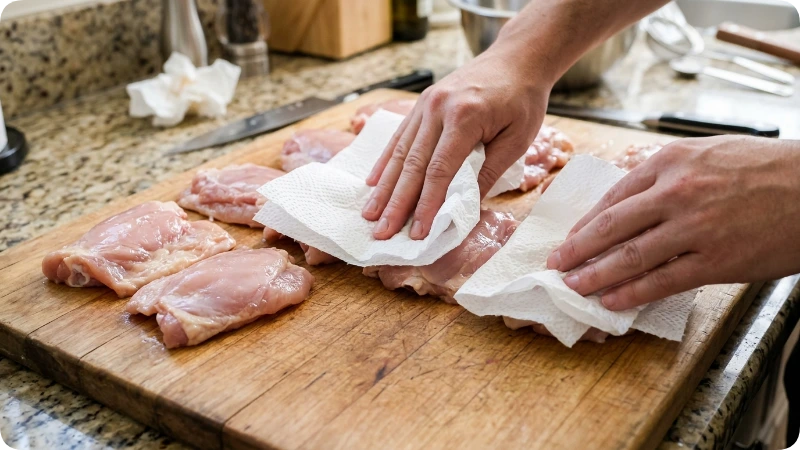
- Dry and trim: Place the chicken thighs on a clean cutting board and use a sharp knife to trim away large flaps of loose fat. Pat both sides of every thigh completely dry using paper towels. Surface moisture prevents browning and causes meat to steam instead of sear.
- Season evenly: In a small bowl, whisk together the kosher salt, smoked paprika, garlic powder, onion powder, dried oregano, dried thyme, and black pepper. Unfold the chicken thighs so they lie relatively flat, then sprinkle the seasoning evenly over all sides, pressing the spices lightly with your fingers so they adhere.
Skillet Searing & Cooking
- Preheat the skillet: Set a 12-inch cast-iron skillet over medium-high heat. Add 1.5 tablespoons of oil and heat until the oil shimmers across the surface and just begins to show faint wisps of smoke (about 2 to 3 minutes).
- Sear the first side: Using tongs, lay the chicken thighs smooth side down into the hot skillet in a single layer. Leave space between each piece; do not overcrowd (if your pan is under 12 inches, cook in two separate batches). Let the chicken cook undisturbed for 6 to 8 minutes. The meat will release naturally from the metal once a deep golden-brown crust forms.
- Flip and cook through: Flip each thigh over. Reduce the heat slightly to medium. Cook for an additional 5 to 7 minutes on the second side. If using butter, add it to the pan during the final 2 minutes and spoon the melted butter over the thighs.
Safety Check & Resting
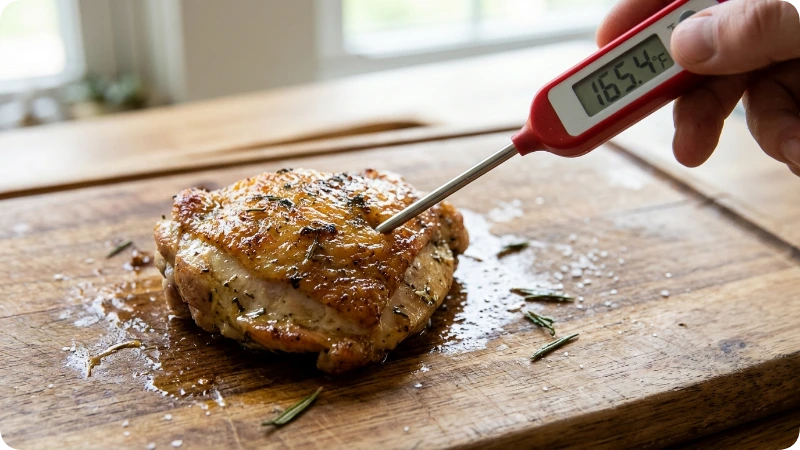
- Verify internal temperature: Insert a digital instant-read thermometer into the thickest section of each thigh without poking through to the hot pan surface. The meat must register a minimum of 165°F (74°C) for safe consumption according to food safety standards. For dark meat, an internal temperature of 175°F to 180°F (80°C to 82°C) renders the connective tissue for maximum tenderness without drying out the cut.
- Rest and serve: Transfer the cooked chicken to a warm plate or cutting board. Let rest undisturbed for 5 minutes to allow the interior juices to redistribute through the muscle fibers before slicing. Serve warm with fresh lemon wedges if desired.
Ingredient Notes and Substitutions
- Boneless Skinless Chicken Thighs: Select cuts that are uniform in thickness. Thighs naturally curl up; unfold them gently before placing them in the skillet so the maximum surface area makes direct contact with the hot metal.
- Cooking Oil: Use a neutral oil with a smoke point above 400°F (204°C), such as avocado oil, canola oil, or refined vegetable oil. Avoid unrefined extra-virgin olive oil for high-heat searing, as it burns and produces bitter compounds at skillet temperatures.
- Kosher Salt vs. Table Salt: The recipe specifies Diamond Crystal kosher salt. Table salt is significantly denser by volume; if substituting standard table salt or fine sea salt, reduce the amount to 1 teaspoon (6 g) to avoid over-salting.
- Spice Blend Variations: The paprika-herb combination is neutral and adaptable. You can swap the dried oregano and thyme for 1 teaspoon of ground cumin and 1/2 teaspoon of ground coriander for a warm taco/fajita profile, or 1 tablespoon of Italian seasoning.
Before You Begin
- Moisture Removal: Do not skip drying the chicken with paper towels. Water turns to steam instantly in hot fat, dropping pan temperatures and preventing the Maillard reaction that creates a savory crust.
- Chill Removal (10 to 15 Minutes): Let the seasoned raw thighs sit on your counter for 10 to 15 minutes before cooking while the skillet preheats. Searing meat straight from refrigerator temperatures chills the pan and leads to uneven cooking.
How to Make It: Key Checkpoints
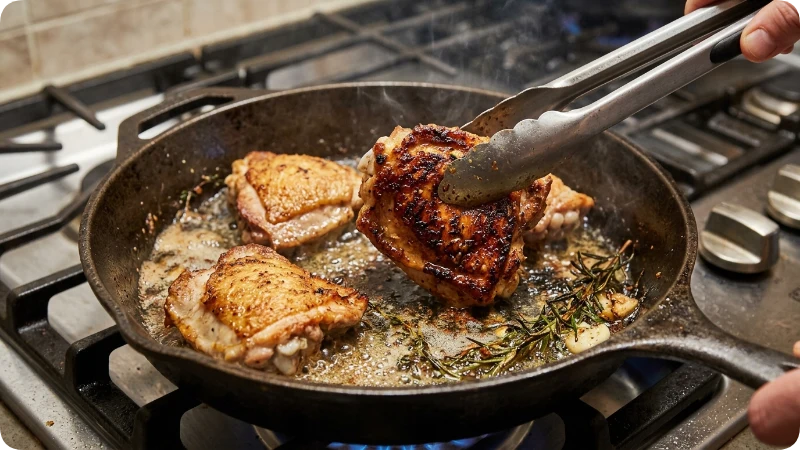
- Pan Contact: Smooth-side down goes first. That side presents the flattest surface area and produces the cleanest visual crust.
- The “No-Touch” Rule: Resist the urge to slide or nudge the chicken during the first 5 minutes. As the proteins sear and caramelize, they will naturally release from the pan surface. If a piece sticks firmly when you gently lift an edge with tongs, give it another 60 to 90 seconds.
- Doneness Checkpoints: Because dark poultry cuts contain myoglobin and hemoglobin near the joint areas, chicken thighs can occasionally remain slightly pinkish near the center even when safely cooked. Trust a calibrated digital thermometer, not visual color alone.
Tips and Troubleshooting
- Chicken is pale and watery:
- Cause: The skillet was crowded or not hot enough before the meat went in.
- Prevention: Use a 12-inch skillet for up to 2 lbs of thighs, or cook in two separate batches. Let the oil shimmer before adding the first piece.
- Spices are blackened and bitter before the meat is cooked through:
- Cause: Skillet heat was excessively high, scorching the paprika and garlic powder.
- Prevention: Start at medium-high to establish the sear, then lower to medium once you flip the chicken.
- Fix: Transfer scorched thighs to a preheated 375°F (190°C) oven to finish baking through without burning further on the stove.
- Meat feels tough and rubbery:
- Cause: Dark meat pulled too early. While white chicken meat dries out above 160°F (71°C), dark meat has heavy connective tissue that stays chewy until it hits 175°F (80°C).
- Prevention: Allow thighs to cook until they reach 175°F–180°F (80°C–82°C) on an instant-read probe.
Storage, Reheating, and Make-Ahead
- Refrigeration: Cool leftover chicken thighs to room temperature within 2 hours of cooking. Store in an airtight container in the refrigerator for up to 4 days.
- Freezing: Freeze cooked thighs in a single layer on a parchment-lined baking sheet until firm, then transfer to a freezer-safe bag or container for up to 3 months. Thaw overnight in the refrigerator before reheating.
- Reheating: For the best texture, reheat thighs in a skillet over medium-low heat with 1 tablespoon of water or broth, covered, for 4 to 6 minutes until warmed through (165°F / 74°C). Alternatively, warm in a 350°F (177°C) oven for 8 to 10 minutes. Avoid high-power microwave reheating, which expels moisture and toughens the exterior.
FAQs
Can I bake these in the oven instead of using a skillet?
Yes. Arrange the seasoned thighs on a rimmed baking sheet lined with foil or parchment. Bake at 425°F (218°C) for 20 to 25 minutes until the internal temperature reaches at least 165°F (74°C) to 175°F (80°C).
Why is dark meat better cooked to 175°F instead of 165°F?
While 165°F (74°C) is the official USDA minimum safe internal temperature for poultry, thighs contain rich collagen that requires higher temperatures and sustained heat to melt into gelatin. Cooking them to 175°F–180°F produces far more tender, juicy meat.
Can I use this recipe for bone-in thighs?
Bone-in thighs take considerably longer to cook (about 25 to 30 minutes in a skillet or 35 to 40 minutes in the oven). For bone-in thighs, sear the skin side in a skillet over medium heat for 10 to 12 minutes, flip, and finish cooking through in a 400°F (204°C) oven.
Final Summary
This boneless skinless chicken thighs recipe delivers a reliable method for pan-searing tender dark poultry in under 30 minutes. By detailing proper pan preheating, spice application, and collagen-rendering temperatures up to 175°F (80°C), it ensures home cooks achieve savory caramelization and juicy, safe chicken every time.

Leo Campbell is the founder, recipe developer, and culinary voice behind Recipe Morsil. With nearly a decade of hands-on home cooking and professional baking experience, Leo tests every recipe multiple times to ensure reliable, fail-proof results in real home kitchens. When he’s not fine-tuning spices or testing cook times, he’s helping home cooks build confidence one bite at a time.
Connect with Leo via [Instagram/Email] or explore his verified recipes below.