Quick Answer: Classic chicken chow mein combines tender velveted chicken, crisp cabbage, and springy egg noodles tossed in a savory light-and-dark soy sauce in just 30 minutes.
Skip takeout night with this authentic homemade chicken chow mein, featuring juicy seared chicken, tender-crisp vegetables, and springy egg noodles coated in a rich, savory brown sauce. By using the traditional Cantonese technique of velveting the chicken with a touch of cornstarch, the meat stays incredibly tender and moist even over screaming-hot skillet heat. Coming together in just 30 minutes using everyday grocery staples, it delivers the deep umami flavor and signature wok aroma of your favorite Chinese restaurant straight to your weeknight dinner table.
A Quick Note from Our Kitchen: This recipe is formulated around classic Cantonese wok-hei principles and domestic kitchen thermal dynamics. For the best noodle texture, rinse your boiled egg noodles under cold water and toss with a drop of sesame oil before they hit the hot pan!
Complete Chicken Chow Mein Recipe
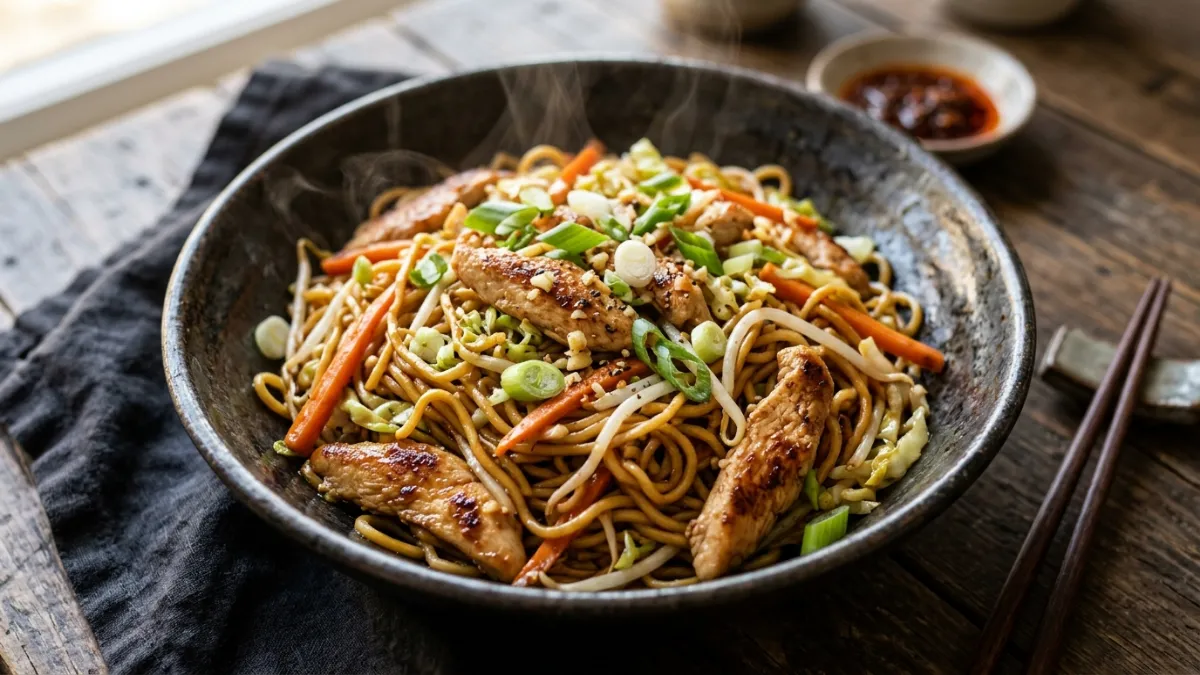
A restaurant-style chicken chow mein featuring marinated chicken strips, shredded cabbage, carrots, and egg noodles tossed in a balanced soy-sesame sauce.
- Yield: 4 servings (approx. 1.5 cups per serving)
- Prep Time: 20 minutes
- Cook Time: 10 minutes
- Inactive / Marinating Time: 15 minutes
- Total Elapsed Time: 45 minutes
- Essential Equipment: 14-inch carbon steel wok or 12-inch heavy stainless/cast-iron skillet, pot for boiling noodles, colander.
Ingredients
Chicken and Marinade
- 1 lb (450 g) boneless, skinless chicken breast, sliced into 1/4-inch thin strips
- 1 tbsp (15 ml) low-sodium soy sauce
- 1 tbsp (15 ml) Shaoxing cooking wine (or dry sherry)
- 1 tsp (3 g) cornstarch
- 1/2 tsp (2.5 ml) toasted sesame oil
- 1/4 tsp ground white pepper
Stir-Fry Sauce
- 2 tbsp (30 ml) low-sodium soy sauce
- 1 tbsp (15 ml) dark soy sauce (for color and rich body)
- 1 tbsp (15 ml) oyster sauce
- 1 tsp (5 g) granulated sugar
- 1/2 tsp (1.5 g) cornstarch
- 2 tbsp (30 ml) water or unsalted chicken stock
Noodles and Aromatics
- 8 oz (225 g) fresh or dried chow mein egg noodles
- 2 tbsp (30 ml) high-smoke-point oil (peanut, canola, or vegetable oil), divided
- 3 cloves garlic, finely minced
- 1 tsp fresh ginger, grated
- 2 cups (150 g) green cabbage, finely shredded
- 1 medium carrot (approx. 70 g), peeled and julienned
- 3 green onions (scallions), cut into 2-inch lengths, whites and greens separated
- 1 cup (100 g) fresh mung bean sprouts, rinsed and drained thoroughly
Step-by-Step Instructions
Prep and Marinate
- Marinate the Chicken: In a medium bowl, combine sliced chicken breast, soy sauce, Shaoxing wine, cornstarch, toasted sesame oil, and white pepper. Mix thoroughly until the liquid is fully absorbed into the meat. Set aside to rest at room temperature for 15 minutes.
- Whisk the Stir-Fry Sauce: In a small bowl, whisk together low-sodium soy sauce, dark soy sauce, oyster sauce, granulated sugar, cornstarch, and water until the sugar and cornstarch completely dissolve. Set aside.
- Parboil the Noodles: Bring a large pot of water to a rolling boil. Add chow mein noodles and cook according to package directions, cutting the recommended boiling time short by 1 minute so the noodles stay slightly firm (al dente, roughly 1 to 2 minutes for fresh noodles, 3 minutes for dried). Drain thoroughly in a colander, rinse briefly with cold water to stop the cooking, and shake out excess moisture. Toss with $1/2$ teaspoon cooking oil to prevent sticking.
Cook the Chicken and Vegetables
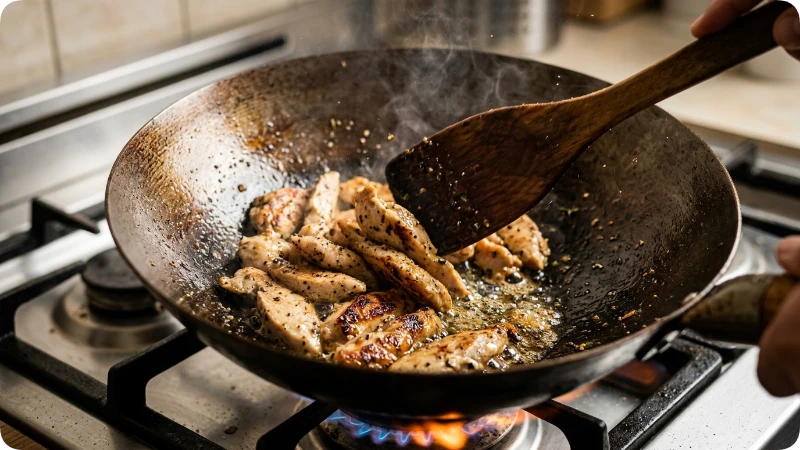
- Sear the Chicken: Heat a 14-inch wok or 12-inch heavy skillet over high heat until wisps of smoke appear. Swirl in 1 tablespoon of cooking oil to coat the surface. Add the marinated chicken in a single layer. Let sear undisturbed for 60 to 90 seconds to develop browning, then stir-fry until the chicken is cooked through and reaches an internal temperature of 165°F (74°C), about 3 to 4 minutes total. Transfer chicken to a clean plate.
- Stir-Fry Aromatics and Vegetables: Return the wok to high heat and add the remaining 1 tablespoon of cooking oil. Add minced garlic, grated ginger, and the white parts of the green onions; stir-fry for 20 to 30 seconds until fragrant, taking care not to burn the garlic. Add the shredded cabbage and julienned carrots. Stir-fry vigorously for 1 to 2 minutes until the vegetables begin to soften but remain crisp.
Combine, Sauce, and Serve
Combine Noodles and Sauce: Add the parboiled noodles, cooked chicken, bean sprouts, and green onion tops to the wok. Give the prepared stir-fry sauce a quick stir to resuspend any settled cornstarch, then pour it evenly around the perimeter of the hot pan.
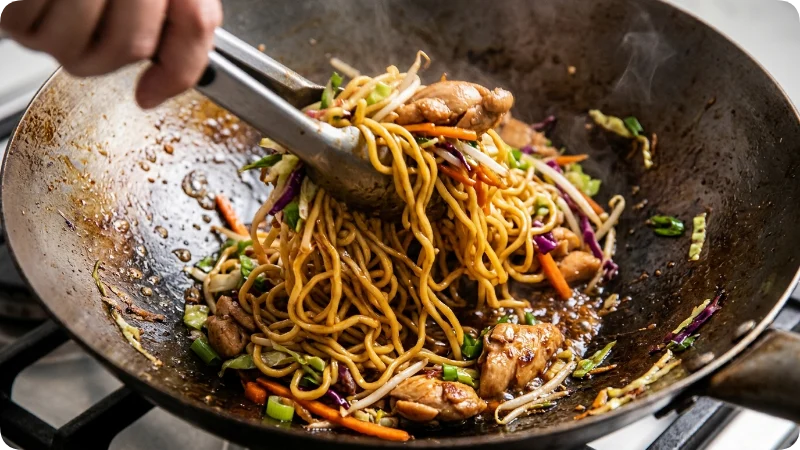
Toss and Finish: Toss everything vigorously using tongs or a wok spatula for 1 to 2 minutes over high heat, until the noodles absorb the sauce evenly, the starch thickens to a light glaze, and the bean sprouts are hot and tender-crisp. Remove from heat immediately and serve hot.
Ingredient Notes and Substitutions
- Chow Mein Noodles: Fresh, thin, steamed chow mein noodles (often labeled Hong Kong style or steamed chow mein) provide the ideal chew and tensile strength. If fresh egg noodles are unavailable, dry ramen noodles (discard the seasoning packet) or dried Italian spaghetti (cooked 2 minutes short of package directions) can substitute, though the texture will be slightly less springy.
- Dark Soy Sauce: Distinct from regular soy sauce, dark soy is aged longer, slightly thicker, sweeter, and less salty. Its primary role here is imparting a rich caramel color and earthy undertone. If you do not have dark soy sauce, substitute with an additional 1 teaspoon of regular soy sauce mixed with 1/4 teaspoon molasses or brown sugar.
- Shaoxing Wine: This traditional Chinese rice wine adds essential depth and acidity to the marinade. If avoiding alcohol or unable to source it, substitute with an equal volume of unsalted chicken broth mixed with 1/4 teaspoon rice vinegar.
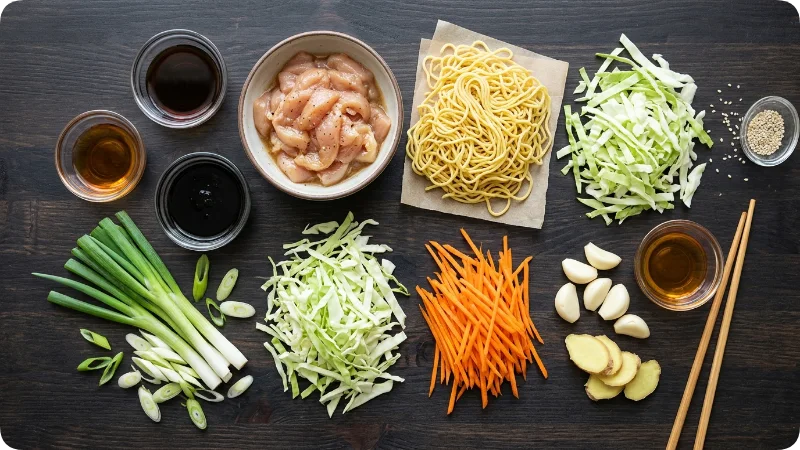
Before You Begin: Mise en Place
Stir-frying happens in minutes over intense heat; there is zero time to chop or measure once the burner is lit.
- Dry the Noodles Thoroughly: Excess surface moisture turns a stir-fry into a steam bath, resulting in soggy noodles instead of lightly seared strands. Shake the colander well after rinsing.
- Slice Chicken Uniformly: Cut the chicken across the grain into uniform 1/4-inch strips so they cook evenly without drying out.
- Organize Your Station: Place your marinated chicken, combined sauce, chopped vegetables, and noodles in separate bowls directly beside the stove in order of use.
How to Make It: Critical Technique Checkpoints
- The Velveting Principle: The cornstarch in the marinade creates a protective barrier around the meat fibers, retaining moisture against the intense dry heat of the wok.
- Wok Temperature: Ensure the wok is genuinely hot before introducing fat. When the cooking oil ripples and shows faint wisps of smoke, it prevents the protein from sticking and allows immediate Maillard browning.
- Adding Sauce via the Perimeter: Never dump cold sauce directly into the center of the noodles. Pouring the sauce down the sloping, hot steel sides of the wok instantly flash-caramelizes the sugars and prevents a sudden drop in pan temperature.
Tips and Troubleshooting
- Problem: Noodles are mushy or broken into tiny pieces.
- Cause: Noodles were overboiled during parboiling, or turned too aggressively with a heavy spoon.
- Prevention: Cook noodles 1 minute under package directions and lift gently using kitchen tongs rather than cutting into them with a metal spatula.
- Problem: The stir-fry is watery at the bottom of the pan.
- Cause: Bean sprouts and cabbage were wet when added, or the pan temperature was too low, causing vegetables to sweat rather than sear.
- Prevention & Fix: Spin or towel-dry vegetables before cooking and keep the burner at maximum output. If watery, immediately push ingredients up the sides of the wok and let the liquid boil down in the center for 30 seconds.
- Problem: Chicken is dry or stringy.
- Cause: Overcooking or slicing with the grain.
- Prevention: Slice strictly across the muscle grain and remove chicken from the pan the moment it reaches 165°F (74°C).
Storage and Reheating
- Refrigeration: Store cooled leftovers in an airtight glass or plastic container within 2 hours of cooking. Refrigerate for up to 3 to 4 days.
- Reheating: Reheat in a hot skillet with 1 teaspoon of oil over medium-high heat for 2 to 3 minutes, tossing constantly until steaming hot. Alternatively, microwave on high in 1-minute bursts, covered with a damp paper towel to preserve moisture.
- Freezing: Freezing is not recommended; cabbage, bean sprouts, and parboiled noodles degrade significantly in texture upon thawing, becoming watery and soft.
FAQs
What is the difference between Chow Mein and Lo Mein?
The distinction lies in the cooking technique. Chow mein translates to “fried noodles,” where noodles are parboiled and then stir-fried directly in the hot wok to develop texture and light crisping. Lo mein translates to “tossed noodles,” where fully cooked, softer noodles are gently folded into a saucier stir-fry near the very end.
Can I make this with chicken thighs instead of breasts?
Yes. Boneless, skinless chicken thighs make an excellent substitution. They offer a higher fat content and are more forgiving of high heat. Slice them into matching 1/4-inch strips; cooking time will remain approximately 3 to 4 minutes.
Can I make this gluten-free?
To make this gluten-free, substitute the egg noodles with gluten-free ramen or rice vermicelli, swap the regular and dark soy sauces for tamari or gluten-free soy sauce, and use a certified gluten-free oyster sauce or vegetarian mushroom sauce.
Final Summary
This quick chicken chow mein recipe guides home cooks through preparing tender marinated chicken, springy egg noodles, and crisp vegetables in 30 minutes. By mastering the velveting technique and high-heat stir-frying, you achieve authentic restaurant texture and rich savory flavor using everyday kitchen equipment.

Leo Campbell is the founder, recipe developer, and culinary voice behind Recipe Morsil. With nearly a decade of hands-on home cooking and professional baking experience, Leo tests every recipe multiple times to ensure reliable, fail-proof results in real home kitchens. When he’s not fine-tuning spices or testing cook times, he’s helping home cooks build confidence one bite at a time.
Connect with Leo via [Instagram/Email] or explore his verified recipes below.