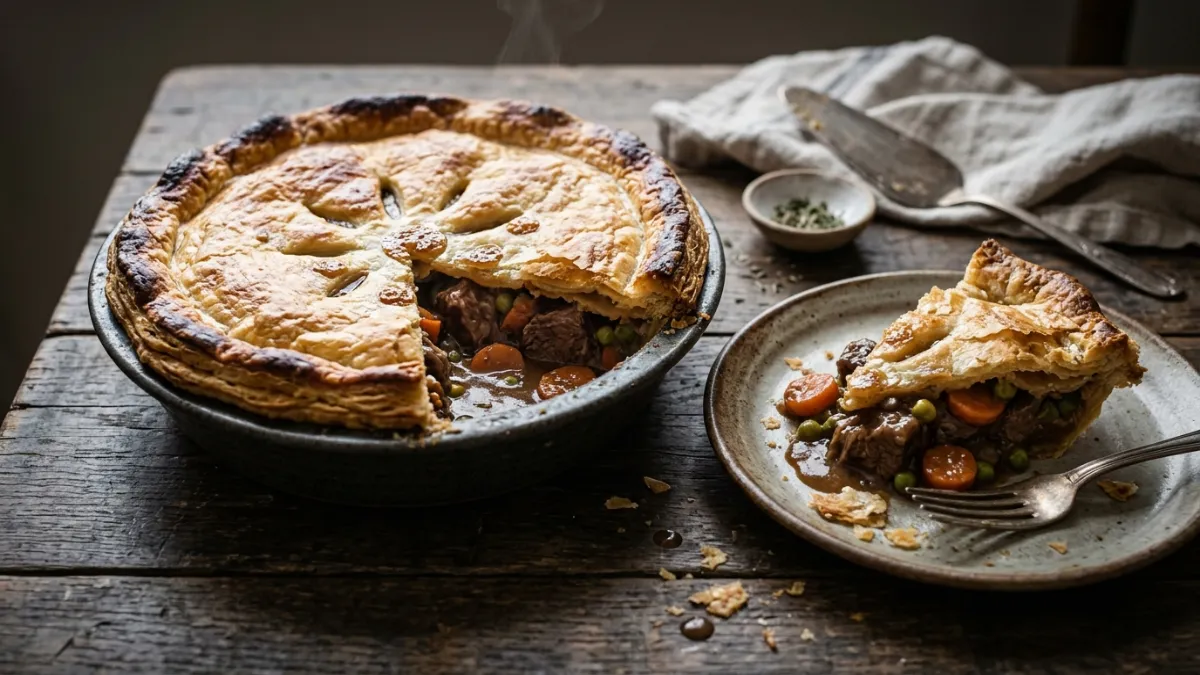
Quick Answer: Simmer seared beef chuck, carrots, and peas in a rich red-wine-and-beef gravy, then bake beneath a vented, golden-brown puff pastry crust at 400°F for 30–35 minutes.
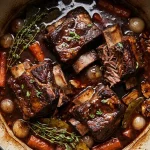
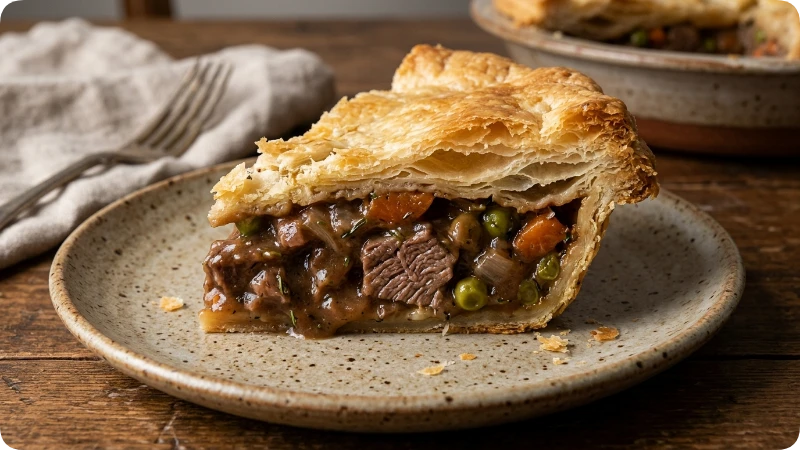
This hearty homemade beef pot pie unites the deep, savory comfort of slow-braised beef stew with the shatteringly crisp crunch of a golden puff pastry lid. Built from well-seared beef chuck roast, sweet carrots, tender peas, and earthy mushrooms simmered in a red-wine-and-tomato reduction, the rich filling thickens into a luxurious, spoon-coating gravy that stays neatly contained in every slice. Whether you are craving cozy cold-weather comfort or an impressive Sunday centerpiece, this foolproof skillet-to-oven bake delivers steakhouse-level depth and flaky pastry perfection straight to your dinner table.
A Quick Note from Our Kitchen: This recipe is built on classic braising fundamentals and home-oven pastry baking dynamics. For the crispiest, puffiest pastry lid, make sure your beef filling cools slightly before topping with dough, and cut three or four small slits in the center so trapped steam can escape without turning the crust soggy!
Classic Deep-Dish Beef Pot Pie
Tender cubes of beef chuck simmered with carrots, celery, and peas in a rich, herb-infused brown gravy under an all-butter puff pastry crust.
- Yield: 1 deep-dish pie (approx. 6 cups filling)
- Serving Size: 1 generous slice (1/6th of pie)
- Servings: 6
- Prep Time: 25 minutes
- Cook Time: 1 hour 45 minutes (1 hour 15 minutes simmer, 30 minutes bake)
- Inactive Rest Time: 15 minutes
- Total Elapsed Time: 2 hours 25 minutes
- Equipment: 9-inch deep-dish pie plate (approx. 1.5–2 quart capacity, 2 inches deep), 5-to-6-quart Dutch oven or heavy-bottomed pot, rimmed baking sheet, slotted spoon, whisk.
Ingredients
Beef & Aromatics:
- 2 pounds (900 g) boneless beef chuck roast, trimmed of excess hard exterior fat and cut into 3/4-inch cubes
- 1 1/4 teaspoons kosher salt (Diamond Crystal; if using Morton, use 1 tsp), divided
- 1/2 teaspoon freshly cracked black pepper, divided
- 2 tablespoons (30 ml) neutral high-heat cooking oil (such as canola or avocado oil)
- 1 large yellow onion, diced (about 1 1/2 cups / 225 g)
- 3 medium carrots, peeled and cut into 1/2-inch rounds (about 1 1/2 cups / 180 g)
- 2 celery ribs, sliced into 1/2-inch crescents (about 3/4 cup / 90 g)
- 3 cloves garlic, finely minced
- 2 tablespoons (30 g) tomato paste
Gravy & Liquids:
- 1/4 cup (35 g) all-purpose flour
- 1/2 cup (120 ml) dry red wine (such as Cabernet Sauvignon or Pinot Noir; or additional beef broth)
- 2 1/2 cups (600 ml) low-sodium beef broth
- 1 tablespoon (15 ml) Worcestershire sauce
- 2 sprigs fresh thyme (or 1/2 teaspoon dried thyme)
- 1 dried bay leaf
- 1 cup (130 g) frozen peas, unthawed
Pastry & Assembly:
- 1 sheet commercial all-butter puff pastry (approx. 14 oz / 400 g), thawed but kept chilled
- 1 large egg
- 1 tablespoon (15 ml) cold water (for egg wash)
- 1/4 teaspoon flaky sea salt (optional, for crust topping)
Instructions
- Season and Sear Beef: Pat the cubed beef thoroughly dry with paper towels. Season evenly with 3/4 teaspoon salt and 1/4 teaspoon black pepper. Heat 1 tablespoon oil in a 5-to-6-quart Dutch oven over medium-high heat until shimmering. Add half the beef in a single layer without crowding. Sear undisturbed until deeply browned on the bottom, 3 to 4 minutes; turn and sear the opposite side for 2 to 3 minutes. Transfer with a slotted spoon to a clean plate. Add the remaining 1 tablespoon oil and sear the second batch. Transfer to the plate.
- Sauté Aromatics: Reduce heat to medium. Add the diced onion, carrots, and celery to the residual oil in the pot. Cook, stirring occasionally, until the onions soften and begin to turn golden, 6 to 8 minutes. Add the minced garlic and tomato paste; cook, stirring constantly, until the tomato paste darkens to a brick-red hue, about 1 to 2 minutes.
- Build the Roux & Deglaze: Sprinkle the 1/4 cup flour over the vegetables. Stir continuously for 1 to 2 minutes to eliminate raw flour flavor. Pour in the 1/2 cup red wine, scraping up all browned bits (fond) stuck to the bottom of the pot with a wooden spoon. Simmer until the wine reduces by half, about 2 minutes.
- Simmer the Filling: Slowly pour in the beef broth and Worcestershire sauce while stirring. Return the seared beef and any accumulated juices to the pot. Add the thyme sprigs, bay leaf, remaining 1/2 teaspoon salt, and remaining 1/4 teaspoon pepper. Bring to a boil, then reduce heat to low, cover with a tight-fitting lid, and simmer gently for 50 to 60 minutes. The beef should be fork-tender and the internal temperature well beyond the safe 145°F minimum, registering tender stew consistency.
- Thicken and Finish Filling: Remove the lid. Simmer uncovered for 10 to 15 minutes until the gravy thickens to a glossy, spoon-coating consistency. Remove from heat. Discard the thyme sprigs and bay leaf. Stir in the frozen peas. Transfer the filling to the 9-inch deep-dish pie plate. Let it cool on the counter for 15 to 20 minutes so rising steam does not melt the pastry fat before baking.
- Preheat the Oven: While the filling cools, position an oven rack in the lower-middle position. Place a rimmed baking sheet on the rack and preheat the oven to 400°F (204°C).
- Roll and Top Pastry: On a lightly floured work surface, roll the chilled puff pastry sheet into a square roughly 1 inch wider than the rim of the pie plate (about 11×11 inches). Carefully drape the pastry over the warm filling. Trim any excessive overhang, tuck the edges under the rim of the pie dish, and crimp or press firmly with the tines of a fork to form a seal.
- Vent and Glaze: Whisk the egg and cold water together in a small bowl. Brush the pastry evenly with a light layer of egg wash. Using a sharp paring knife, cut 4 to 5 slits (1 to 2 inches long) in the center of the pastry to release steam. Sprinkle lightly with flaky sea salt if using.
- Bake: Place the pie dish directly onto the preheated baking sheet. Bake at 400°F (204°C) for 30 to 35 minutes. Check at 20 minutes; if the pastry is already a deep amber, tent loosely with foil. Bake until the pastry is puffed, deeply golden brown, and the beef filling is visibly bubbling through the steam slits.
- Rest and Serve: Transfer the pie to a wire rack. Let rest for 15 minutes before slicing and serving to let the starch structure set.
Ingredient Notes and Substitutions
- Beef Chuck Roast: The gold standard for stew and pot pie fillings. Chuck contains intramuscular connective tissue (collagen) that melts into gelatin during the 60-minute simmer, giving the beef a tender bite and adding body to the gravy. Avoid pre-packaged “beef stew meat” if possible, as it often contains a mix of lean round cuts that become dry and stringy.
- Red Wine: A dry red wine (Cabernet, Merlot, or Pinot Noir) adds acidity and complex tannins that cut through beef fat. If cooking without alcohol, replace with an equal amount of additional low-sodium beef broth mixed with 1 teaspoon of red wine vinegar or balsamic vinegar.
- Thickening Agent: All-purpose flour cooked directly with the sautéed aromatics forms a stable brown roux. If using cornstarch for a gluten-free filling, omit the flour entirely; mix 2 tablespoons of cornstarch with 3 tablespoons of cold broth and whisk it into the stew during the final 5 minutes of uncovered simmering until thickened.
- Pastry Choice: All-butter puff pastry gives a high, laminated crust with buttery flakes. Standard rolled shortcrust pie dough works equally well for a denser, traditional bakery-style savory pie. If using a double crust with a bottom layer, blind-bake the bottom crust for 12 minutes before filling to prevent sogginess.
Before You Begin
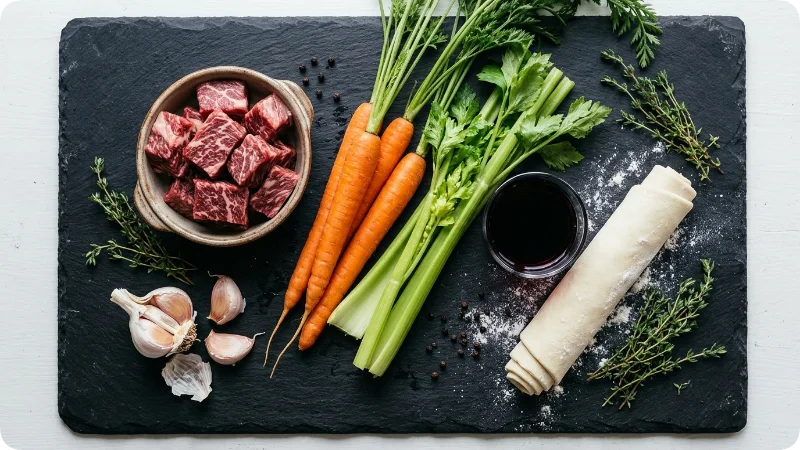
- Dry the Meat: Moisture is the enemy of browning. Thoroughly pat the beef dry with paper towels before seasoning. Wet meat will steam in the oil rather than develop the brown fond required for a deep gravy base.
- Keep Pastry Cold: Keep the puff pastry in the refrigerator until the exact moment you are ready to roll and assemble. If the pastry warms above 65°F (18°C), the laminated butter layers will melt, resulting in a flat, greasy top rather than distinct, flaky layers.
- Oven Setup: Always preheat the rimmed baking sheet on the lower-middle rack. Placing the heavy pie dish onto a hot sheet pan conducts bottom heat directly into the base of the filling and pastry rim while keeping drips off your oven floor.
How to Make It: Key Decisions and Visual Cues
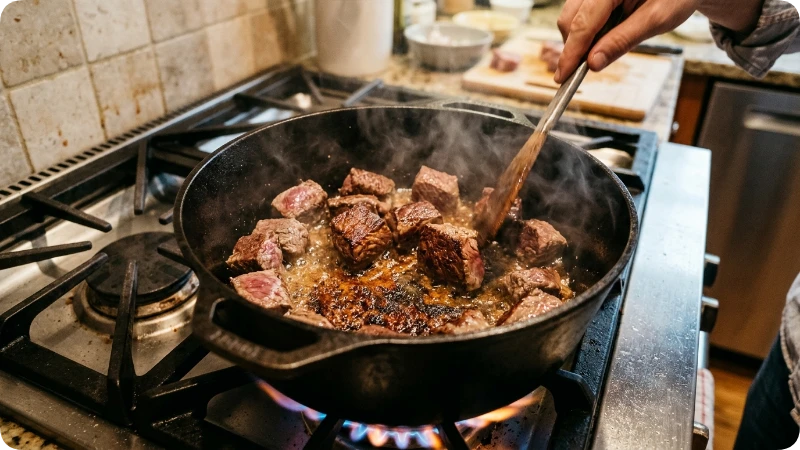
- Sear in Batches: Crowding the Dutch oven drops the pan temperature immediately, forcing moisture out of the beef cubes and boiling them in their own juices. Give each piece space; seared beef should have a deep mahogany crust on at least two sides.
- Pacing the Deglaze: After stirring in the tomato paste and flour, the bottom of the pot will look dark and coated. Pouring the wine in creates an active steam sizzle. Use a flat-edged wooden spoon to firmly scrape the caramelized brown bits off the metal; this residue contains the concentrated savory flavor of the entire dish.
- The Doneness Fork-Test: Simmering for 50 to 60 minutes breaks down tough fibers. Test a cube of beef before taking the pot off the stove: a fork should pierce the center with almost zero resistance. If the meat feels springy or tough, simmer covered for an additional 15 minutes.
- Cooling the Filling: Never lay cold puff pastry over a boiling-hot liquid. The blast of steam will melt the butter in the raw dough instantly, causing the crust to dissolve or sink into the meat. Letting the filling stand for 15 to 20 minutes before capping it ensures the dough holds its structural shape.
Tips and Troubleshooting
- Problem: The pastry crust sank into the filling and turned soggy.
- Cause: Filling was either too hot when the pastry was applied, or there was a massive air gap below the crust rim, or steam vents were omitted.
- Prevention: Cool the filling slightly, fill the dish until nearly level with the rim, and cut generous 1-to-2-inch vents in the center.
- Fix: Cannot be undone once baked; if the crust is undercooked, move the dish to the upper oven rack, tent with foil, and bake 5 to 8 minutes longer to crisp the surface.
- Problem: Beef is tough and chewy.
- Cause: Beef chuck was not simmered long enough on the stovetop prior to baking. (Baking alone is too short to tenderize tough beef cuts).
- Prevention: Ensure the beef is completely tender during step 4 before pouring it into the pie dish.
- Fix: If discovered before assembling, return the pot to the stove, add 1/4 cup broth, and simmer covered for another 15 to 20 minutes.
- Problem: Gravy runs all over the plate when sliced.
- Cause: Cutting into the pie immediately out of the oven.
- Prevention: Rest the pie for a full 15 minutes on a wire rack. Gravy starches require cooler temperatures (around 160°F / 71°C) to settle into a sliceable gel.
- Fix: Spoon the loose sauce over the beef and crust portions in shallow bowls.
Variations and Alternative Methods
- Guinness / Stout Beef Pot Pie: Replace the 1/2 cup red wine and 1/2 cup of the beef broth with 1 cup (240 ml) of stout beer (such as Guinness Extra Stout). The roasted barley notes lend a distinctive pub-style bitterness and depth.
- Skillet Beef Pot Pie: Make the entire recipe in a single 10- or 12-inch oven-safe cast-iron skillet. Complete the filling on the stovetop, turn off the heat, let cool 15 minutes, drape the pastry directly over the skillet rim, brush with egg wash, vent, and transfer the skillet directly to the 400°F oven for 30 minutes.
- Mushroom and Shallot Beef Pie: Sauté 8 ounces (225 g) of quartered cremini mushrooms with the aromatics in step 2. Replace the diced yellow onion with 3 large thinly sliced shallots.
Serving Suggestions
Because beef pot pie is rich, hearty, and heavy, choose sides with bright acidity and clean textures:
- A crisp garden salad with mixed greens, thinly sliced radishes, and a sharp lemon or red-wine vinaigrette.
- Roasted or steamed broccolini or Brussels sprouts with a squeeze of fresh lemon juice.
- Pickled red onions or cornichons served on the side to provide sharp contrast to the savory beef gravy.
Make-Ahead, Storage, and Reheating
- Make-Ahead (Filling Only): The filling can be made up to 2 days in advance. Cool completely, store in an airtight container in the refrigerator, and bring to room temperature for 30 minutes before placing into the pie plate and topping with pastry. Add 10 minutes to the baking time to ensure the center reaches 165°F (74°C).
- Refrigerator Storage: Store cooled leftover pie covered tightly with aluminum foil or in an airtight container for up to 3 to 4 days at or below 40°F (4°C).
- Freezing (Unbaked Pie): Assemble the pie completely in a disposable aluminum pie dish, omitting the egg wash. Freeze solid uncovered for 2 hours, then wrap tightly in plastic wrap and aluminum foil. Freeze for up to 2 months. Bake from frozen at 375°F (190°C) for 55 to 65 minutes, applying egg wash just before placing in the oven.
- Reheating: Avoid microwaving, which destroys the crispness of the crust. Reheat individual slices on a baking sheet in a 350°F (177°C) oven or toaster oven for 12 to 15 minutes until heated through and crisp.
FAQs
Can I use ground beef instead of beef chuck?
Yes. Brown 1 1/2 pounds of lean ground beef (85/15) in step 1, drain excess grease, and proceed with the aromatics. Because ground meat has no connective tissue requiring long tenderization, you only need to simmer the sauce for 10 to 12 minutes rather than 50 to 60 minutes before baking.
Can I make this in an Instant Pot or pressure cooker?
Yes. Sear the beef and aromatics on the Sauté setting. Add the liquids, herbs, and seasonings (omit the peas and thickener). Pressure cook on High for 25 minutes, followed by a 10-minute natural pressure release. Turn to Sauté, stir in a slurry of 3 tablespoons flour and 3 tablespoons water, simmer until thickened, stir in the peas, transfer to the pie plate, and bake with pastry as directed.
Why is my gravy pale instead of dark brown?
Rich brown color comes from two sources: deeply browning the meat cubes during step 1 and allowing the tomato paste to caramelize into a brick-red color in step 2. If you skip the browning steps or crowd the pan, the resulting sauce will stay beige or light brown.
Can I use beef stew meat from the supermarket?
You can, but inspect the packaging. Pre-cut stew meat frequently combines trimmings from various cuts (such as round, sirloin, and chuck) that cook at uneven rates. Buying a whole boneless chuck roast and cutting it yourself ensures uniform tenderness and collagen distribution.
Let the finished pie rest for 15 minutes after baking so the savory beef gravy settles and slices cleanly.
Summary
This hearty beef pot pie recipe pairs tender braised beef chuck, carrots, and sweet peas with a rich red-wine-infused brown gravy baked under a crisp puff pastry crust. Built on classic searing and reduction techniques, it delivers deep comfort-food flavor and reliable texture in an accessible deep-dish presentation for dinner.

Leo Campbell is the founder, recipe developer, and culinary voice behind Recipe Morsil. With nearly a decade of hands-on home cooking and professional baking experience, Leo tests every recipe multiple times to ensure reliable, fail-proof results in real home kitchens. When he’s not fine-tuning spices or testing cook times, he’s helping home cooks build confidence one bite at a time.
Connect with Leo via [Instagram/Email] or explore his verified recipes below.