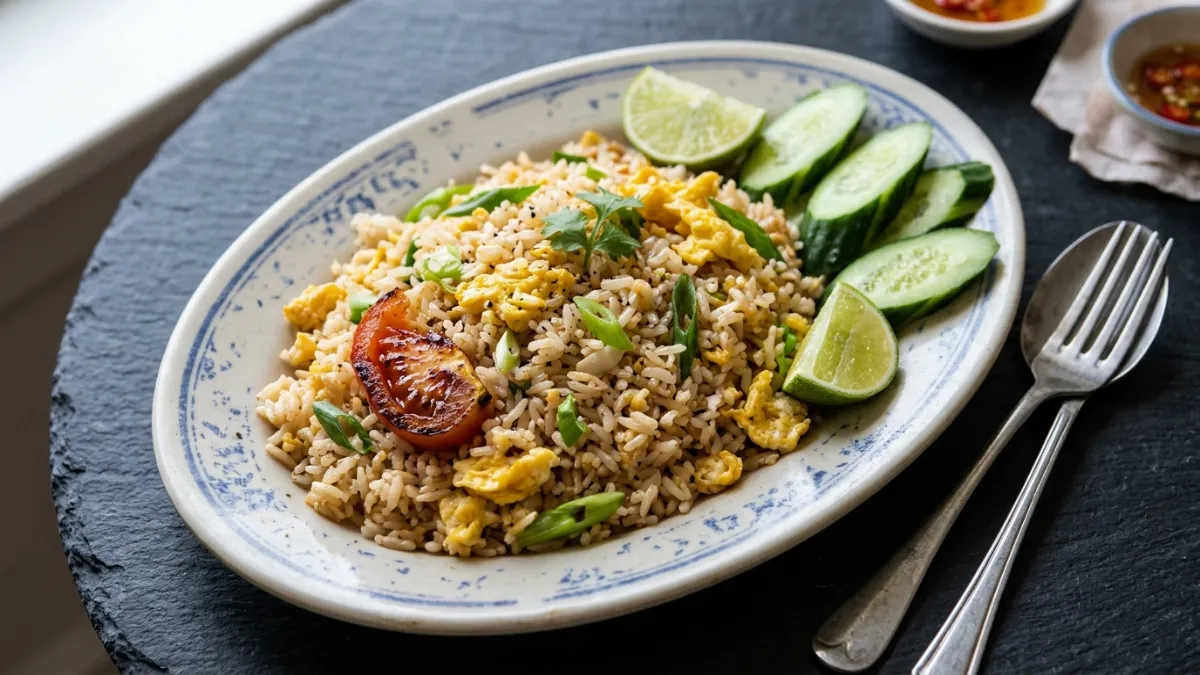
Quick Answer: Authentic Thai fried rice (Khao Pad) flash-fries chilled day-old jasmine rice over high heat with garlic, scrambled eggs, savory fish sauce, and a squeeze of fresh lime.
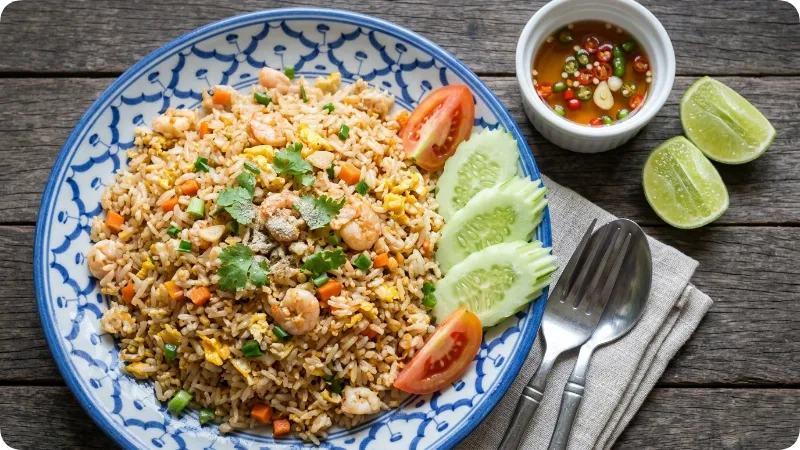
Skip the takeout menu with authentic Thai fried rice (Khao Pad), a street-food classic that turns simple kitchen staples into a fragrant, restaurant-worthy meal in just 15 minutes. Unlike heavy, soy-laden versions, real Thai fried rice is delightfully light, featuring distinct, fluffy grains of chilled jasmine rice coated in a delicate balance of savory fish sauce, fragrant garlic, tender scrambled eggs, and a hint of sweetness. Tossed in a screaming-hot skillet or wok to capture authentic smoky aroma and served with crisp cucumber slices and a fresh lime wedge, this lightning-fast recipe brings genuine Bangkok street-cart flavor straight to your weeknight table.
A Quick Note from Our Kitchen: This recipe is modeled after classic Thai street-vendor stir-fry ratios and domestic skillet dynamics. For individual, non-mushy rice grains, always use chilled day-old jasmine rice and break up any clumps with your fingers before it hits the hot pan!
Thai Fried Rice (Khao Pad)
A classic, savory street-style fried rice featuring fluffy jasmine grains, scrambled egg ribbons, aromatic garlic, and balanced umami seasonings.
- Yield: 2 main servings (or 4 side servings), approximately 4 cups total cooked rice
- Prep Time: 15 minutes
- Active Cook Time: 10 minutes
- Inactive Advance Prep: 12 to 24 hours (chilling cooked rice)
- Total Elapsed Time: 25 minutes (excluding overnight rice chilling)
- Essential Equipment: 14-inch carbon steel wok or 12-inch heavy stainless steel/cast iron skillet; stiff wok spatula
Ingredients
Sauce Mixture
- 1 tablespoon Thai fish sauce (nam pla)
- 1 tablespoon thin/light soy sauce
- 1 teaspoon oyster sauce
- 1/2 teaspoon granulated white sugar
- 1/4 teaspoon finely ground white pepper
Stir-Fry Base
- 2 tablespoons neutral high-smoke-point oil (canola, peanut, or avocado oil), divided
- 3 cloves garlic, finely minced (about 1 tablespoon)
- 1/2 small yellow onion, thinly sliced lengthwise (about 1/2 cup)
- 2 large eggs, lightly beaten
- 3 cups chilled cooked jasmine rice (day-old, clumps broken apart gently by hand)
- 1 small Roma tomato, seeded and cut into 6 wedges (optional)
- 2 scallions (green onions), sliced into 1-inch batons
Serving & Condiments
- 1 lime, cut into wedges
- 1/2 English cucumber or 1 Persian cucumber, sliced crosswise on a bias
- Prik nam pla (optional table condiment: 2 tablespoons fish sauce mixed with 1 sliced Thai bird’s eye chili and 1 teaspoon lime juice)
Step-by-Step Instructions
Prep and Aromatics
- Mix the Sauce: In a small bowl, whisk together the fish sauce, light soy sauce, oyster sauce, sugar, and ground white pepper until the sugar dissolves. Set aside next to the stove.
- Preheat the Pan: Place a 14-inch wok or 12-inch heavy skillet over high heat until wisps of smoke just begin to rise from the surface (about 2 minutes). Pour 1 tablespoon of oil down the sides of the wok and swirl to coat the cooking surface.
- Sear Aromatics: Add the sliced onion and minced garlic. Stir-fry constantly for 30 to 45 seconds until fragrant and the garlic turns light golden. Do not allow the garlic to scorch.
Eggs and Rice Stir-Fry
- Scramble the Eggs: Push the garlic and onion up onto the cooler sides of the wok (or to one side of the skillet). Add the remaining 1 tablespoon of oil to the cleared center. Pour in the beaten eggs. Let them sit undisturbed for 10 to 15 seconds until the edges set, then push and fold gently with the spatula until soft curds form (about 70% cooked).
- Add Rice and High Heat: Dump the chilled jasmine rice directly over the soft eggs. Immediately begin pressing and slicing through the rice with the edge of the spatula to break apart remaining clumps. Toss vigorously with the aromatics over high heat for 2 minutes until the rice grains are hot, glossy, and making a faint crackling sound against the metal.
Seasoning and Plating
- Apply Sauce: Drizzle the sauce mixture evenly around the perimeter of the hot wok not directly on top of the rice allowing the sauce to flash-caramelize on the metal before tossing it through the grains. Stir-fry rapidly for 1 to 2 minutes until every grain is evenly seasoned and coated.
- Finish Vegetables: Add the tomato wedges (if using) and sliced scallions. Toss over high heat for 30 to 45 seconds until the scallions wilt slightly and the tomato is heated through but still holds its shape.
- Plating: Transfer immediately to serving plates. Garnish with fresh cucumber slices and lime wedges on the side. Squeeze lime juice directly over the rice before eating, and serve with prik nam pla if desired.
Ingredient Notes and Substitutions
- Jasmine Rice: Long-grain jasmine rice provides the signature floral fragrance and tender bite. Short-grain or sushi rice contains too much amylopectin and will turn gummy; regular American long-grain white rice functions mechanically as a 1:1 substitute, though it lacks the signature floral aroma.
- Fish Sauce (Nam Pla): Provides essential salinity and deep fermentation funk. If avoiding fish, substitute with an equal volume of vegetarian mushroom stir-fry sauce or additional light soy sauce plus a drop of toasted sesame oil.
- Light Soy Sauce: Differs from dark soy sauce. Light soy provides salt and light color. Do not substitute dark soy sauce in equal amounts; dark soy is thicker, less salty, and will turn the rice dark brown and overly sweet.
- White Pepper: Traditional Thai cooking relies on finely ground white pepper for a clean, sharp, earthy heat without black specks. Black pepper can be substituted 1:1, but will alter the visual appearance and regional flavor profile.
Before You Begin: Rice Preparation
The moisture level of the rice dictates the final texture of the dish:
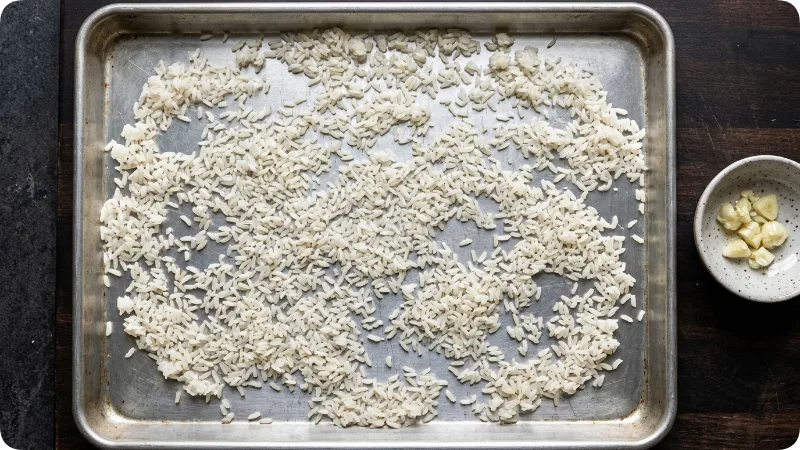
- Advance Cooking (Preferred): Cook jasmine rice using a slightly reduced water ratio (1 cup rice to 1 or 1.1 cups water). Spread the freshly cooked rice across a rimmed baking sheet in an even layer. Cool to room temperature (about 20 minutes), then refrigerate uncovered for at least 4 hours, or covered overnight. The cold air dehydrates the surface of the starch granules, preventing the rice from turning to mush when stir-fried.
- Same-Day Alternative: If cooking fresh rice the same day, spread hot, freshly cooked rice across a wide baking sheet and place it directly in front of a fan or under the freezer’s air vent for 30 to 45 minutes until the exterior feels cool, dry, and firm to the touch.
How to Make It: Critical Wok Checkpoints
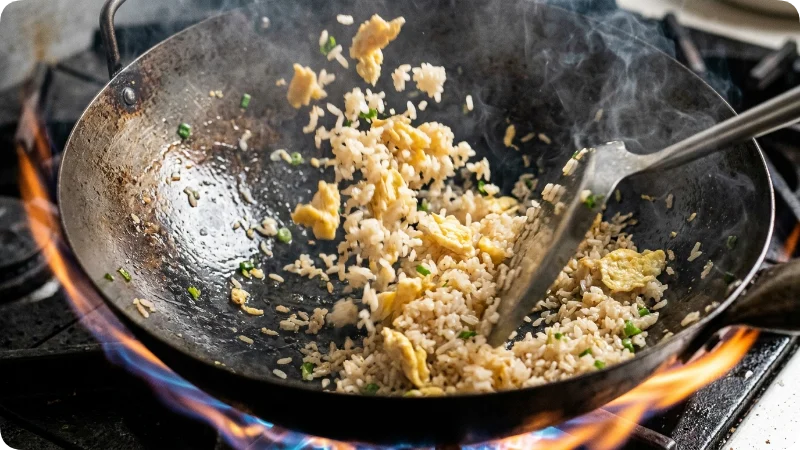
- Maintain Searing Pan Temperature: Residential stove burners produce fewer BTUs than commercial wok burners. To compensate, allow the pan to preheat thoroughly before adding oil. If the pan loses heat, the ingredients will steam instead of sear.
- Drizzle Sauce on Pan Walls: Never pour liquid seasonings directly onto a mound of cold or warming rice; the grains will absorb the liquid unevenly and turn soggy. Drizzling sauce along the sloping perimeter of the wok flashes off excess water instantly and creates light caramelization (wok hei aroma).
- Work in Batches: Attempting to cook more than 2 servings (3 to 4 cups of cooked rice) at once in a standard 12-to-14-inch home pan overloads the heat capacity, dropping the temperature and leading to wet, sticky rice.
Tips and Troubleshooting
- Problem: Rice turns out mushy or clumps together.
- Cause: Fresh, warm rice was used, or excess water was added during the initial boil.
- Prevention: Use day-old, chilled rice cooked with less water. Break clumps apart with clean hands before adding the rice to the wok.
- Safe Fix: Cannot be reversed in the wok. Finish cooking, remove from heat, and spread the rice onto a warm plate to allow steam to escape.
- Problem: Burnt garlic or bitter taste.
- Cause: Garlic was added to dry, smoking metal or left unattended over high heat.
- Prevention: Add garlic immediately after swirling the oil, and begin stirring continuously. Move to the next step within 30 to 45 seconds.
- Safe Fix: If garlic turns dark brown or black, discard the batch, wipe the wok with a paper towel, and restart from Step 2.
- Problem: Pale, bland rice.
- Cause: Pan was not hot enough to brown the grains, or sauce distribution was uneven.
- Prevention: Ensure continuous high heat; keep the rice moving against the pan surface.
- Safe Fix: Drizzle an extra 1/2 teaspoon of fish sauce around the rim of the pan and toss for 30 seconds.
Variations and Add-Ins
- Shrimp (Khao Pad Goong): Peel and devein 8 medium raw shrimp (about 6 ounces). Sear the shrimp in 1 tablespoon of oil for 1 to 2 minutes per side until pink and opaque (reaching 145°F / 63°C). Remove the shrimp to a plate, proceed with the garlic and eggs, and return the shrimp to the wok along with the rice in Step 5.
- Chicken or Pork (Khao Pad Gai / Moo): Thinly slice 6 ounces of chicken breast or pork loin. Stir-fry with the garlic and onion in Step 3 until fully cooked through (165°F / 74°C for chicken, 145°F / 63°C for pork with a 3-minute rest) before pushing to the side to scramble the eggs.
- Vegetarian / Tofu: Substitute firm pressed tofu cut into 1/2-inch cubes. Brown the tofu cubes in 1 tablespoon of oil for 3 minutes before adding aromatics. Use vegetarian mushroom sauce instead of fish sauce and oyster sauce.
Serving Suggestions
Serve khao pad piping hot. Accompany each plate with 2 to 3 thick slices of cold, crisp cucumber to cleanse the palate against the warm savory rice, alongside 2 fresh lime wedges. A small ramekin of prik nam pla (sliced bird’s eye chilies steeped in fish sauce) allows diners to customize heat and acidity.
Storage and Food Safety
- Cooling & Refrigeration: Cooked rice can harbor spores of Bacillus cereus, which survive boiling. Cool leftover fried rice quickly by spreading it into shallow containers, and place in the refrigerator within 1 hour of cooking. Store in an airtight container for up to 3 days at or below 40°F (4°C).
- Reheating: Reheat rice thoroughly until steaming hot throughout, reaching an internal temperature of at least 165°F (74°C). Reheat in a hot skillet with 1 teaspoon of water and a lid for 2 minutes, or microwave covered with a damp paper towel on high for 90 to 120 seconds.
- Freezing: Freeze fully cooled fried rice in airtight freezer bags, pressed flat, for up to 2 months. Reheat directly from frozen in a hot covered skillet with a splash of water.
FAQs
Why is Thai fried rice lighter in color than Chinese fried rice?
Thai fried rice emphasizes fish sauce and light soy sauce, avoiding heavy dark soy sauce. This preserves a pale golden hue and lets the fresh aroma of jasmine rice, garlic, and lime stand out.
Can I make this with freshly cooked rice if I forgot to make it yesterday?
Yes. Cook the rice with 10% less water, spread it thinly across a baking sheet, and freeze it for 20 minutes (or refrigerate for 45 minutes) to rapidly cool and evaporate surface moisture before stir-frying.
What is the best pan to use if I do not own a wok?
A large (12-inch) heavy stainless steel skillet or well-seasoned cast iron skillet works effectively. Cast iron retains high heat exceptionally well on residential electric and induction cooktops.
Is Thai fried rice spicy?
The base dish is mild and savory, seasoned only with white pepper. The heat comes from the optional table condiment, prik nam pla (fresh bird’s eye chilies in fish sauce), which diners spoon over their individual portions.
Final Summary
This guide delivers an authentic Thai fried rice (khao pad) formula utilizing chilled day-old jasmine rice, aromatics, and savory fish sauce. Designed for home kitchens, it outlines essential wok technique, high-heat temperature management, food safety cooling protocols for cooked rice, and adaptable protein variations with verified cooking temperatures.

Leo Campbell is the founder, recipe developer, and culinary voice behind Recipe Morsil. With nearly a decade of hands-on home cooking and professional baking experience, Leo tests every recipe multiple times to ensure reliable, fail-proof results in real home kitchens. When he’s not fine-tuning spices or testing cook times, he’s helping home cooks build confidence one bite at a time.
Connect with Leo via [Instagram/Email] or explore his verified recipes below.