Quick Answer: Soak rice noodles in warm water, flash-sear sliced chicken and scrambled eggs over high heat, and toss with a classic tamarind, fish sauce, and palm sugar glaze until chewy and glossy.
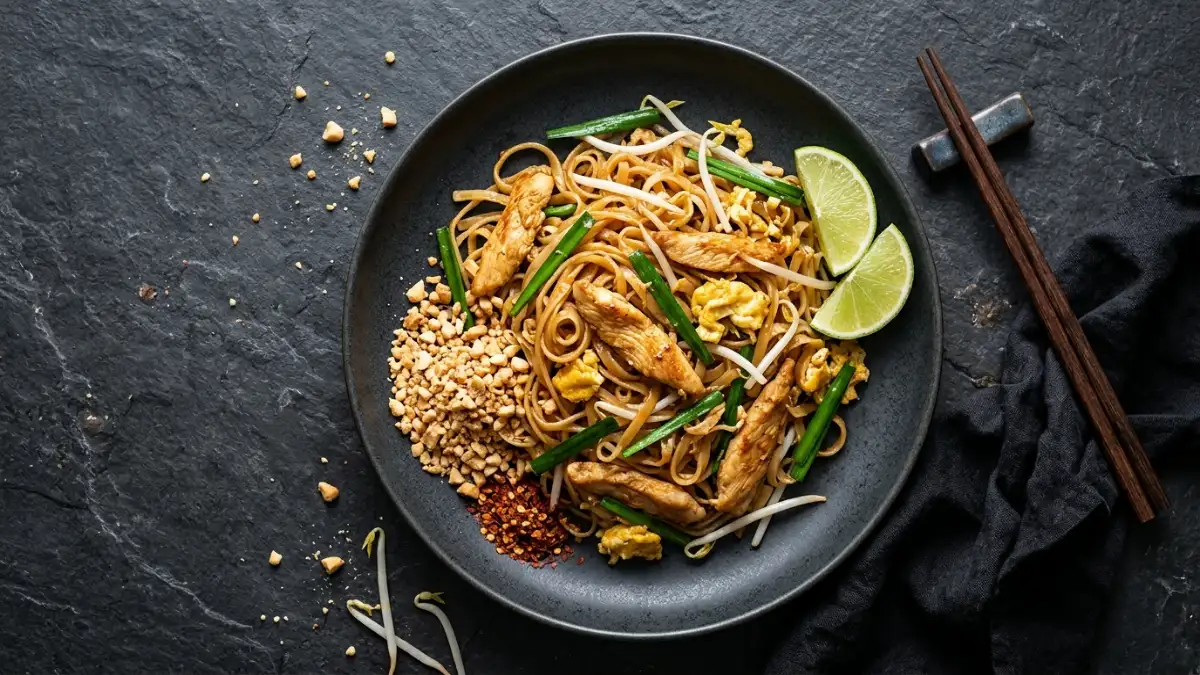
Skip takeout night with authentic chicken pad thai, where springy rice noodles, tender seared chicken, scrambled eggs, and crunchy bean sprouts unite in a vibrant, sweet-and-tangy glaze. The signature flavor comes from a scratch-made reduction of real tamarind paste, savory fish sauce, and palm sugar no ketchup or syrupy shortcuts needed. By soaking the rice noodles in warm water rather than boiling them, every strand stays pleasantly chewy and drinks in the rich stir-fry sauce without turning soggy. Finished with crushed roasted peanuts and fresh lime, this fast weeknight dinner brings the bustling energy of Bangkok street food straight to your stovetop.
A Quick Note from Our Kitchen: This recipe is modeled after classic Thai street-vendor noodle-frying techniques and domestic thermal dynamics. For the best chewy texture, never boil your rice noodles soak them in hot water until just bendable and pliable, as they will finish cooking directly in the sauce inside your hot pan!
Classic Chicken Pad Thai
A street-style stir-fried noodle dish featuring tender chicken breast, scrambled eggs, garlic chives, and chewy rice noodles coated in a balanced tamarind glaze.
- Yield: 2 main-course servings
- Prep Time: 20 minutes
- Inactive Soaking Time: 30 minutes
- Cook Time: 10 minutes
- Total Elapsed Time: 1 hour
- Essential Equipment: 14-inch flat-bottom carbon steel wok or 12-inch heavy-bottom skillet; small saucepan; fine-mesh colander; instant-read thermometer.
Ingredients
Pad Thai Sauce
- 3 tablespoons (45 ml) tamarind paste/concentrate (Thai style)
- 3 tablespoons (45 ml) fish sauce
- 3 tablespoons (45 g) finely grated palm sugar (or packed dark brown sugar)
- 1 tablespoon (15 ml) water
Stir-Fry Components
- 6 ounces (170 g) dried medium rice noodles (banh pho / pad thai style, 2 to 3 mm wide)
- 8 ounces (225 g) boneless, skinless chicken breast, sliced into thin ⅛-inch bite-sized strips
- 3 tablespoons (45 ml) neutral high-heat oil (canola, peanut, or vegetable oil), divided
- 2 cloves garlic, finely minced (about 1 tablespoon)
- 1 medium shallot, thinly sliced (about 2 tablespoons)
- 2 large eggs, lightly beaten
- 2 tablespoons (20 g) salted preserved sweet radish (chai pow), finely minced (optional)
- 1 cup (90 g) fresh bean sprouts, rinsed and drained well (divided: ¾ cup for cooking, ¼ cup raw for serving)
- ½ cup (25 g) garlic chives or Chinese chives, cut into 1½-inch batons (or green onion tops)
- 3 tablespoons (30 g) roasted unsalted peanuts, coarsely crushed
- 1 fresh lime, cut into wedges
- ½ teaspoon crushed red chili flakes (prik pon), for serving (optional)
Instructions
Prep the Noodles and Sauce
- Hydrate the Rice Noodles:
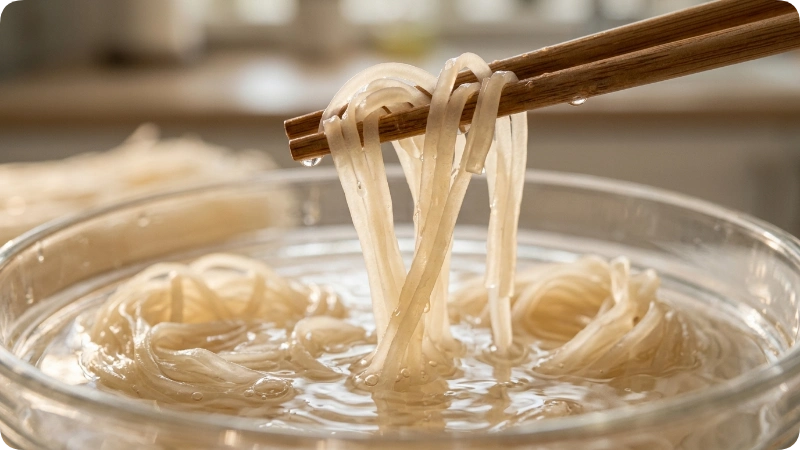
Place the dried rice noodles in a large heatproof bowl and cover completely with warm water (around 110°F to 120°F / 43°C to 49°C). Soak for 30 to 40 minutes, stirring once or twice to prevent clumping. The noodles are ready when they are completely flexible, white, and limp, but still firm and opaque in the core when bitten. Drain thoroughly in a colander and set aside. Do not boil. - Reduce the Sauce:
In a small saucepan over medium-low heat, combine the tamarind paste, fish sauce, palm sugar, and 1 tablespoon water. Heat for 2 to 3 minutes, stirring constantly, until the sugar is dissolved and the sauce is uniform. Remove from heat and reserve at your cook station.
Sear the Protein and Scramble Eggs
- Sear the Chicken:
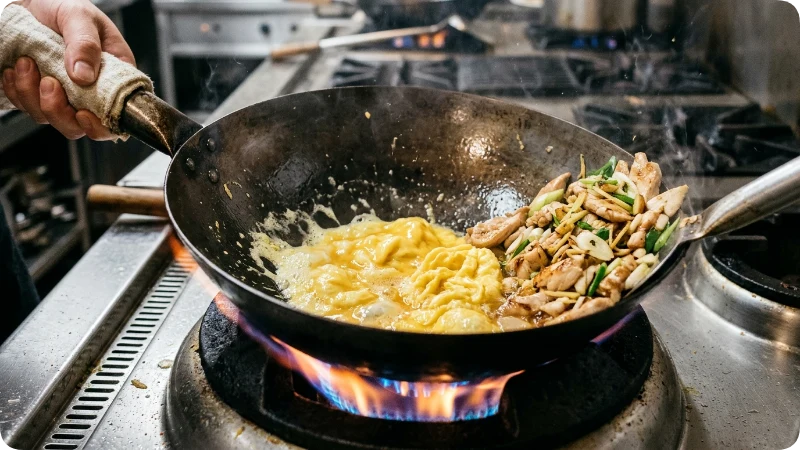
Set your wok or heavy 12-inch skillet over high heat until wisps of smoke appear. Swirl in 1½ tablespoons of the oil to coat the sides. Add the sliced chicken in a single layer and sear without moving for 60 to 90 seconds to build color. Stir-fry for another 1 to 2 minutes until no longer pink outside. Use an instant-read thermometer inserted into the thickest piece to verify it reaches 165°F (74°C). Transfer the cooked chicken to a clean plate, leaving any residual oil in the pan. - Sauté Aromatics and Scramble Eggs:
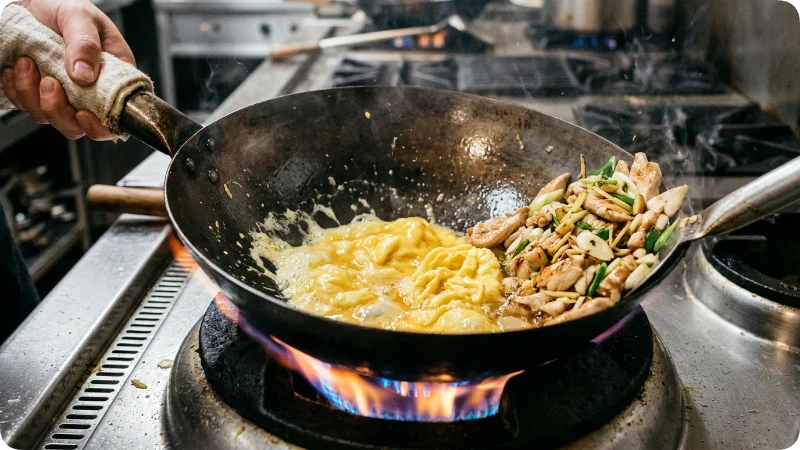
Return the wok to medium-high heat and add the remaining 1½ tablespoons of oil. Add the minced garlic, shallots, and sweet preserved radish. Stir continuously for 30 seconds until fragrant and lightly golden; do not burn the garlic. Push the aromatics to one side of the wok. Pour the beaten eggs into the empty side. Let the eggs set undisturbed for 15 seconds until the edges bubble, then scramble into soft, broken curds with a spatula.
Combine, Glaze, and Finish
- Toss Noodles with Sauce:
Add the drained noodles directly over the eggs and aromatics. Immediately pour the prepared sauce over the noodles. Using two spatulas or tongs, toss and fold vigorously over medium-high heat for 1 to 2 minutes. The sauce will bubble vigorously and be absorbed by the noodles as they soften into a glossy, chewy texture. If noodles seem dry or stiff after 2 minutes, sprinkle in 1 tablespoon of water around the rim of the wok and toss for 30 seconds more. - Fold in Chicken and Greens:
Return the cooked chicken and any accumulated juices to the wok. Add ¾ cup of the bean sprouts and all the cut garlic chives. Toss quickly for 30 to 45 seconds until the chicken is hot and the greens are slightly wilted but still crisp. - Garnish and Serve:
Remove the wok from the heat immediately. Transfer the noodles onto two serving plates. Garnish each plate with the remaining ¼ cup raw bean sprouts, crushed peanuts, lime wedges, and a pinch of dried chili flakes. Serve immediately while piping hot.
Ingredient Notes and Substitutions
- Dried Rice Noodles (Chantaboon): Medium noodles (roughly 2–3 mm wide) provide structural integrity. Thicker ribbons take too long to soften in the wok, while thin vermicelli breaks into mush. Avoid fresh pre-boiled noodles for this method, as their moisture level differs from dry-soaked noodles.
- Tamarind Concentrate: Authentic Pad Thai requires natural tamarind paste. Commercial Thai brands (such as Pantai or Aroy-D) have a pourable molasses-like texture with sharp fruit acidity. If substituting Indian tamarind paste (which is significantly denser and more concentrated), cut the quantity by half and dilute with equal parts warm water. Never substitute tomato ketchup; ketchup adds vinegar acidity and artificial sweetness that obscures traditional savory depth.
- Palm Sugar: Imparts a mellow caramel sweetness with subtle floral tones. Light or dark brown sugar can be used 1:1 by weight, though brown sugar has a sharper molasses profile.
- Garlic Chives vs. Green Onions: Garlic chives (ku chai) have flat, ribbon-like blades with a distinct garlicky sharpness that holds up to wok heat. If unavailable, use the green tops of scallions cut into 2-inch lengths.
Before You Begin: The Timeline
- 45 Minutes Before Cooking: Place noodles into a large bowl of warm water to soak. Set a timer for 30 minutes.
- 20 Minutes Before Cooking: Chop chicken, mince aromatics, measure sauce ingredients, and crack the eggs. Arrange every single item in small bowls next to your stovetop in the exact order of use. Once the wok gets hot, cooking takes less than 10 minutes; you cannot pause to chop ingredients mid-cook.
- 5 Minutes Before Cooking: Drain noodles completely. If water remains trapped in the noodles, they will steam instead of sear, producing gummy clusters.
How to Make It: Critical Stages and Checkpoints
1. The Noodle Soak Test
Boiling dried rice noodles ruins Pad Thai. Boiling saturates the exterior with water while leaving the core stiff, causing them to shred when tossed with hot sauce. Warm-water soaking hydrates the starch evenly. Check your noodles at 30 minutes: pull a strand and bend it around your finger. If it bends without snapping, it is ready. If you bite into it, it should resist like al dente pasta without a crunchy chalk center.
2. Managing Domestic Heat
Commercial street-food burners push upwards of 100,000 BTUs; standard domestic home burners reach 7,000 to 15,000 BTUs. Because home ranges lack raw thermal power, doubling this recipe in a single pan cools the metal down instantly, stewing the ingredients in liquid rather than searing them. Limit cooking to 2 servings per batch. If serving four, cook the recipe in two back-to-back runs.
3. Emulsifying the Pan Sauce
Pouring the sauce directly onto the noodles rather than the bare pan bottom prevents the sugars from scorching against the hot metal. The starch on the hydrated noodles works with the tamarind pulp to thicken the liquid in seconds, coating every strand with a shimmering glaze rather than leaving a pool of liquid at the base of the wok.
Tips and Troubleshooting
- Noodles Are Hard and Clumping
- Cause: Noodles were under-soaked, or pan ran out of moisture before they cooked through.
- Prevention: Confirm noodles are pliable before draining.
- Safe Fix: Drizzle 1 to 2 tablespoons of water or unsalted chicken stock around the outer perimeter of the wok, cover with a lid for 30 seconds to steam, then toss gently.
- Noodles Are Mushy and Broken
- Cause: Noodles were pre-boiled, over-soaked in hot boiling water, or moved aggressively with a metal spatula.
- Prevention: Soak exclusively in warm (not boiling) tap water; use two wooden paddles or kitchen tongs to lift and fold rather than chop.
- Safe Fix: Cannot be structurally reversed. Remove from heat immediately, toss in raw sprouts for crunch, and serve.
- Sauce Tastes Overly Sour or Harsh
- Cause: Tamarind brand had high natural acidity, or palm sugar was measured loosely.
- Prevention: Taste the warm sauce reduction before pouring into the wok.
- Safe Fix: Dissolve 1 teaspoon of palm sugar in 1 teaspoon warm water and stir directly into the wok off the heat.
Make-Ahead, Storage, and Reheating
- Advance Prep: The Pad Thai sauce can be mixed and boiled in large batches up to 2 weeks in advance. Store refrigerated in a sealed glass jar. Noodles can be soaked up to 4 hours ahead: drain thoroughly, toss with 1 teaspoon of neutral oil to prevent sticking, and store covered in the refrigerator.
- Refrigerator Storage: Store assembled leftovers in an airtight container for up to 3 days at or below 40°F (4°C). Reheat within 2 hours of removal from refrigeration.
- Freezing: Do not freeze cooked Pad Thai. The delicate cellular structure of cooked rice noodles and bean sprouts breaks down during freezing, defrosting into a watery, broken mess.
- Reheating for Texture: Avoid the microwave, which turns rice noodles rubbery and overcooks chicken. To reheat, warm a skillet over medium heat with 1 tablespoon of water and 1 teaspoon of neutral oil. Add the noodles, cover with a lid for 1 to 2 minutes to let the steam soften the starch, then uncover and toss gently until heated through to 165°F (74°C).
FAQs
Why does authentic Pad Thai not use peanut butter?
Peanut butter is an American adaptation. In Thailand, Pad Thai receives its nutty aroma and crunch exclusively from roasted, crushed whole peanuts sprinkled over the dish right before serving. The sauce itself relies entirely on the interplay of tamarind, fish sauce, and sugar.
Can I substitute shrimp or tofu for the chicken?
Yes. Firm or extra-firm tofu (pressed and cubed) should be seared alongside the aromatics until golden. Large peeled shrimp (prawns) should be seared in oil for 1 to 2 minutes until pink and opaque, then removed and added back at the end with the chives to avoid overcooking.
What can I use in place of fish sauce?
A balanced vegetarian fish sauce or a mixture of 2 tablespoons soy sauce and 1 teaspoon dark mushroom soy sauce can replace the 3 tablespoons of fish sauce. Note that soy sauce lacks the fermented funk of anchovy-based fish sauce, so the final dish will taste more savory-sweet than traditional street-style noodles.
How do I keep the eggs from disappearing into the noodles?
Always push the aromatics aside and let the beaten eggs settle on the bare surface of the wok until they partially set into a thin crepe. Break them into large, distinct curds before incorporating the noodles. Whisking raw eggs directly onto wet noodles coats the starch in raw protein, resulting in a cloudy, sticky texture.
Article Summary
This authentic chicken pad thai recipe delivers balanced sweet, sour, and savory street-cart flavor using real tamarind paste, palm sugar, and fish sauce. By hydrating rice noodles in warm water instead of boiling them, home cooks avoid gummy stir-fries and achieve perfectly chewy, sauced noodles with tender chicken and crisp bean sprouts.

Leo Campbell is the founder, recipe developer, and culinary voice behind Recipe Morsil. With nearly a decade of hands-on home cooking and professional baking experience, Leo tests every recipe multiple times to ensure reliable, fail-proof results in real home kitchens. When he’s not fine-tuning spices or testing cook times, he’s helping home cooks build confidence one bite at a time.
Connect with Leo via [Instagram/Email] or explore his verified recipes below.